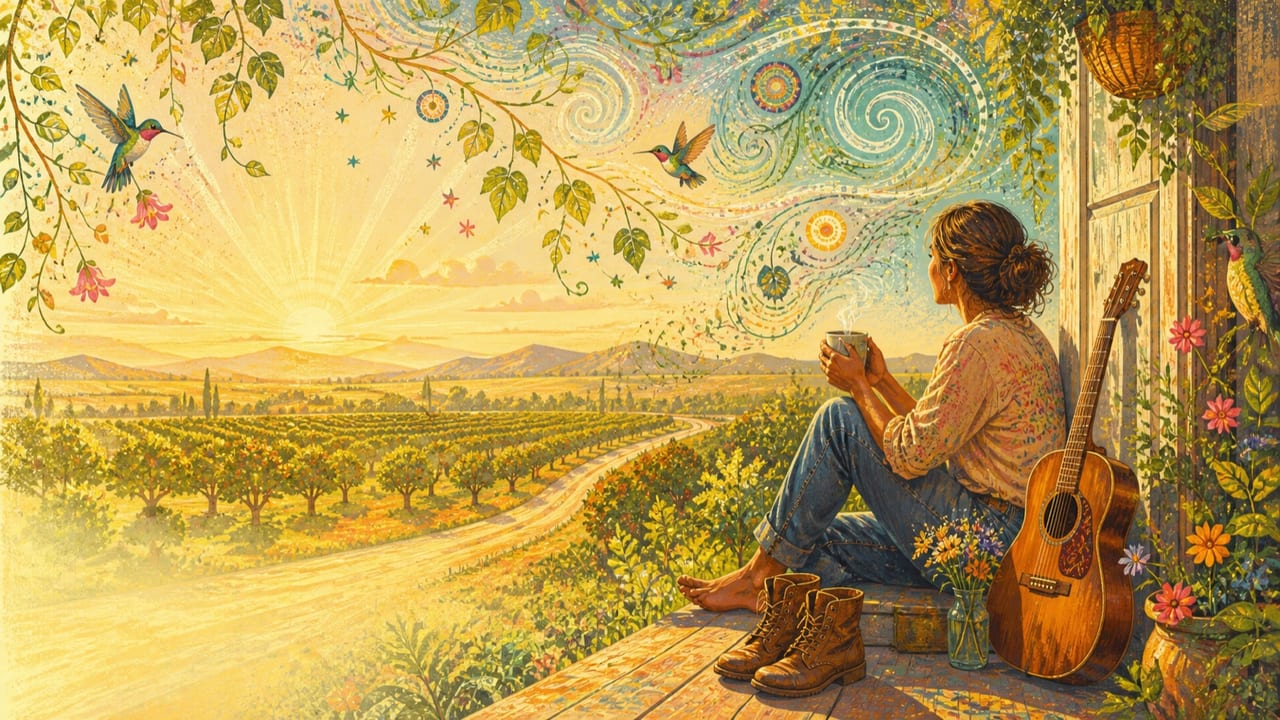
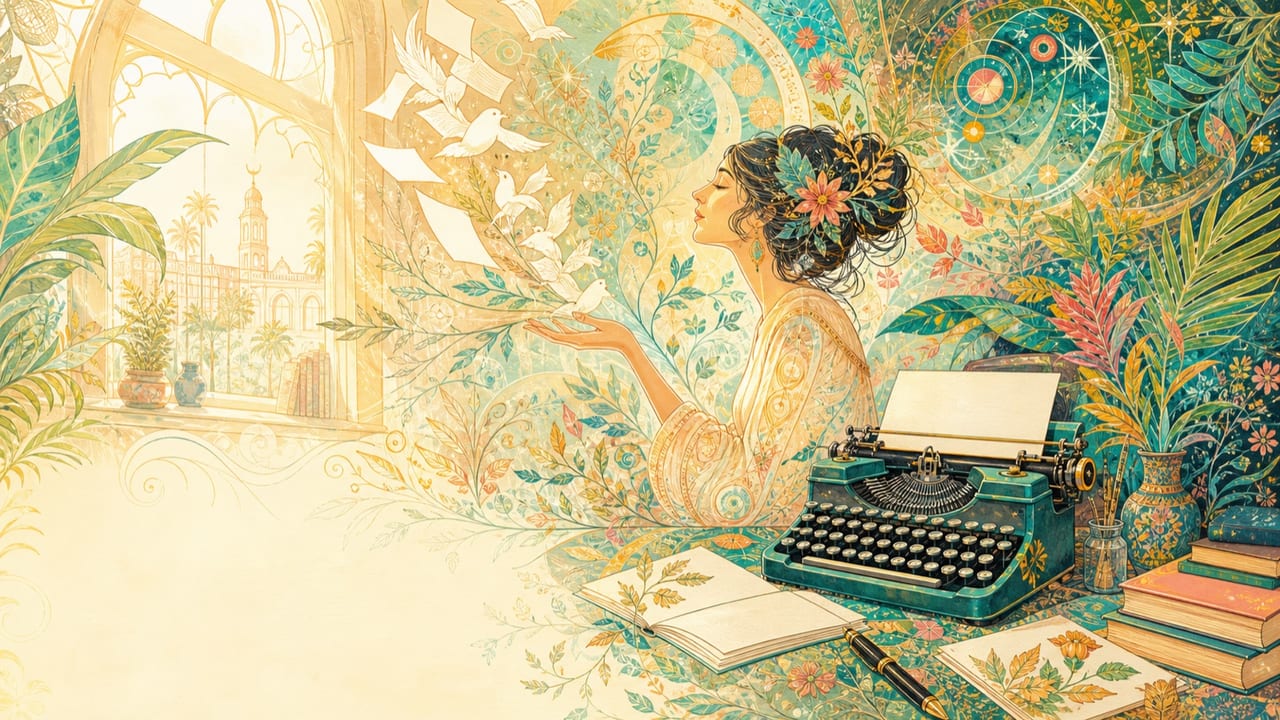
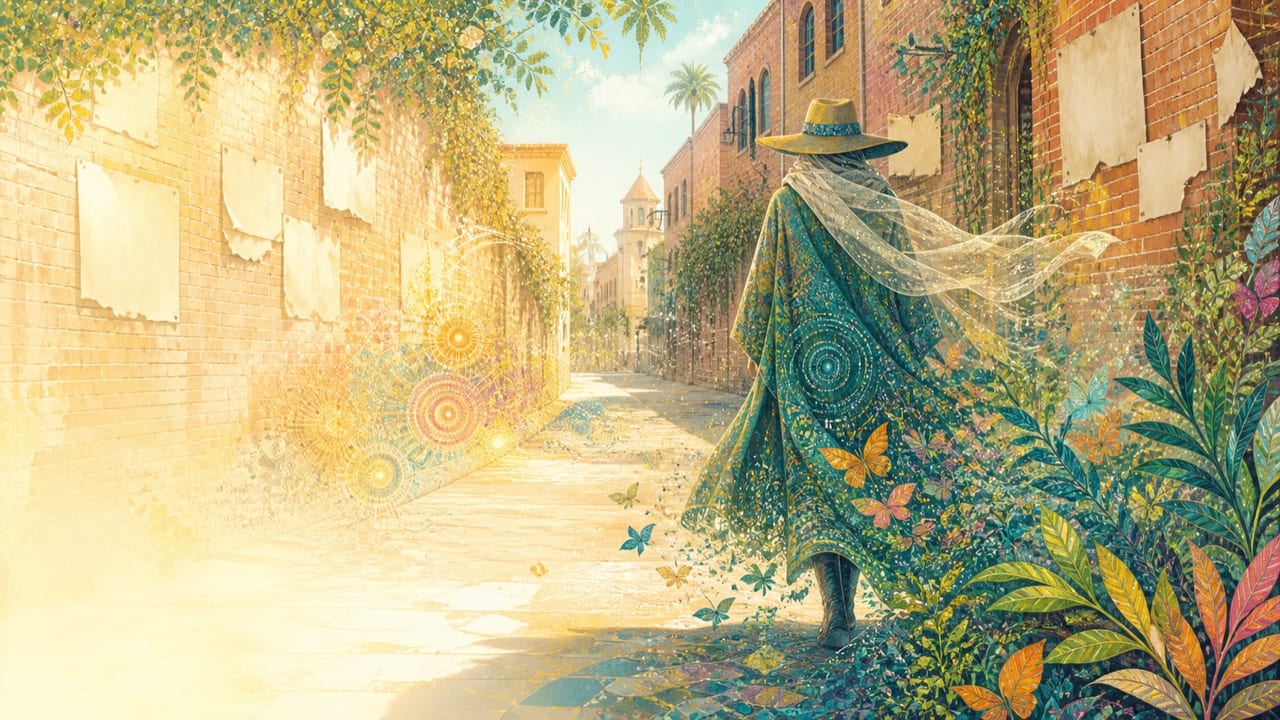
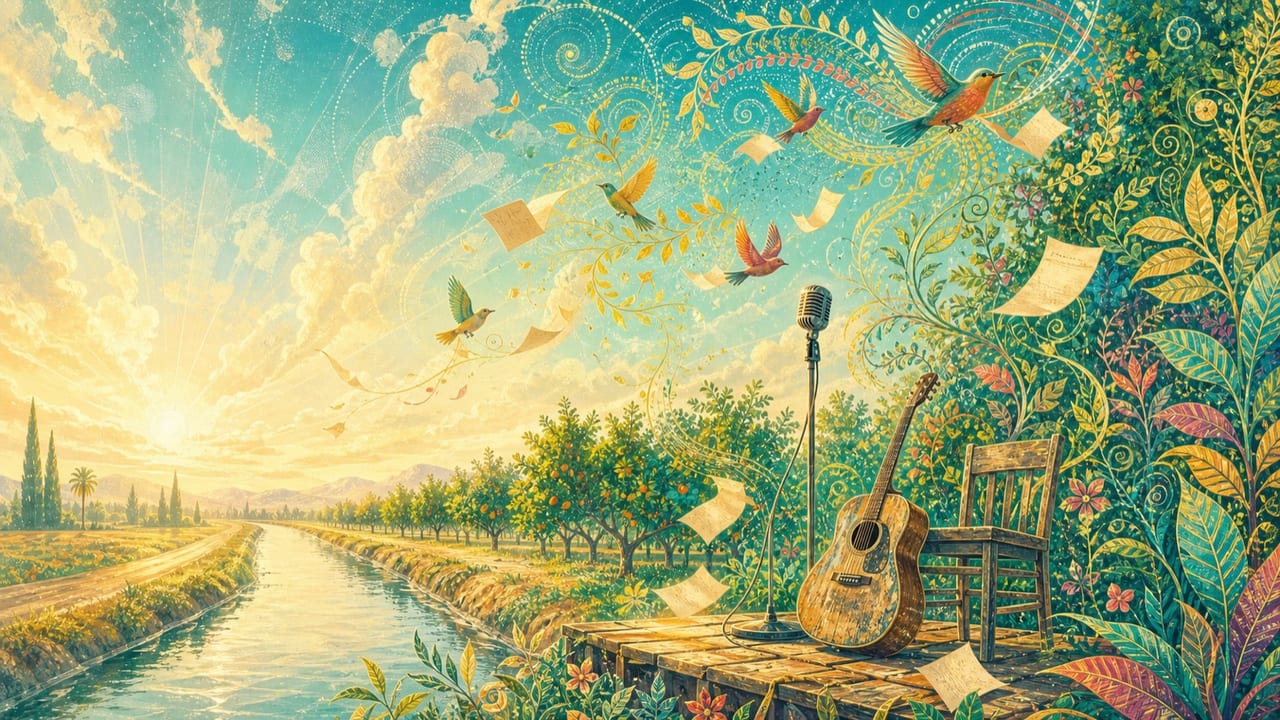
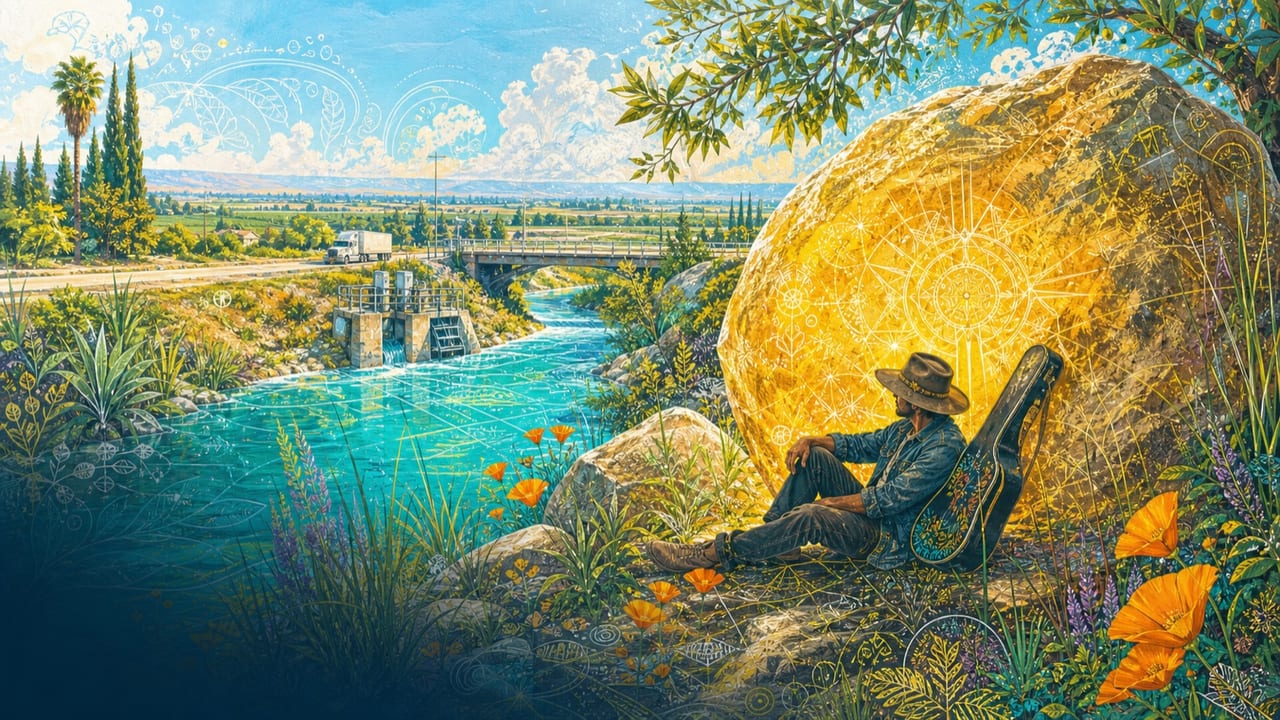
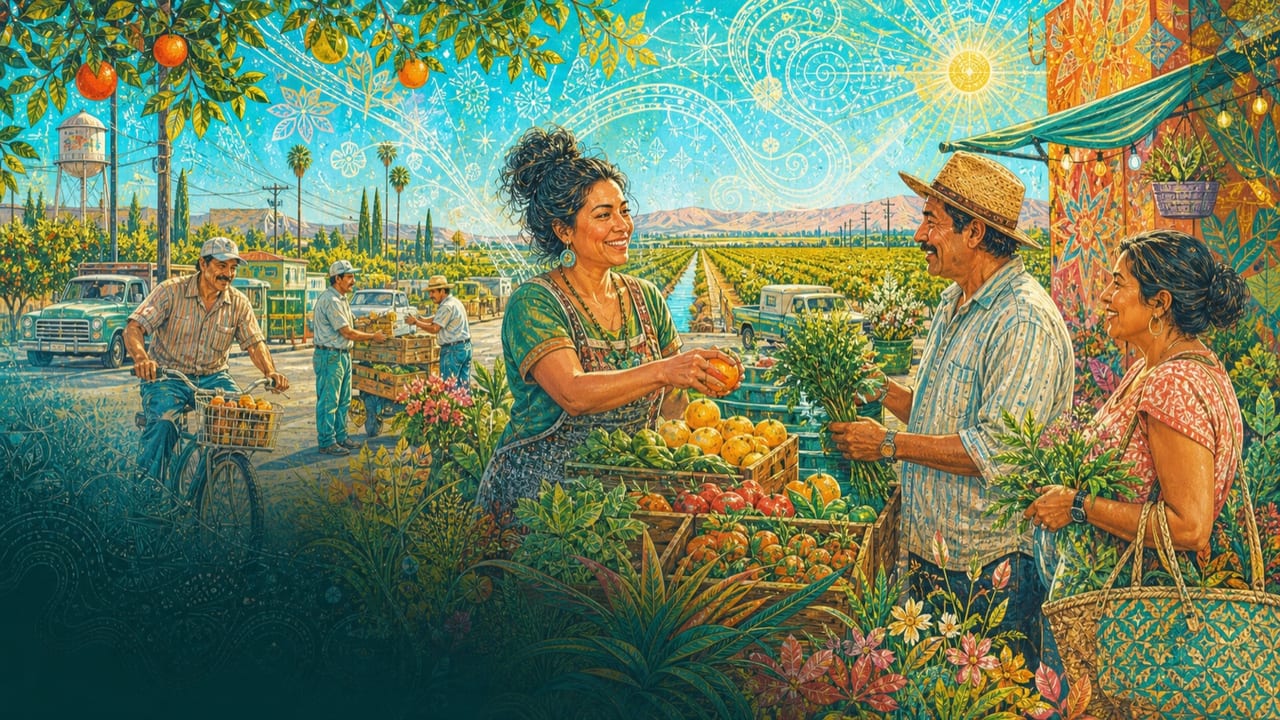
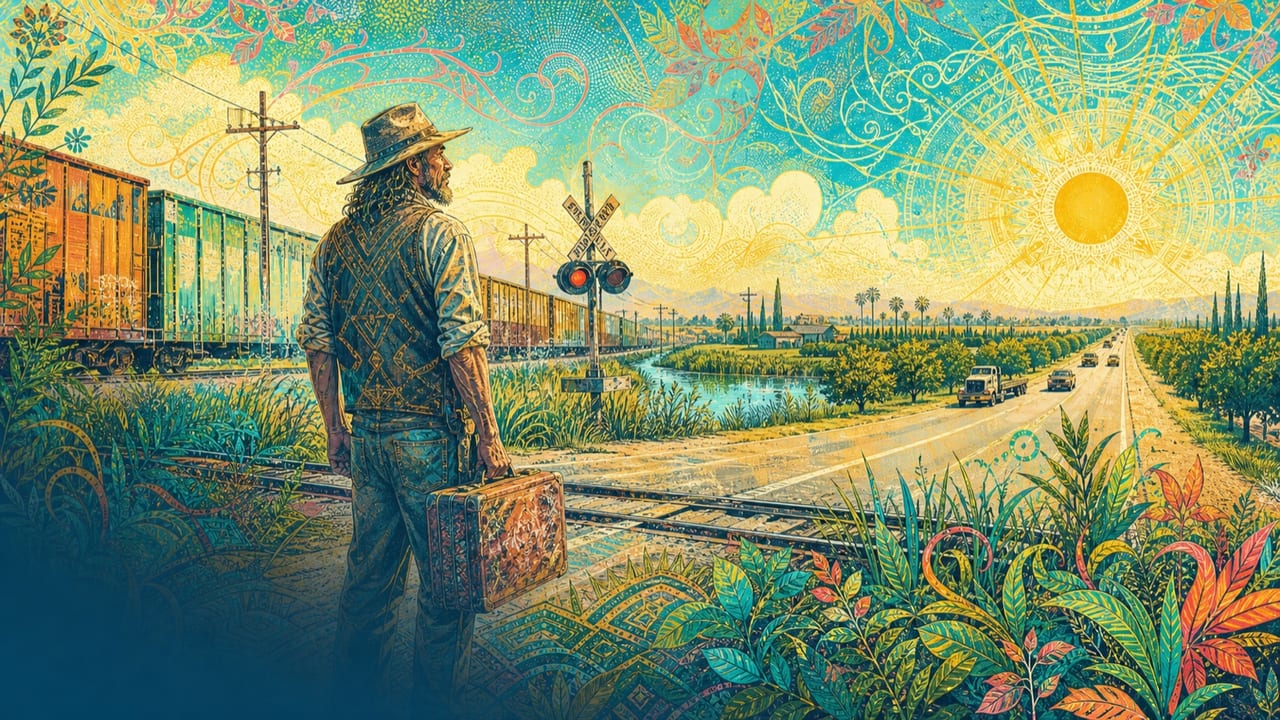
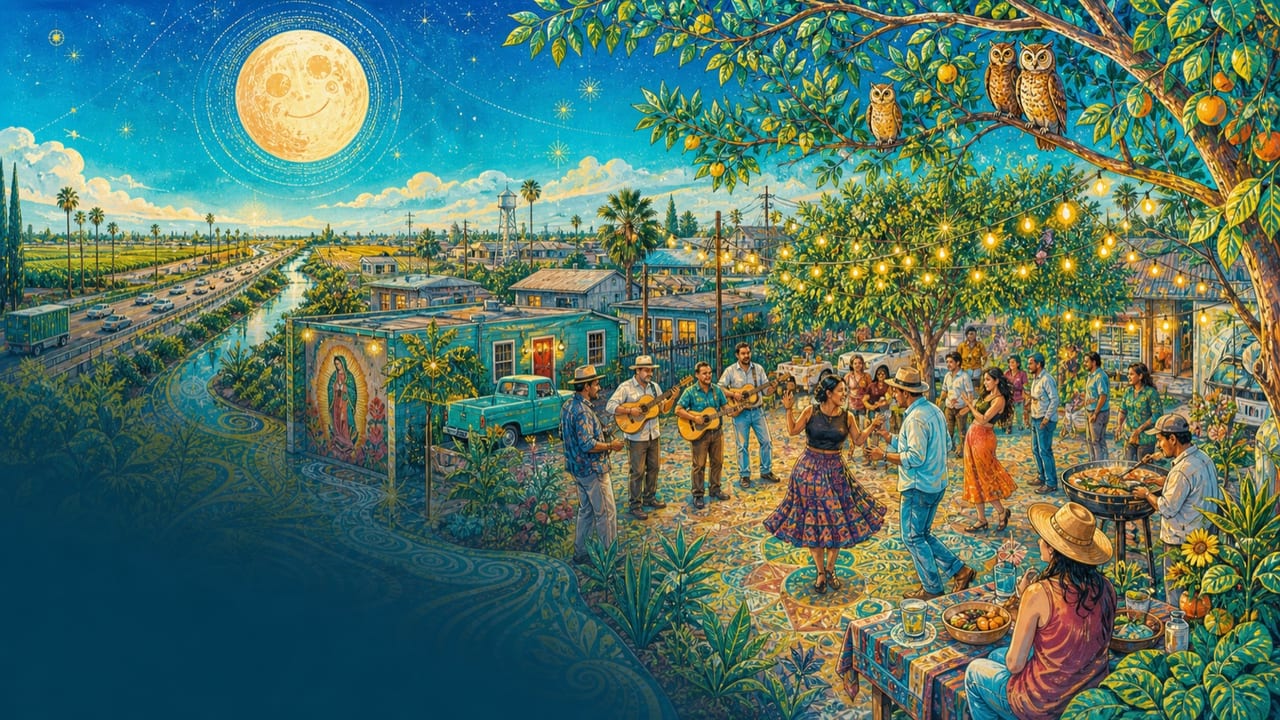
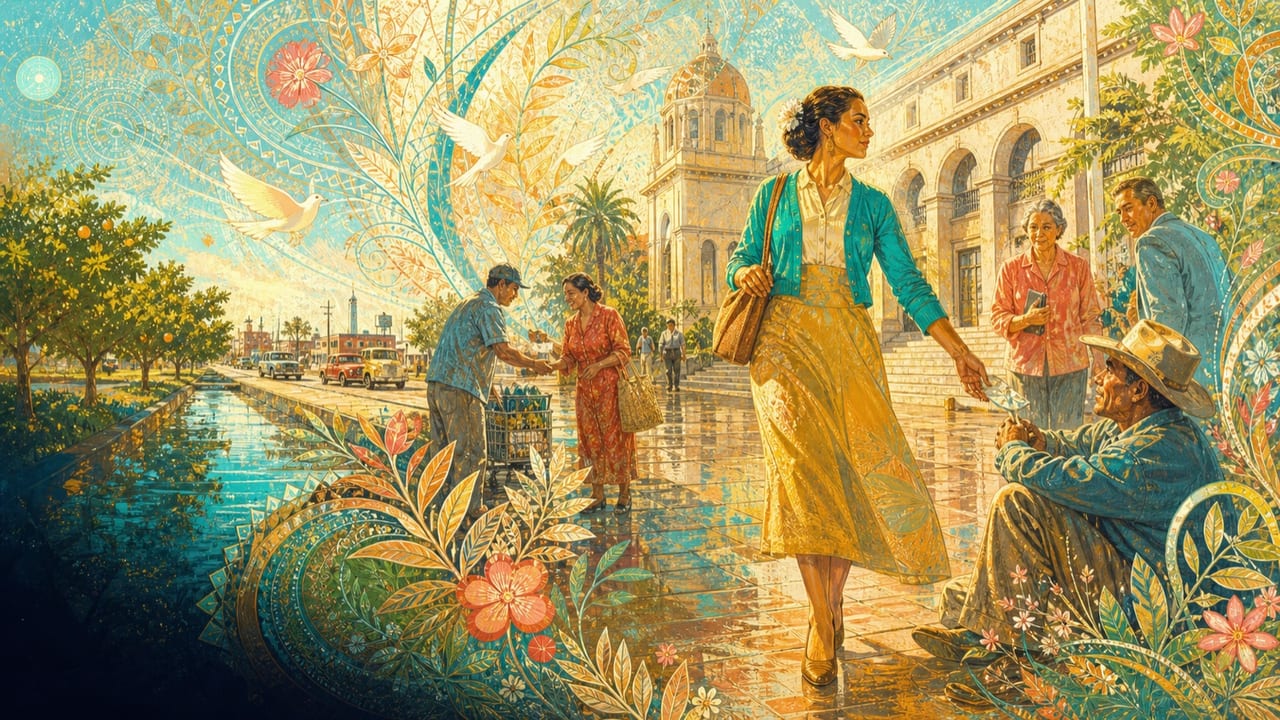
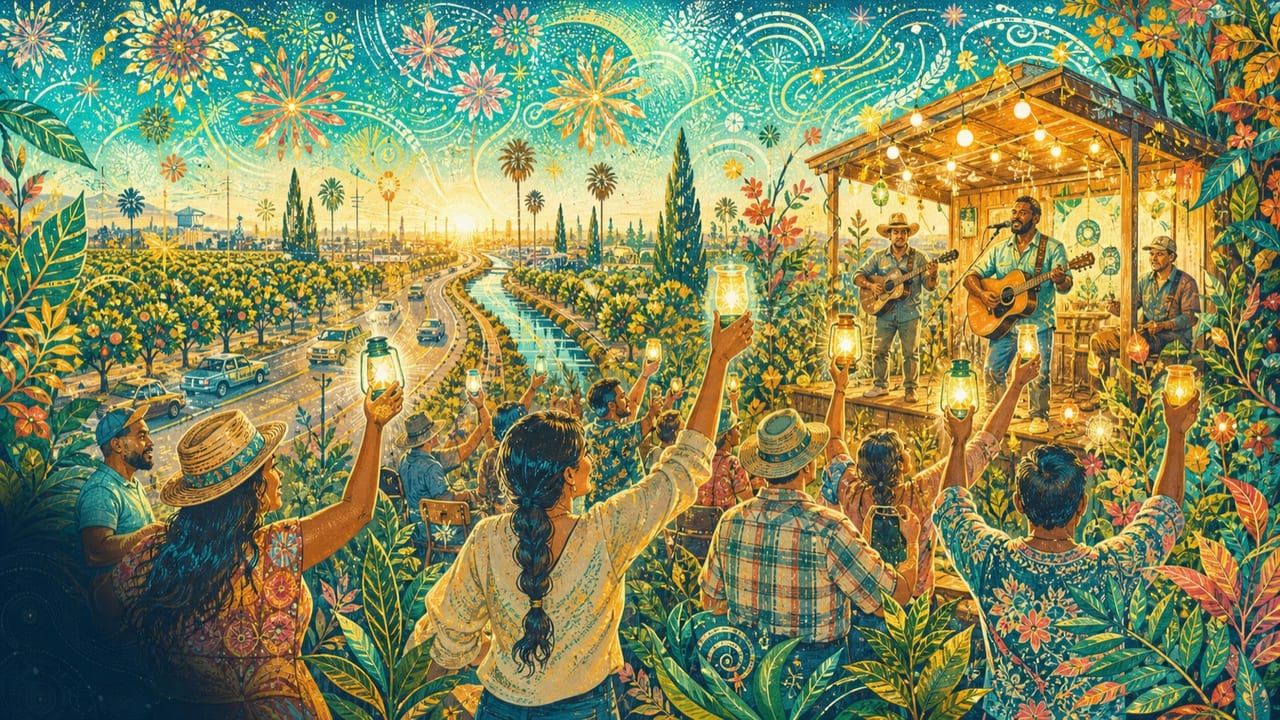
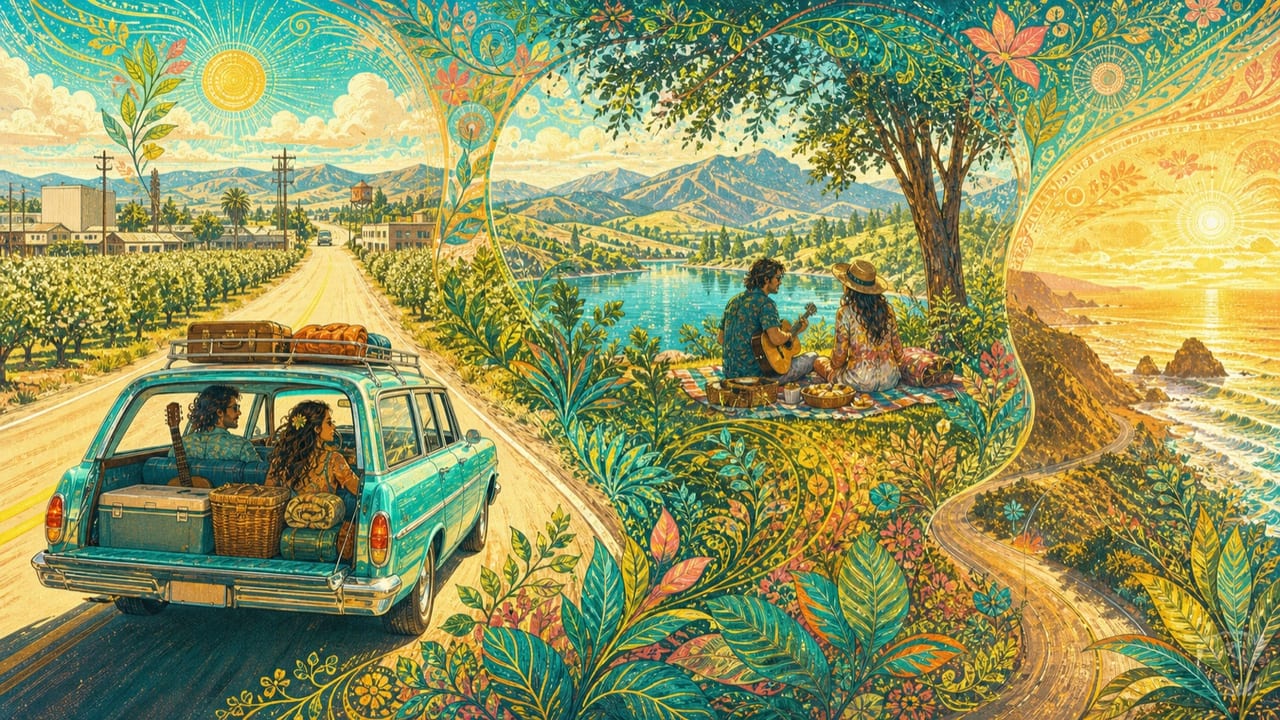
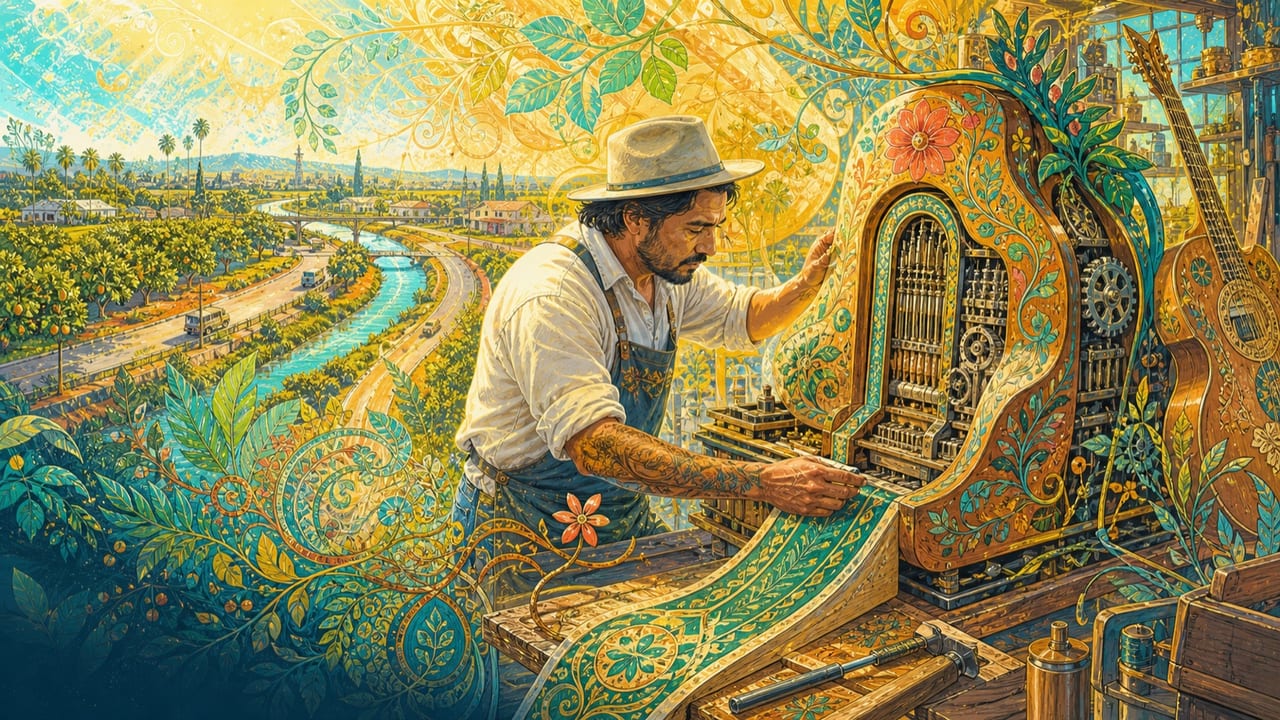
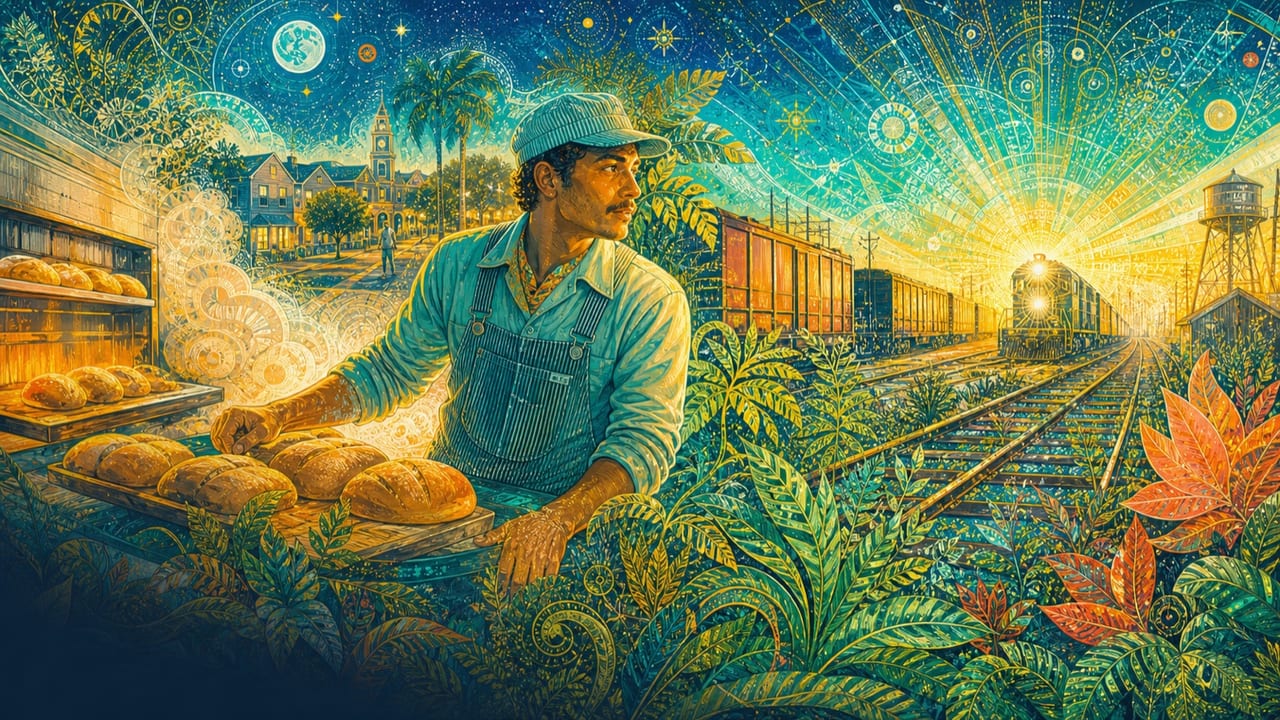
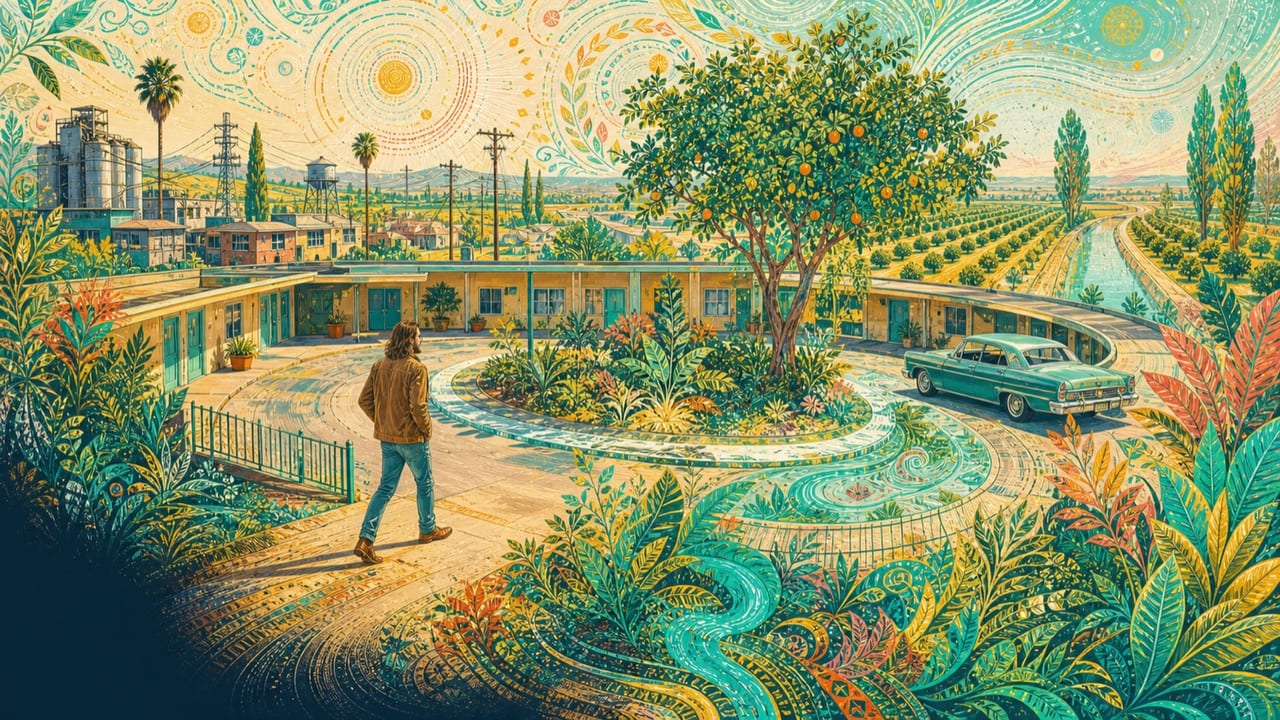
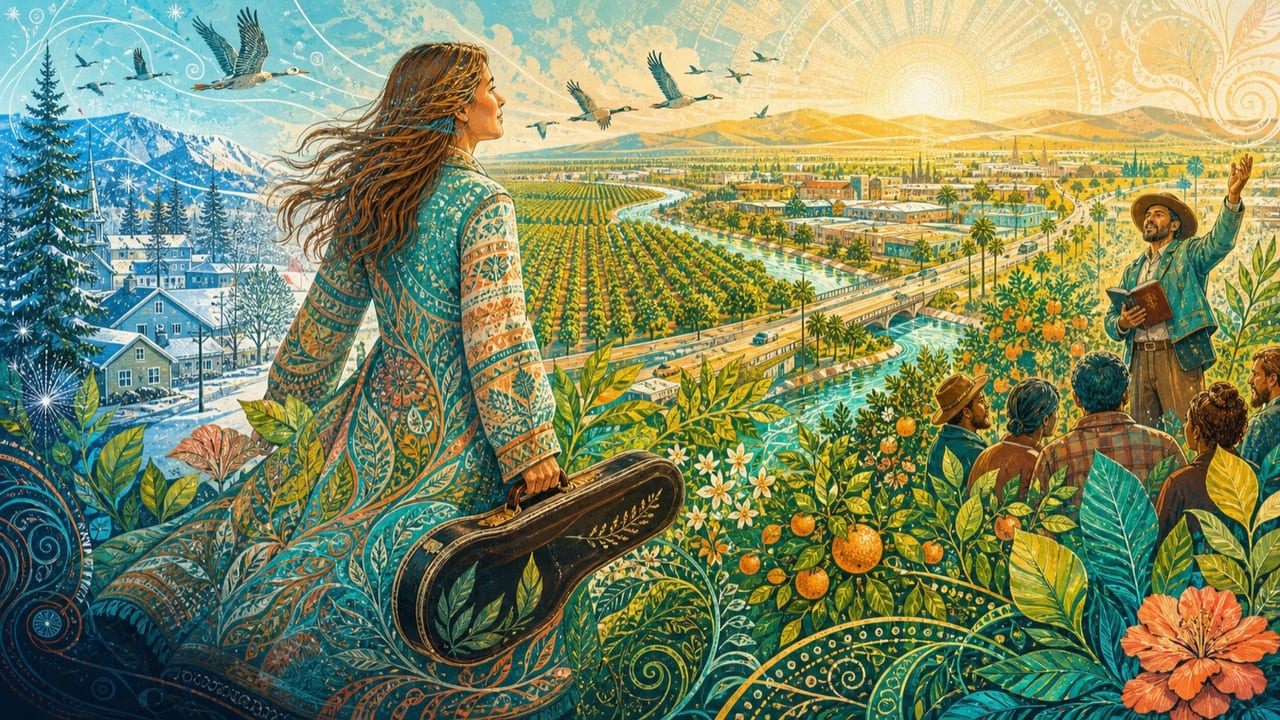
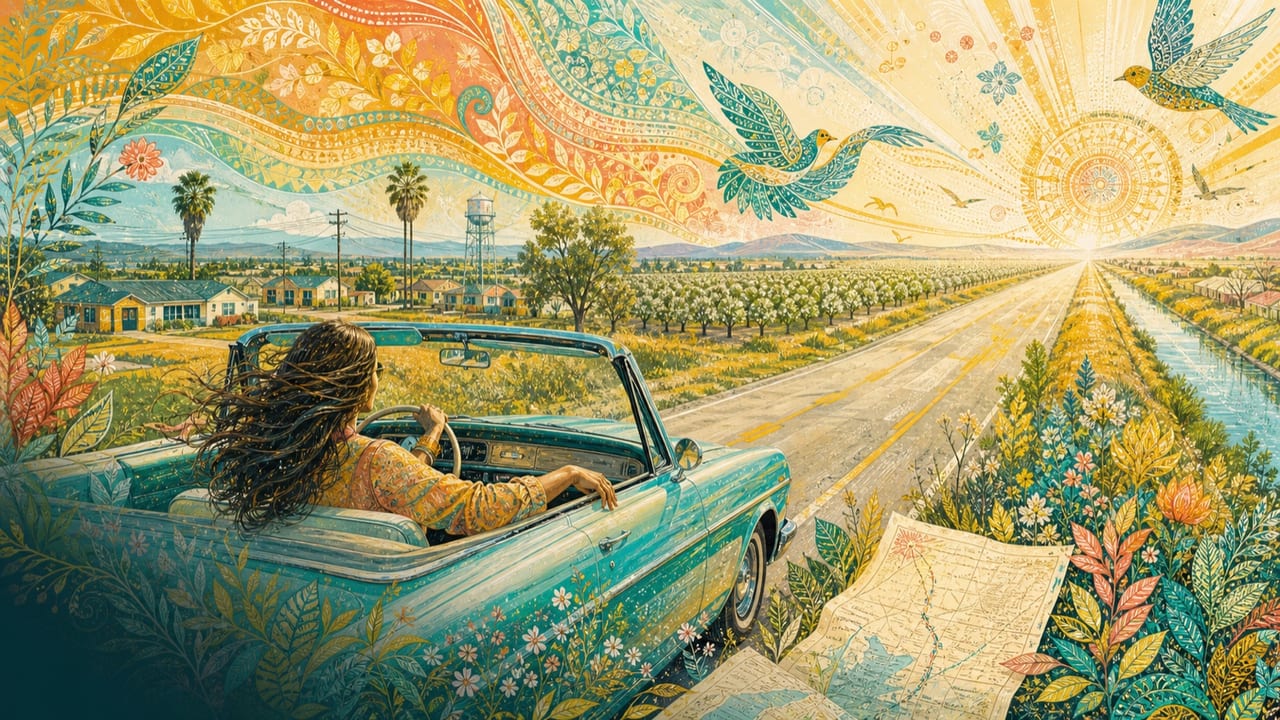
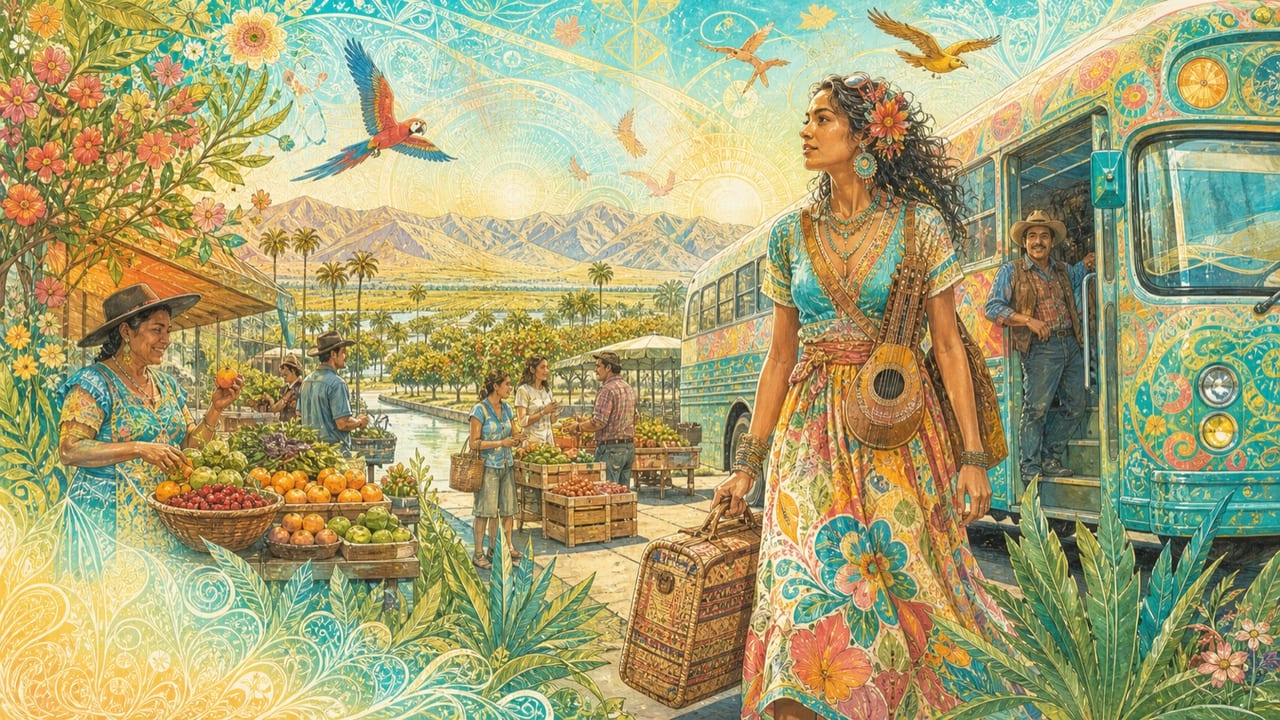
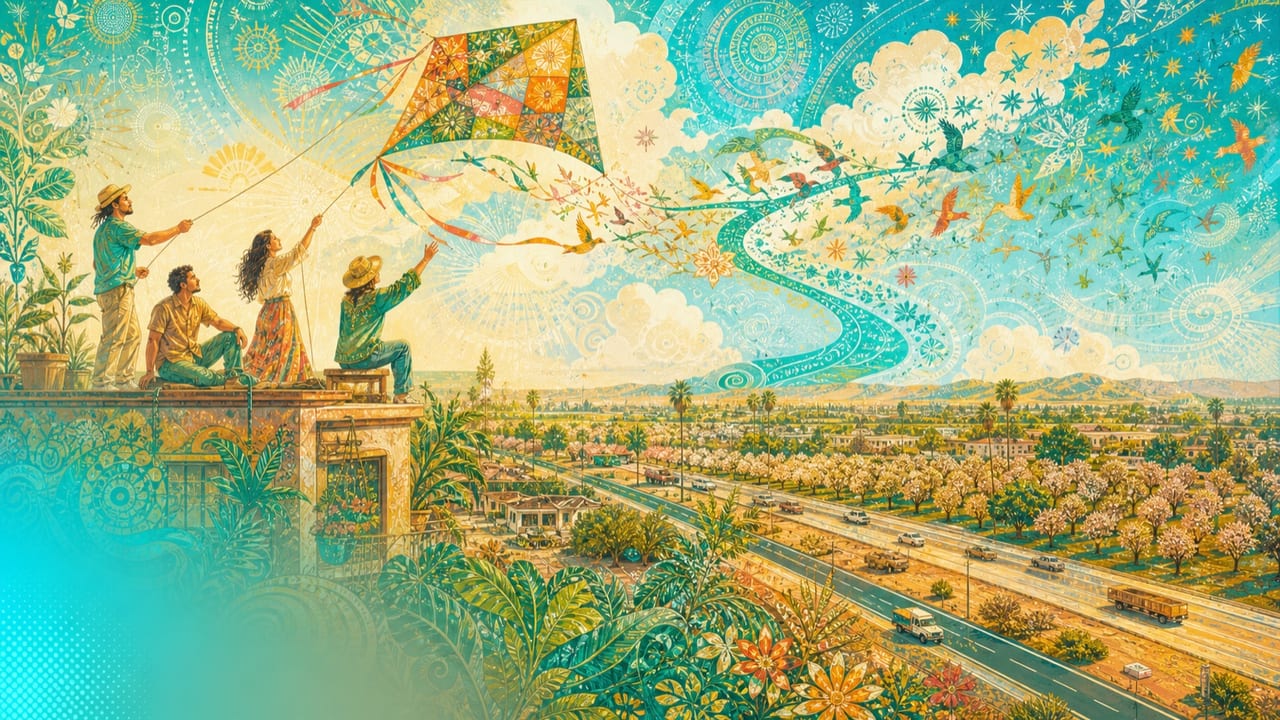
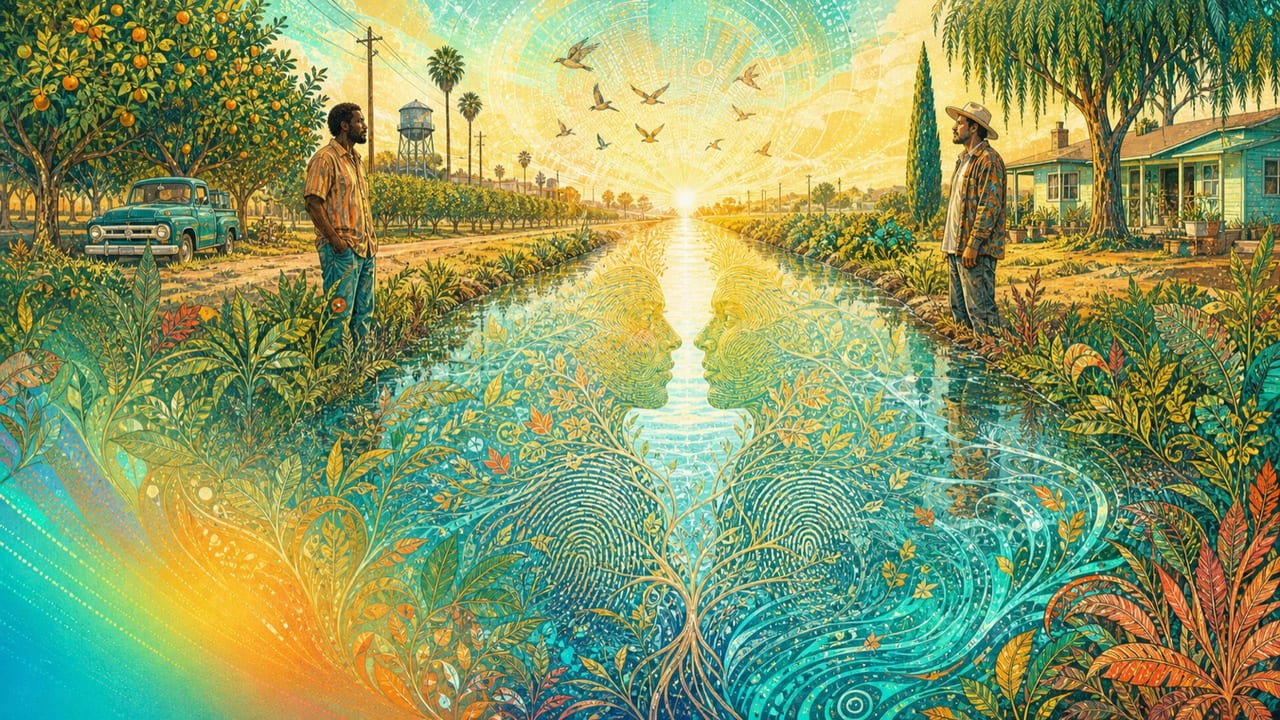
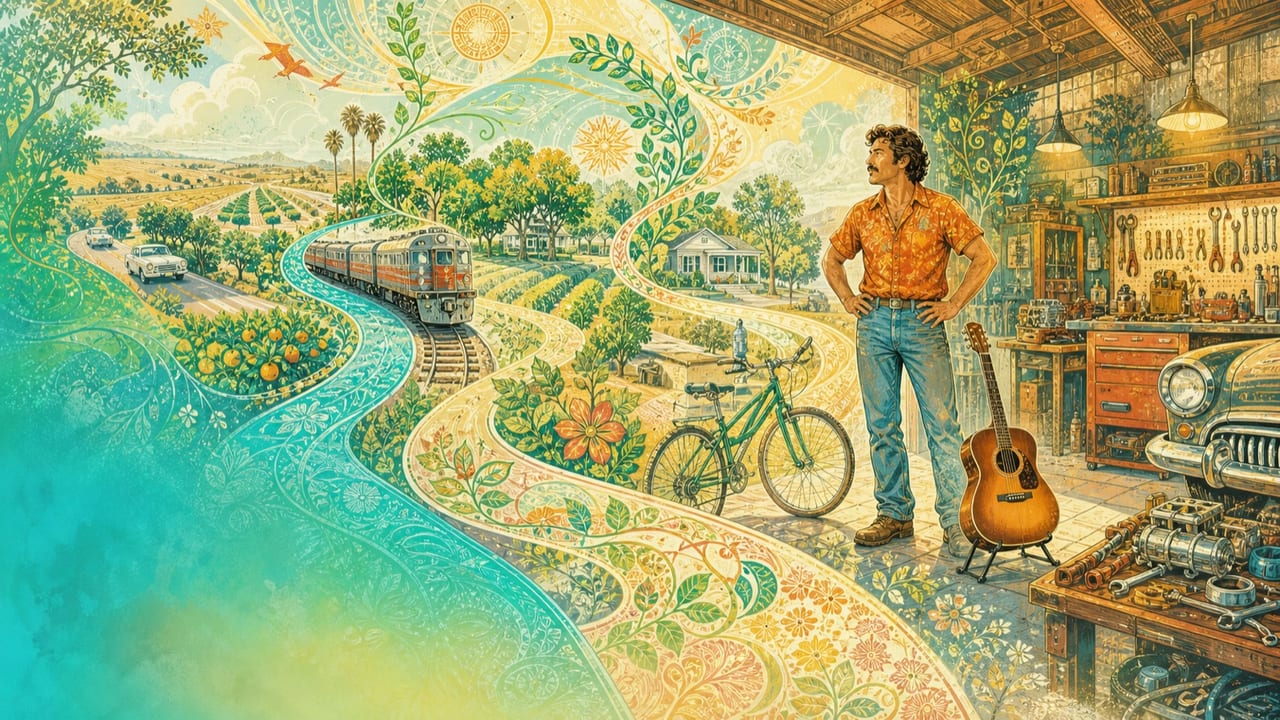
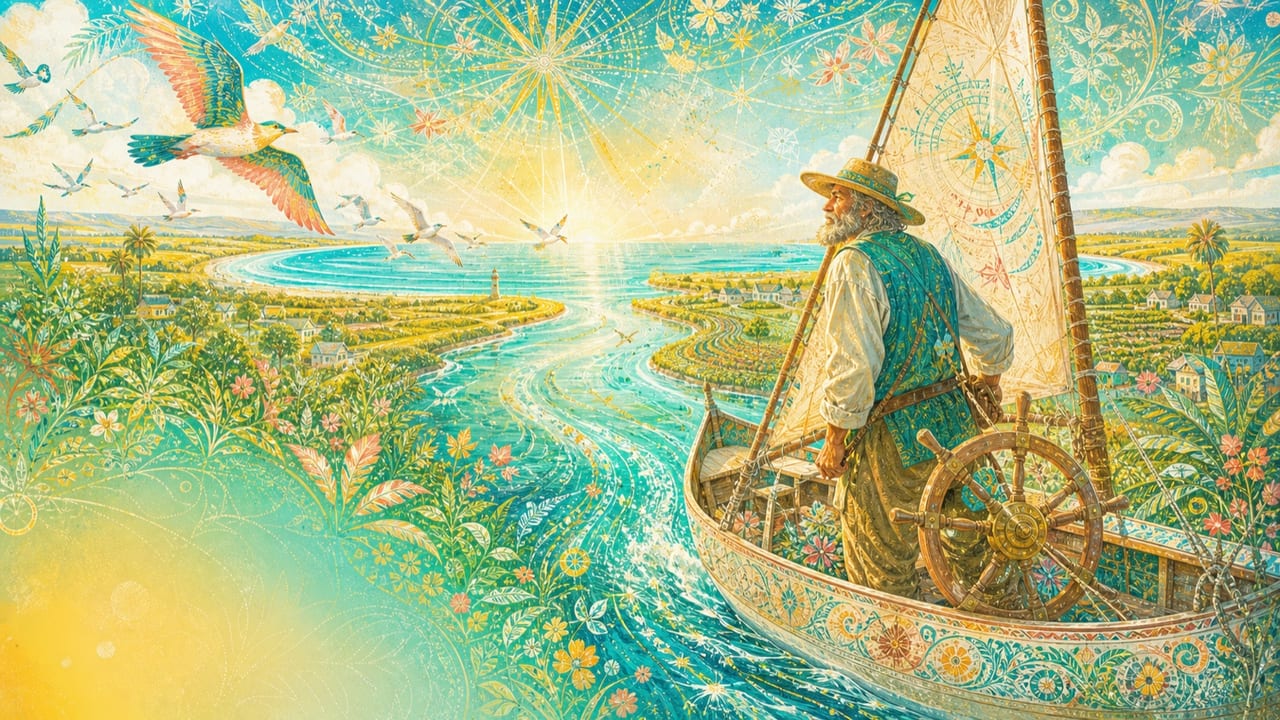
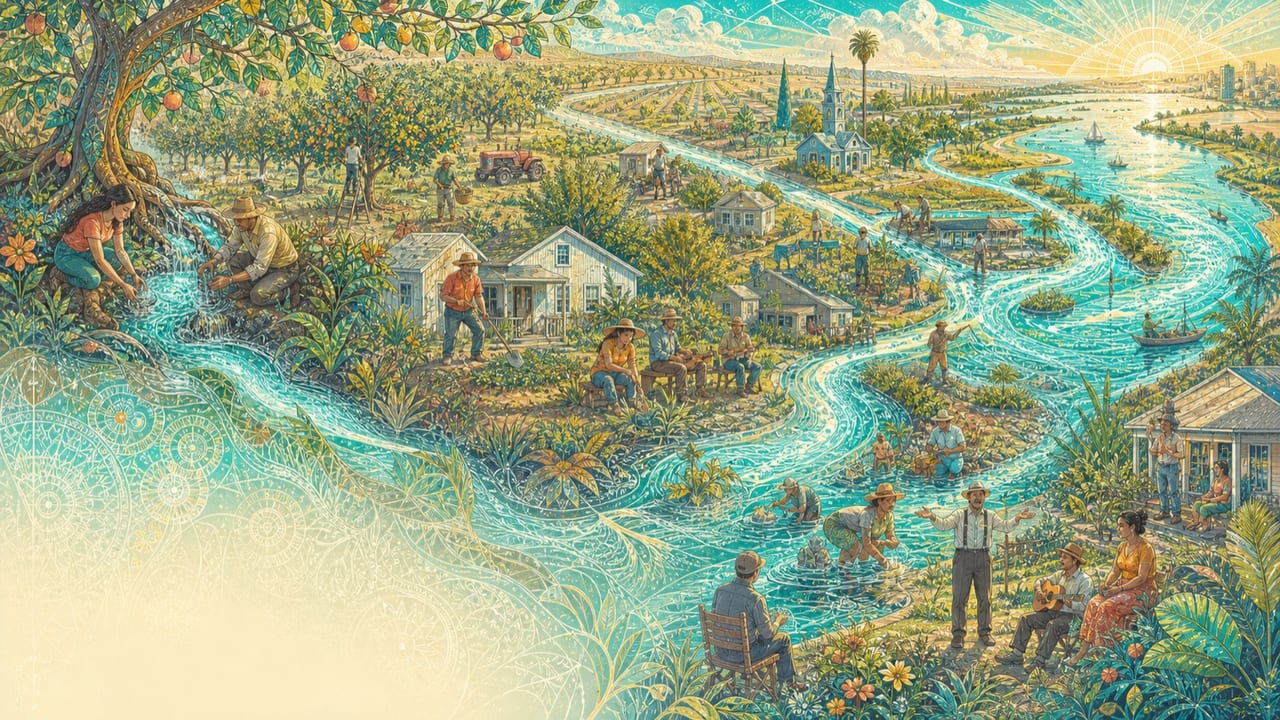
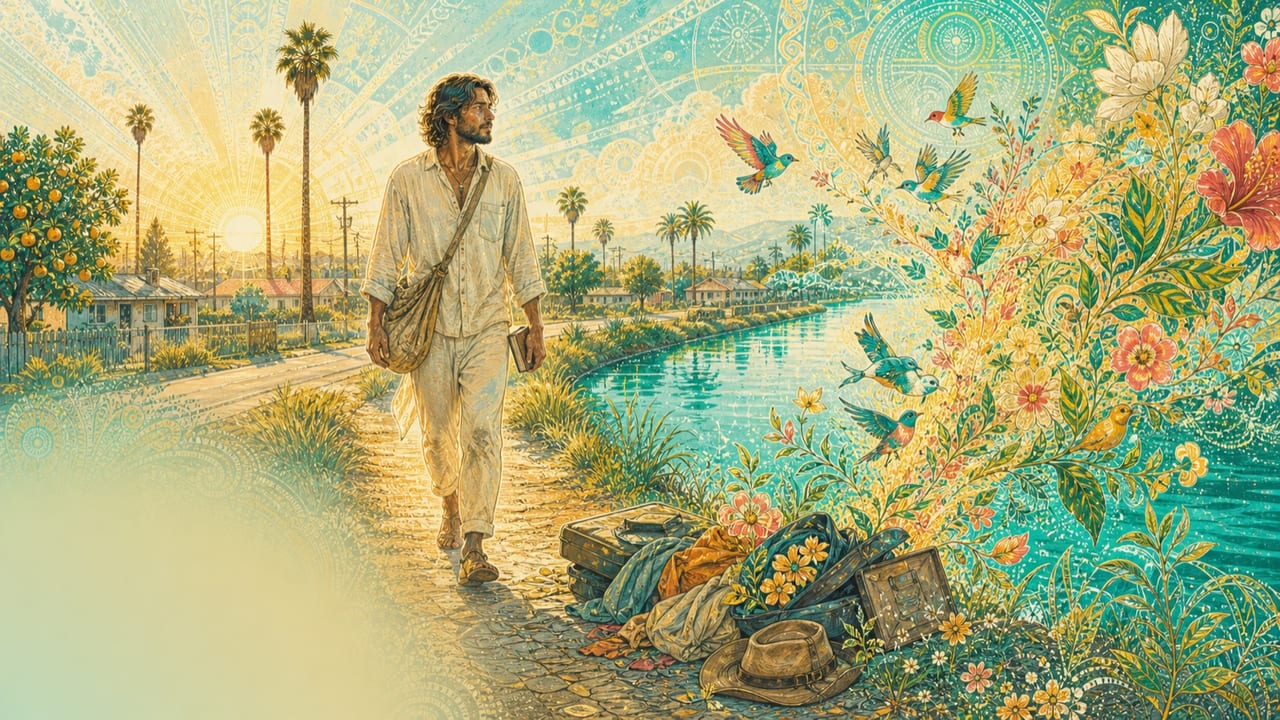
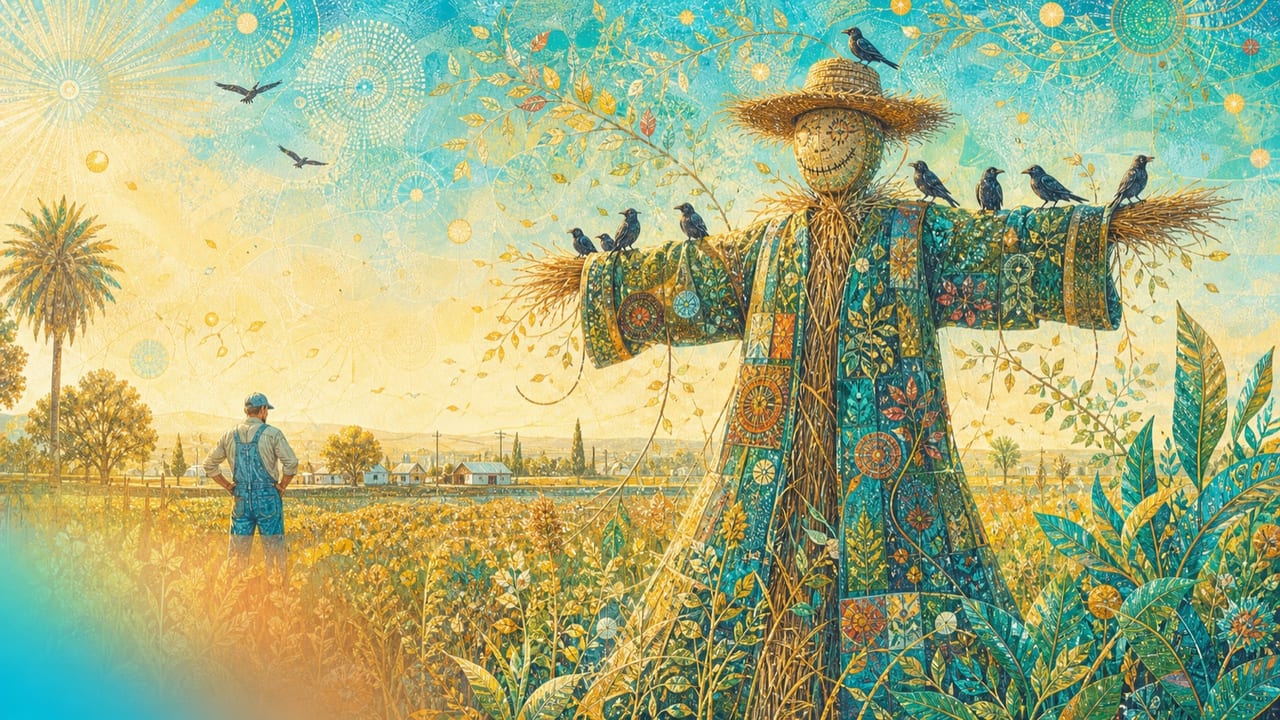
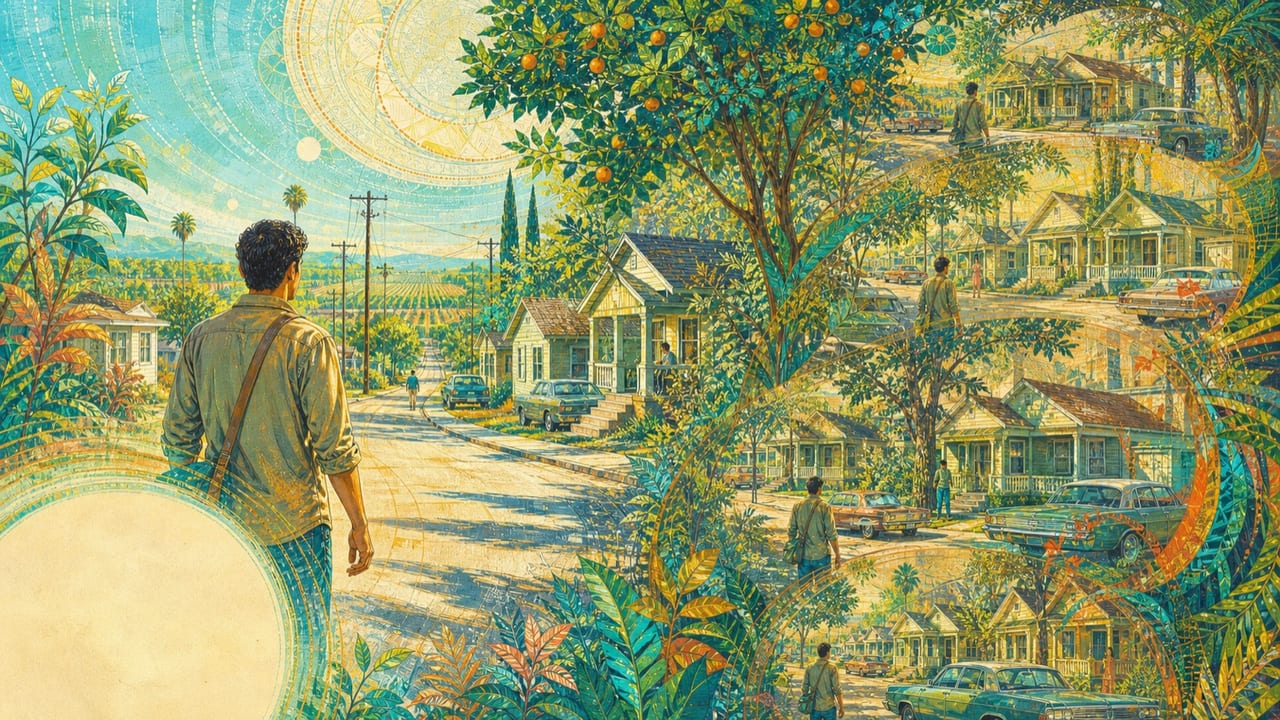
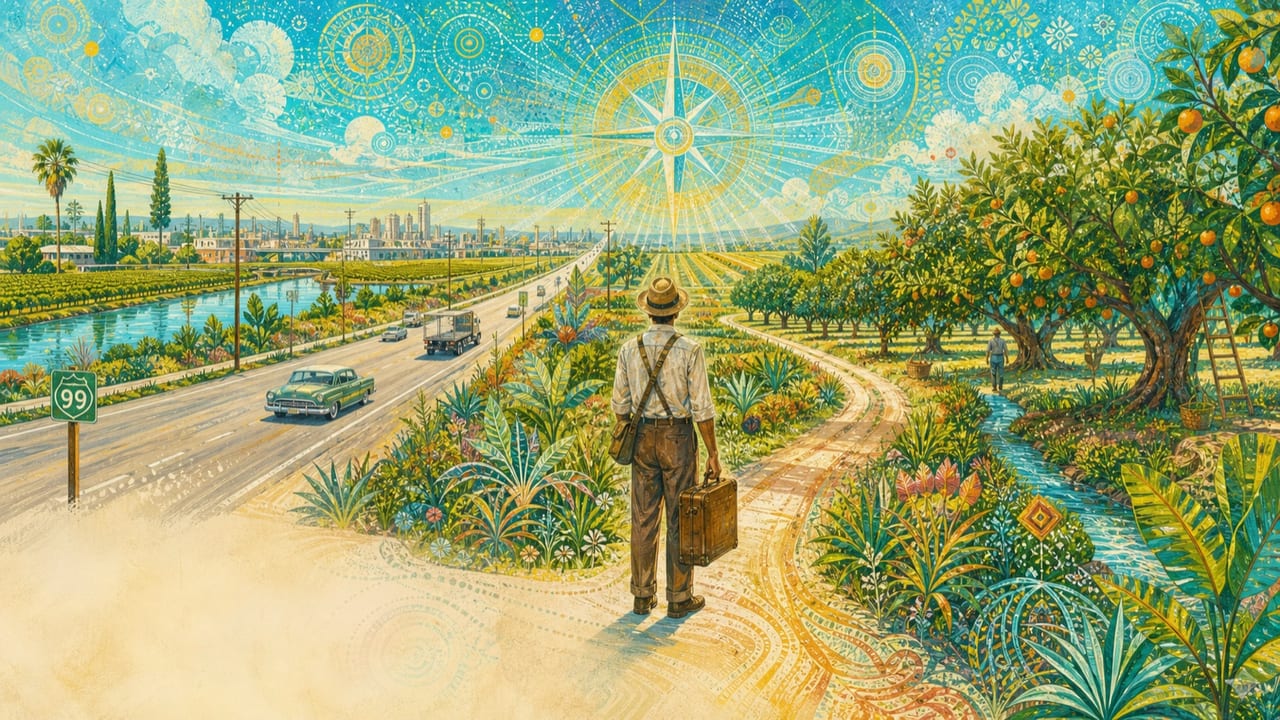
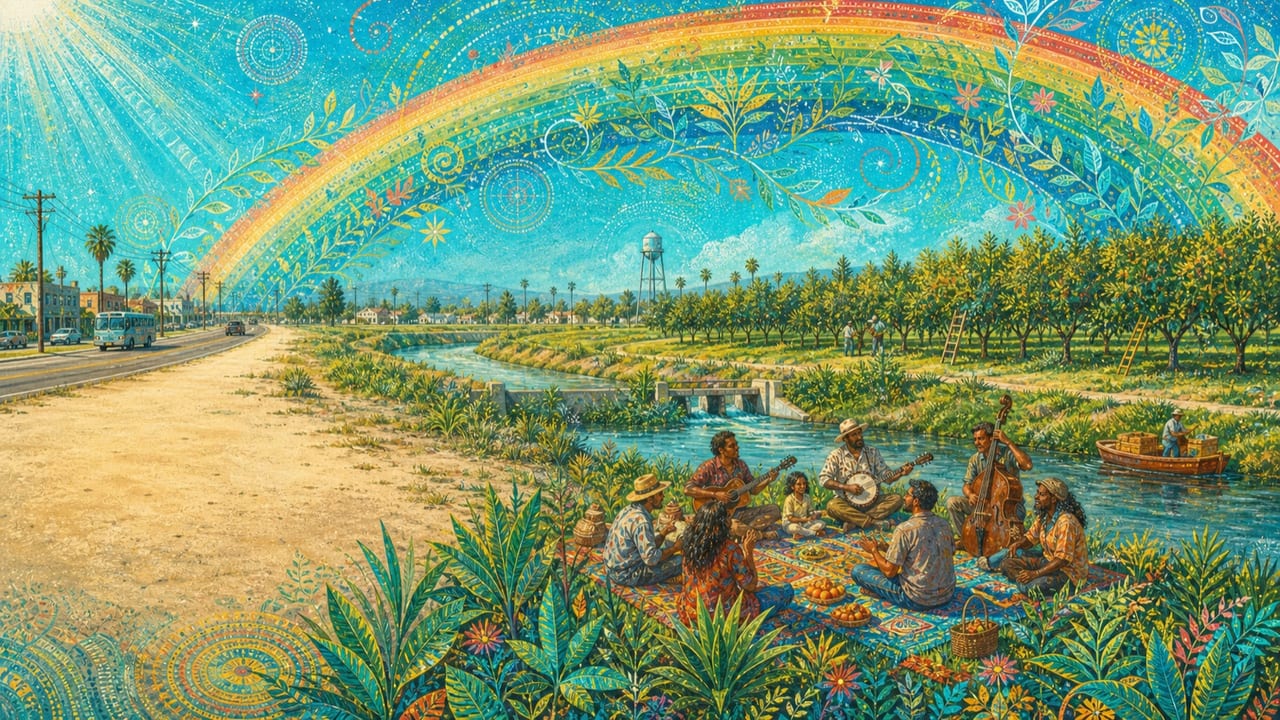
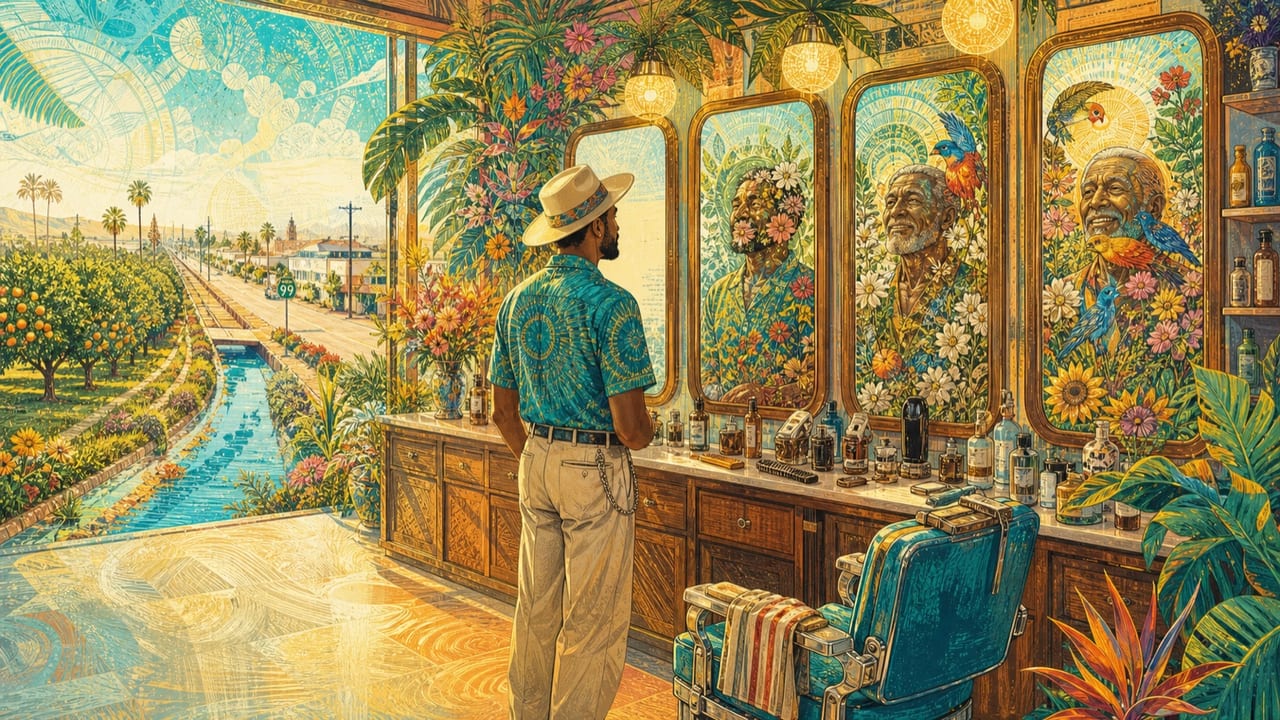
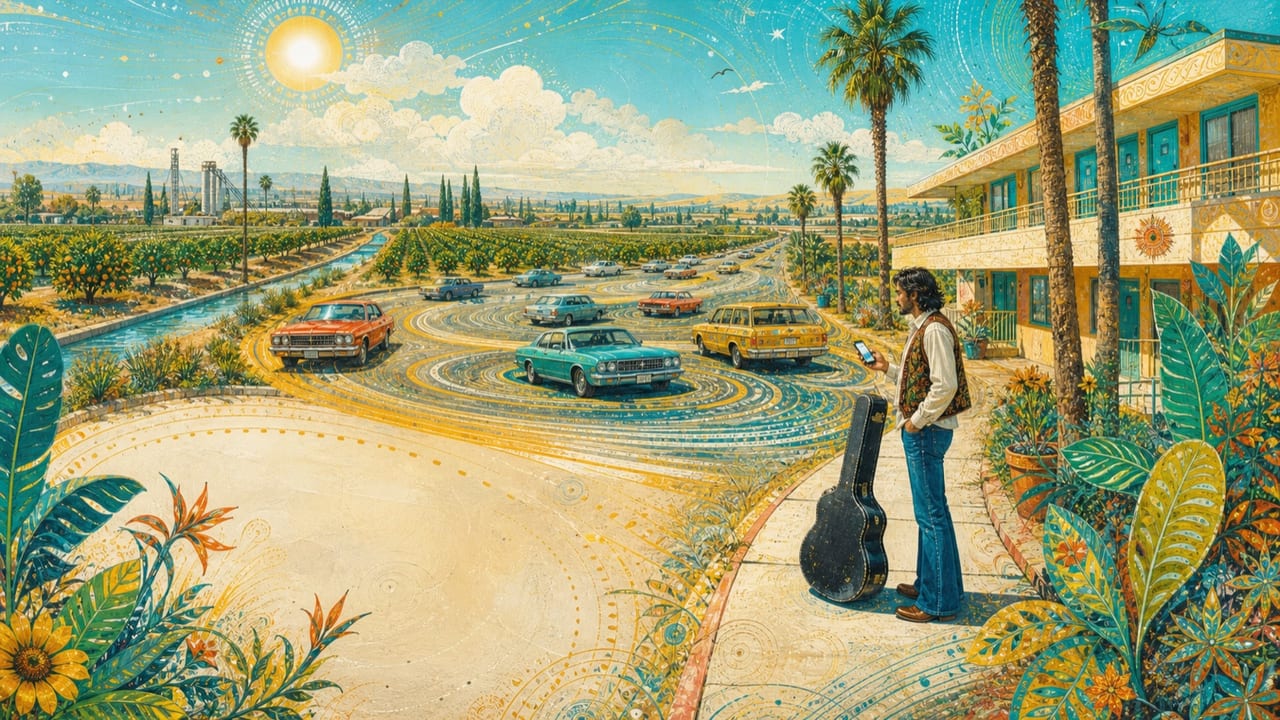
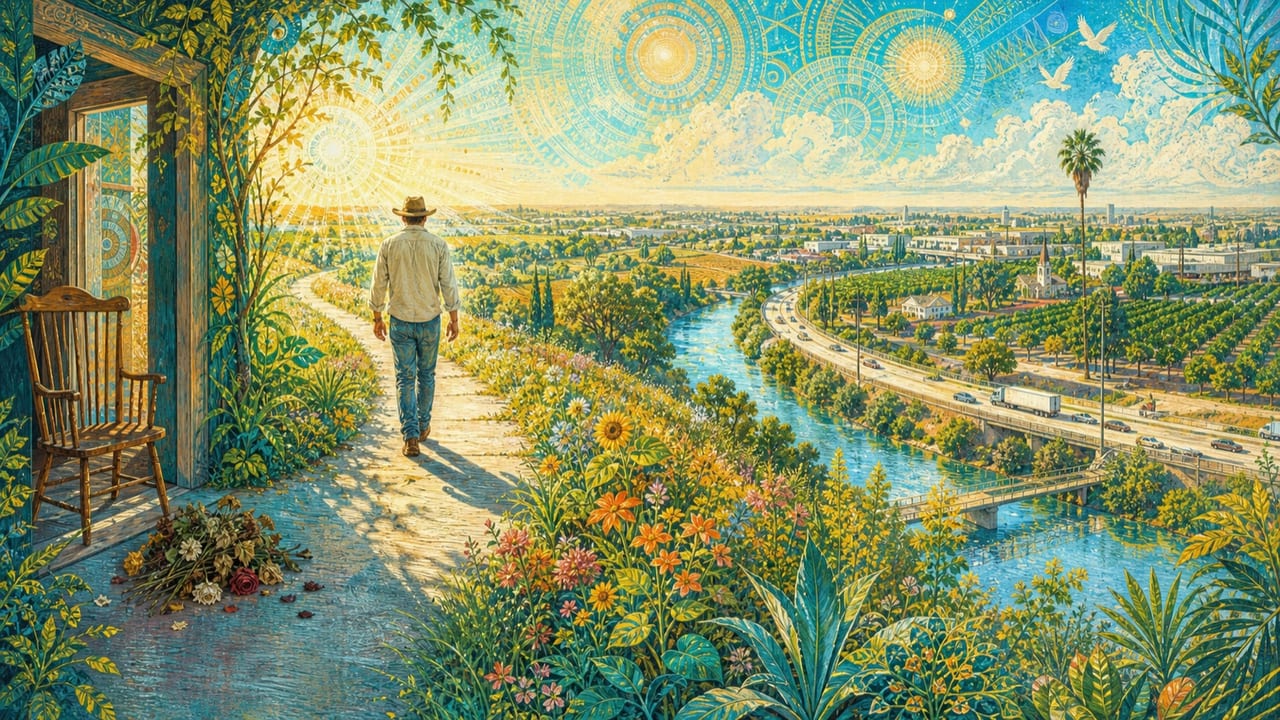
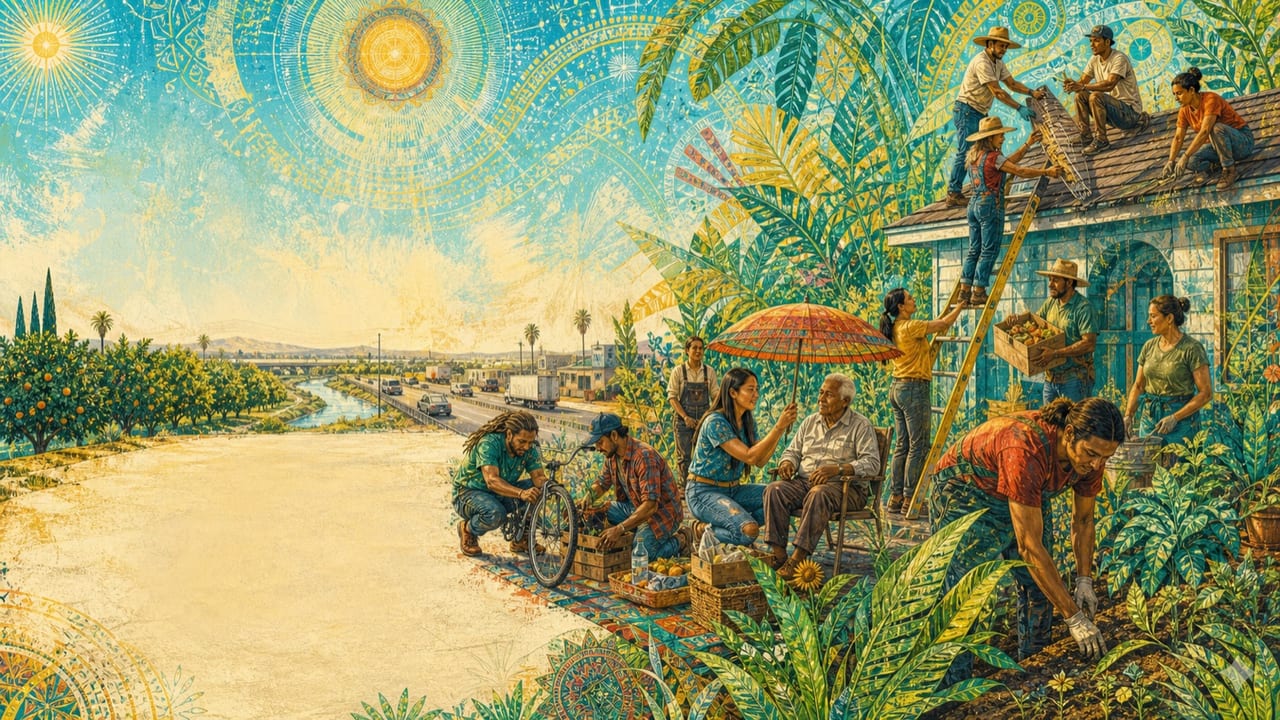
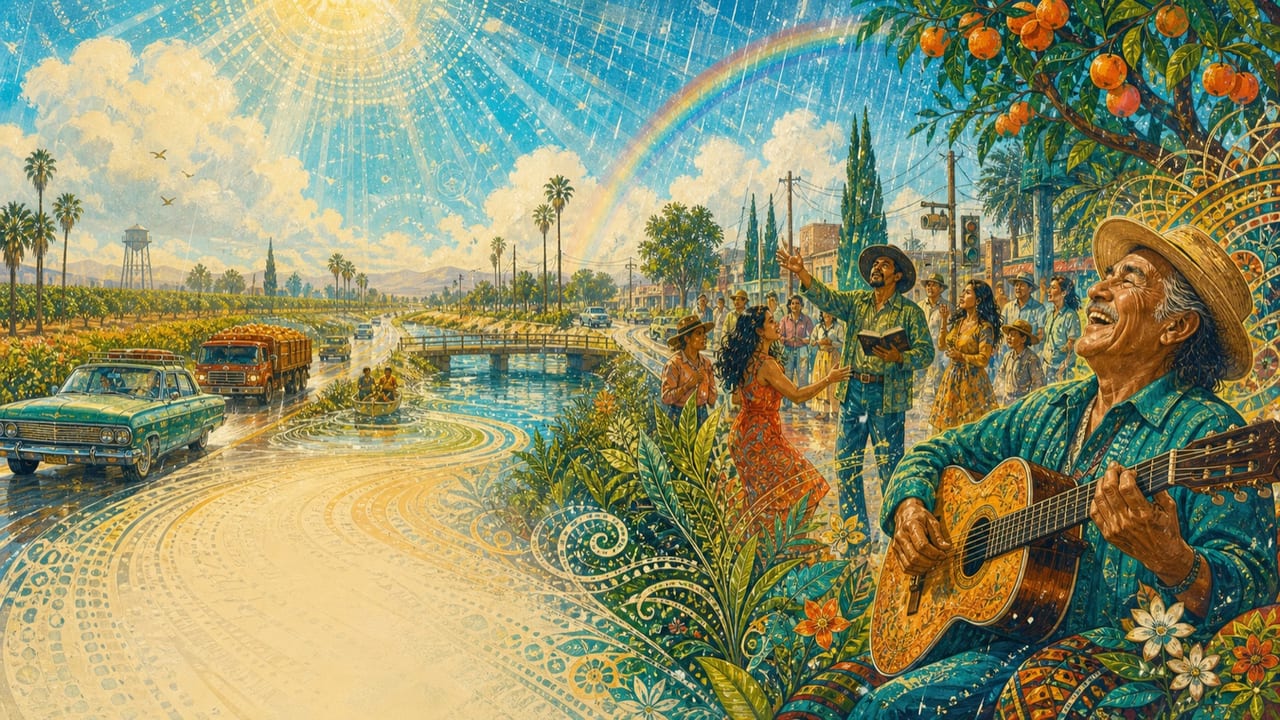
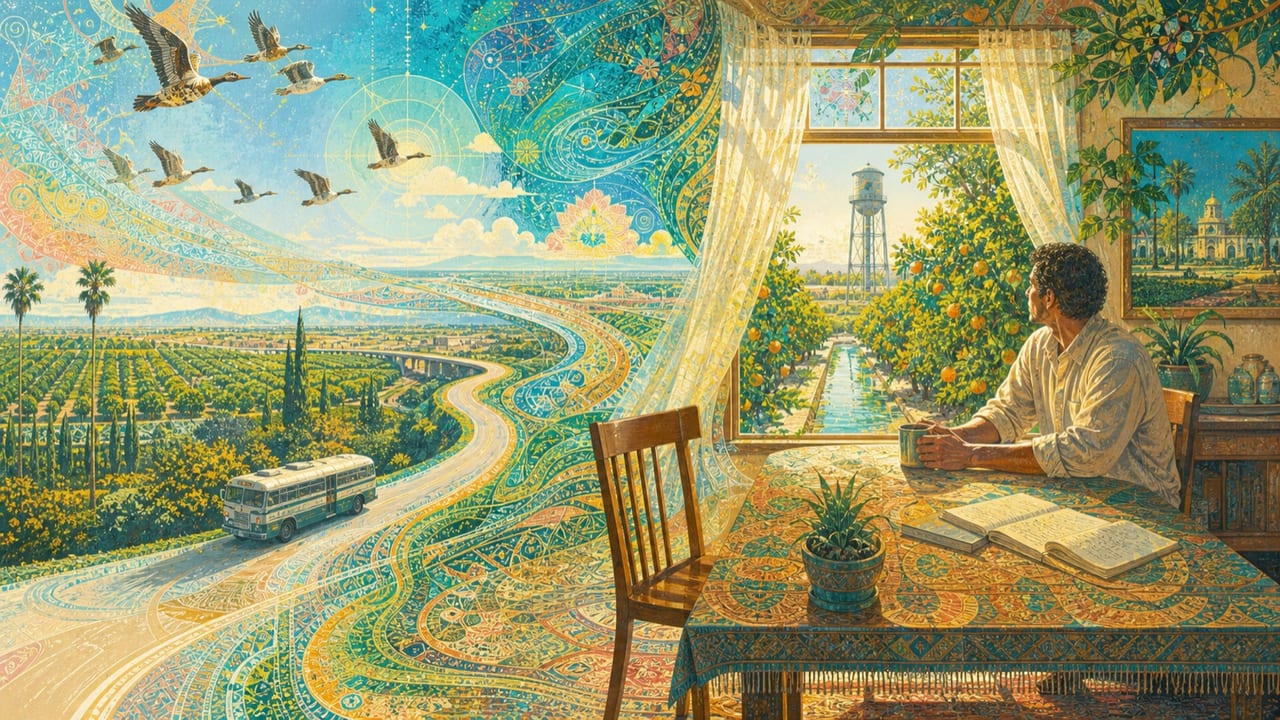
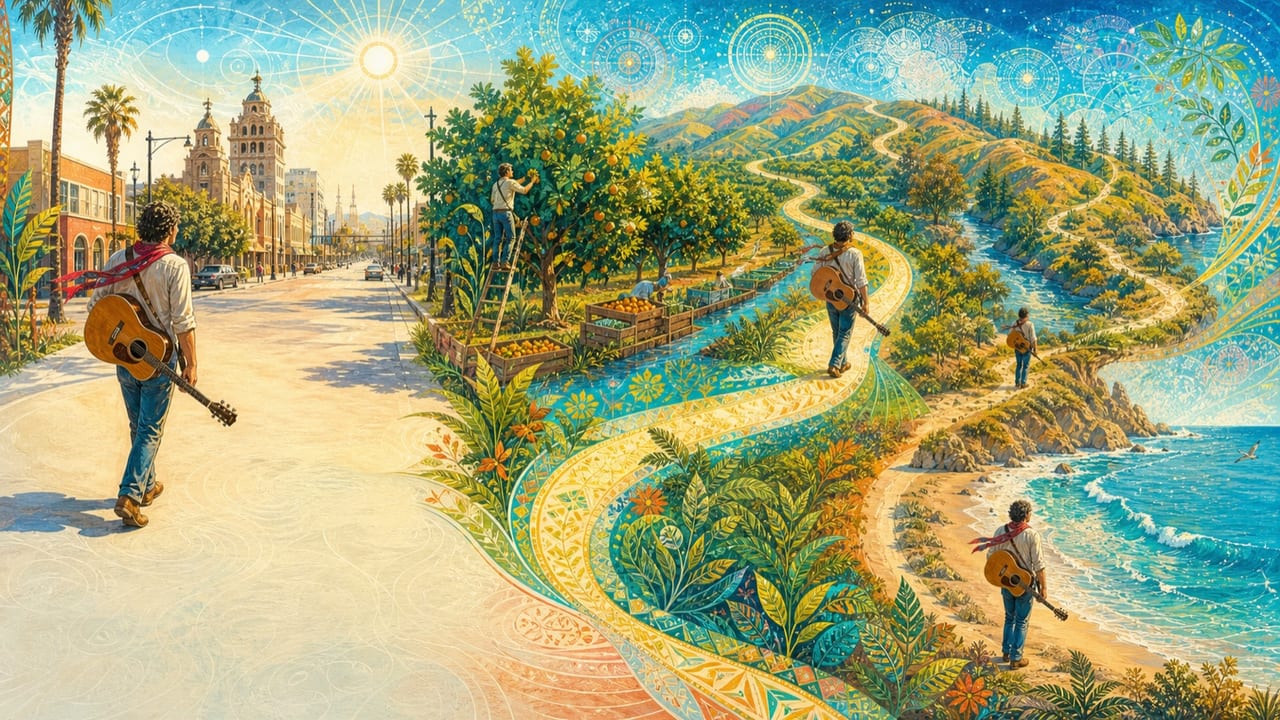
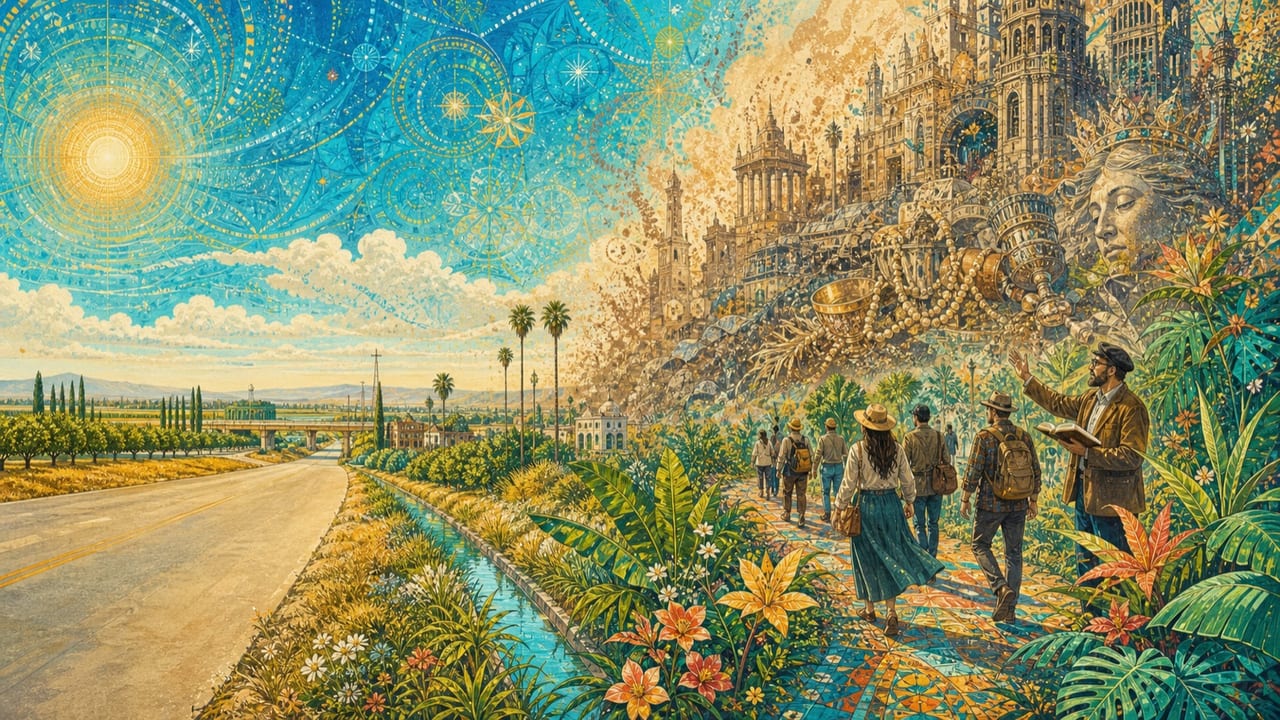
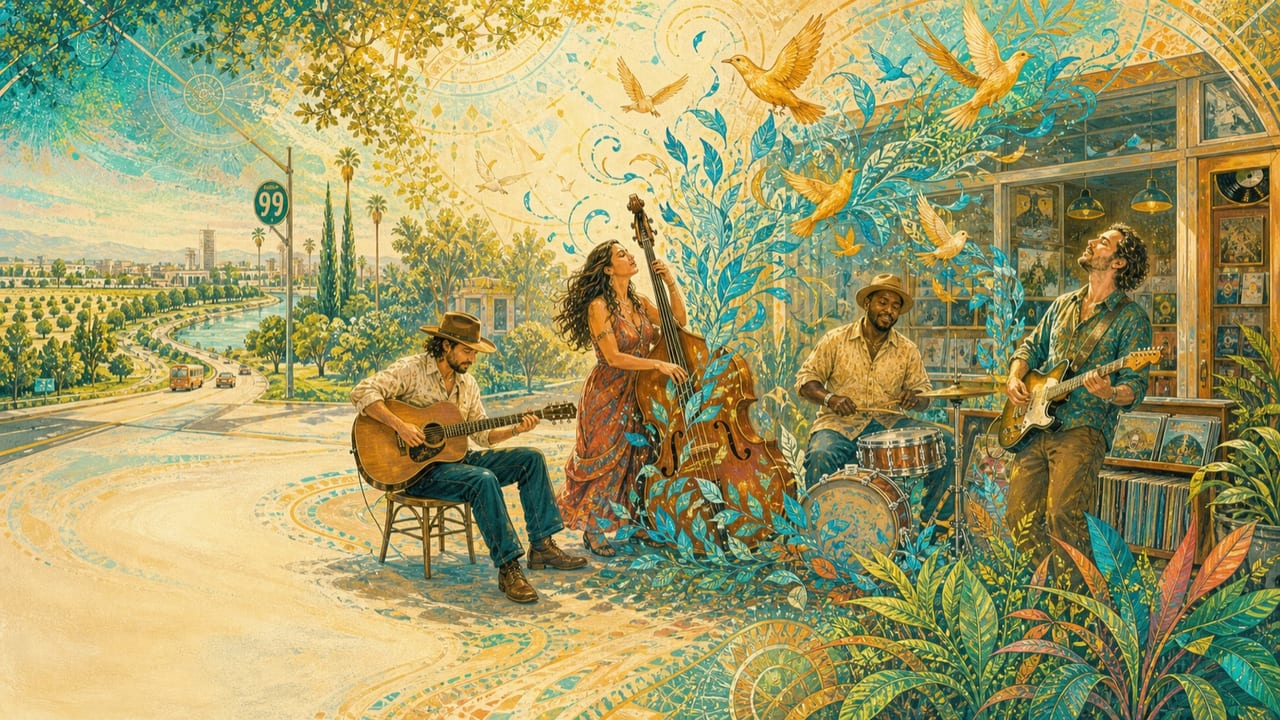
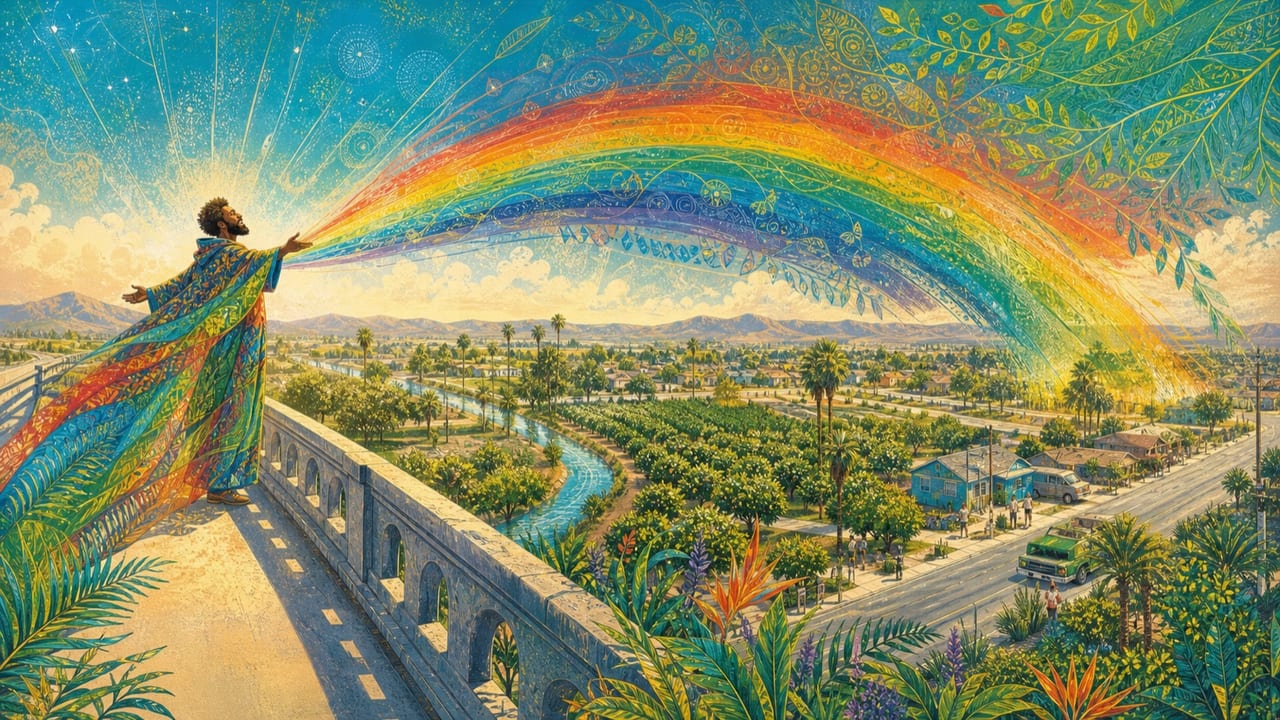
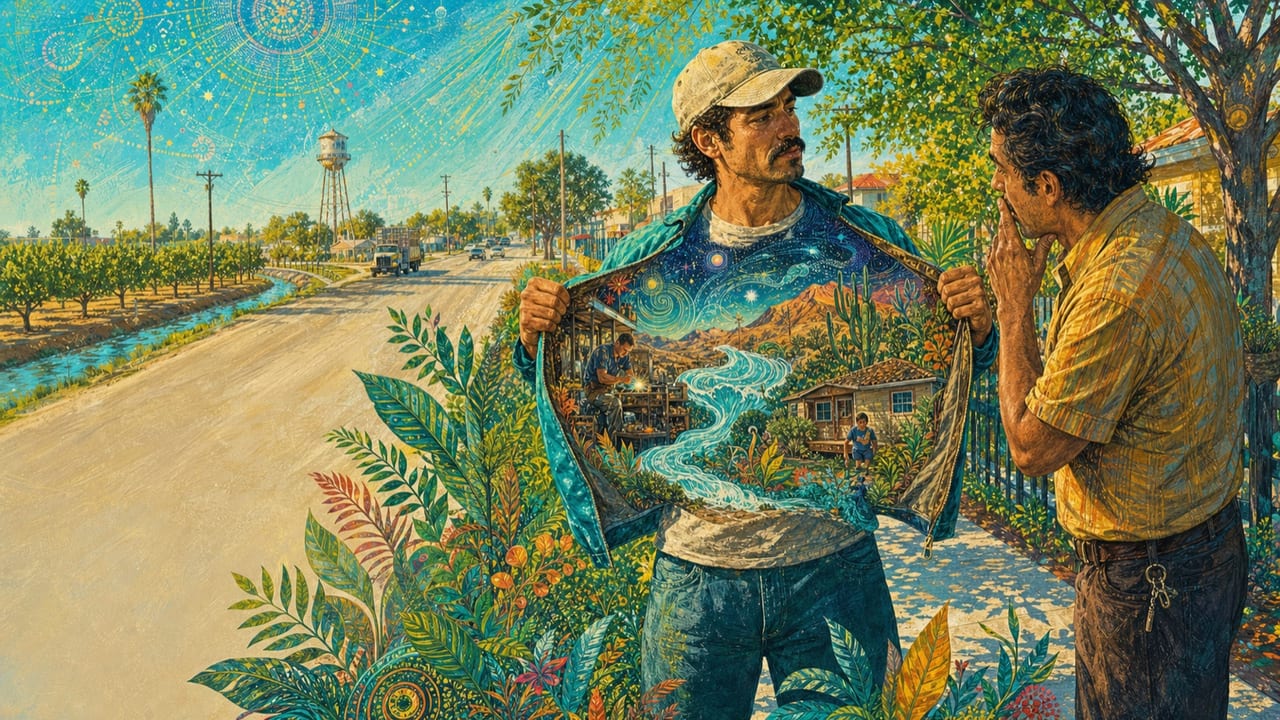
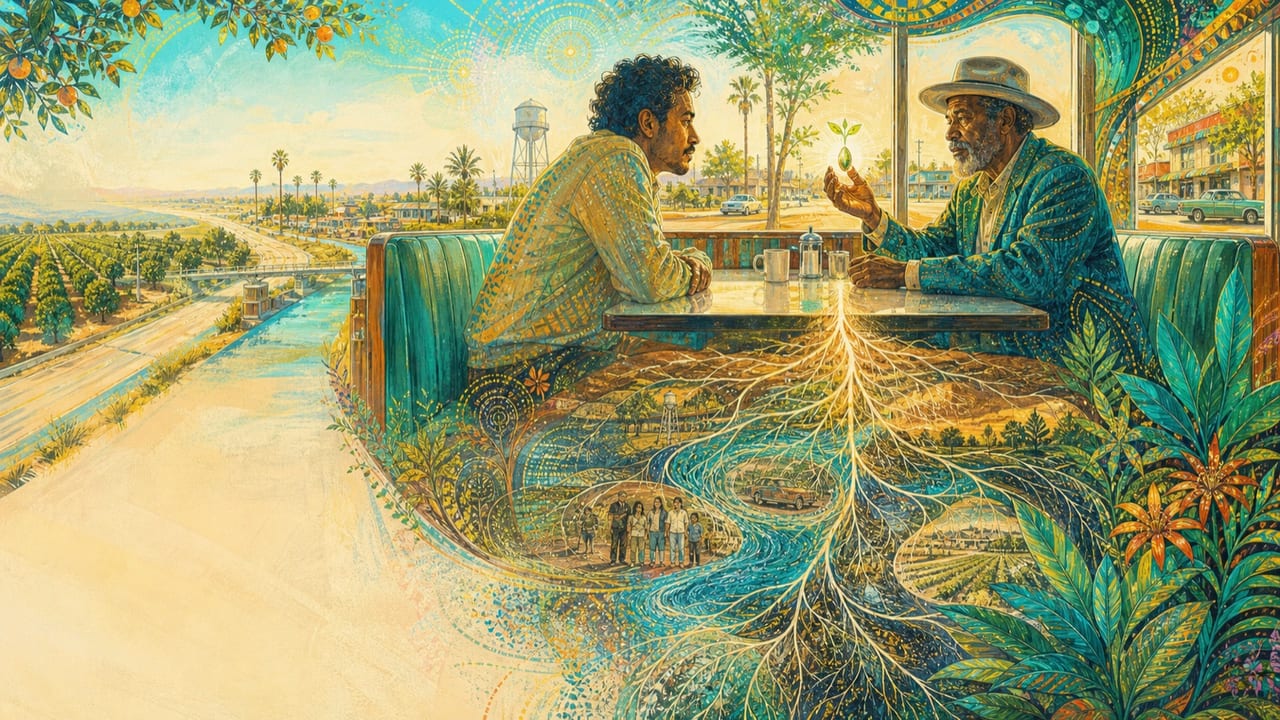
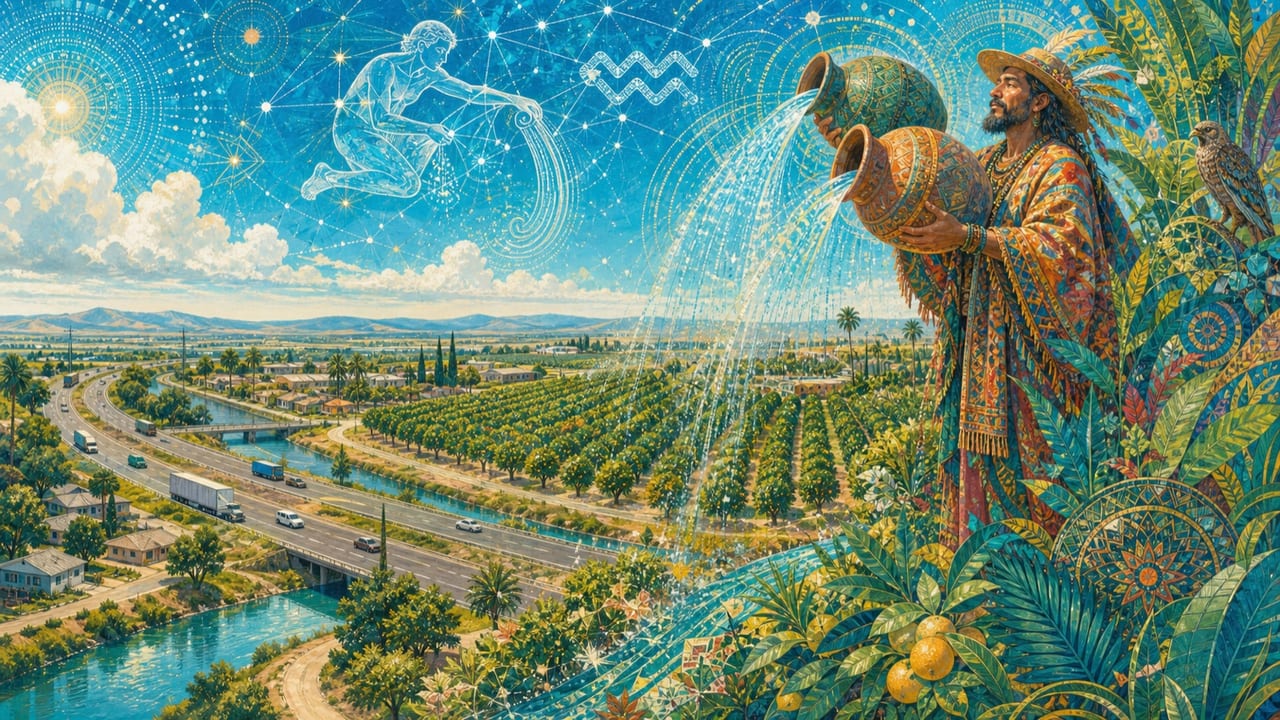
Love songs, road songs, strange visions, hard streets and stubborn hope. Explore Douglas’s growing catalog, listen where recordings are available, and read the lyrics collected here.
Illustrated songs
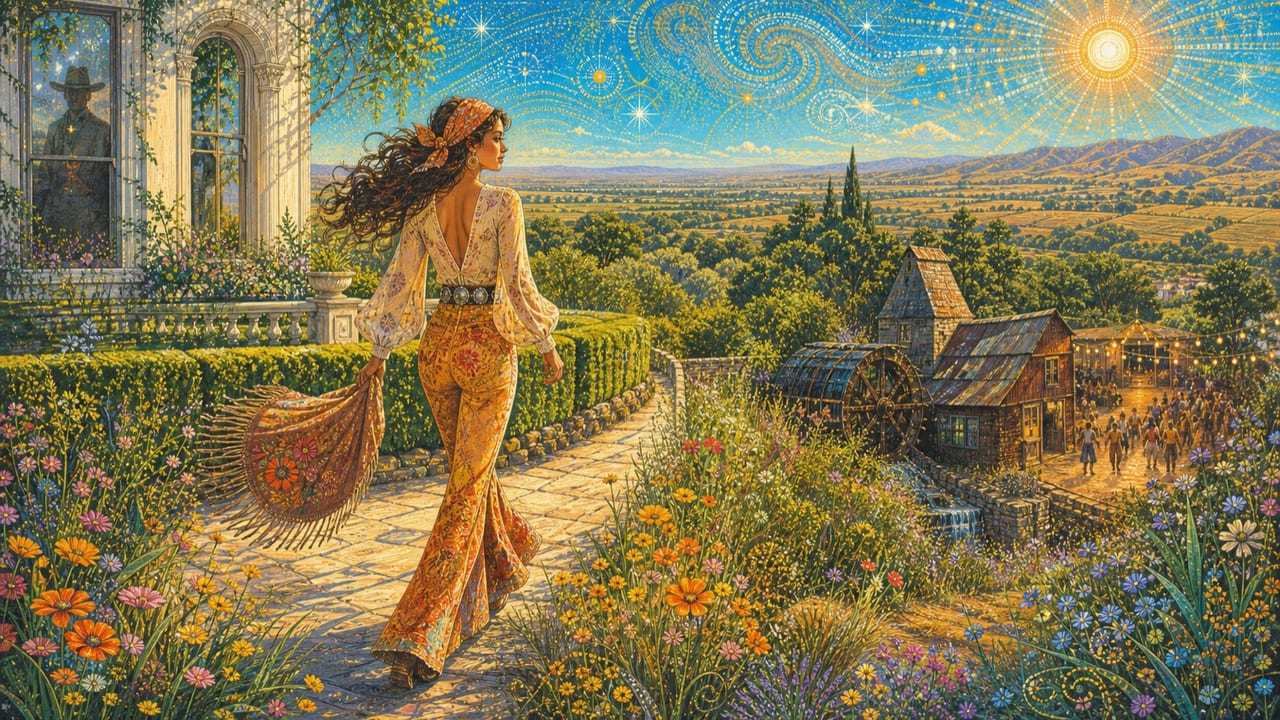
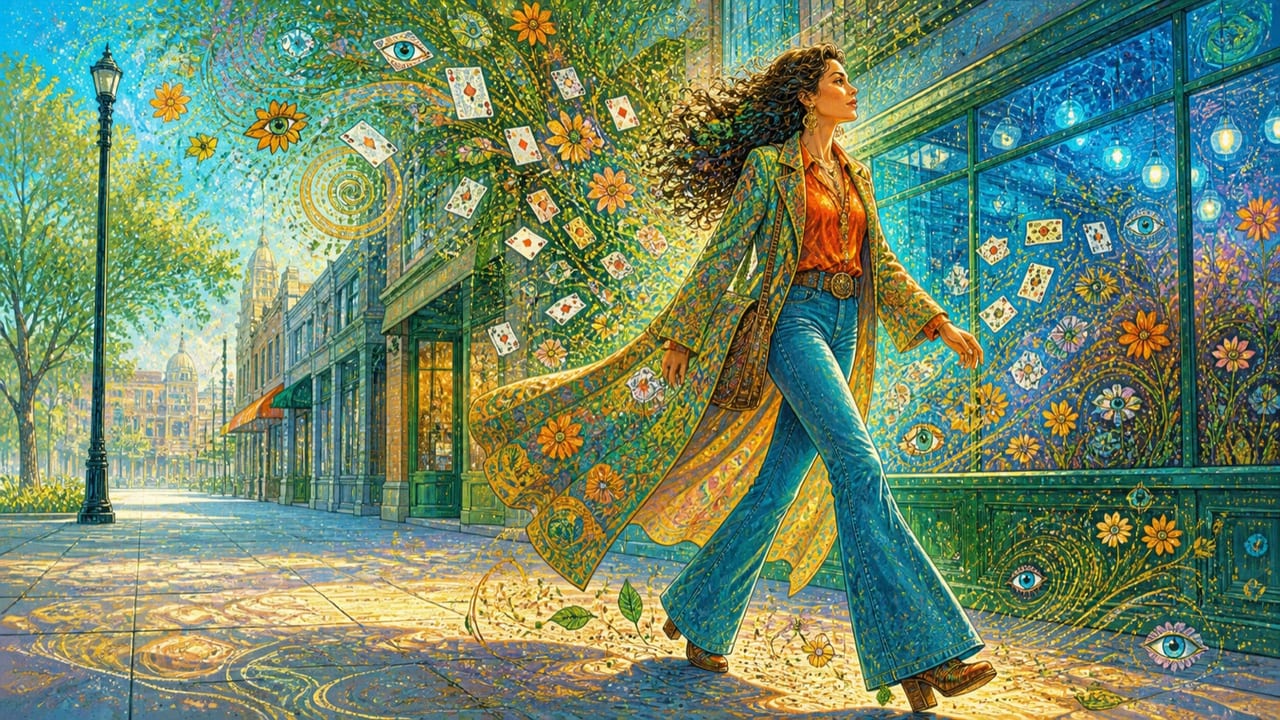
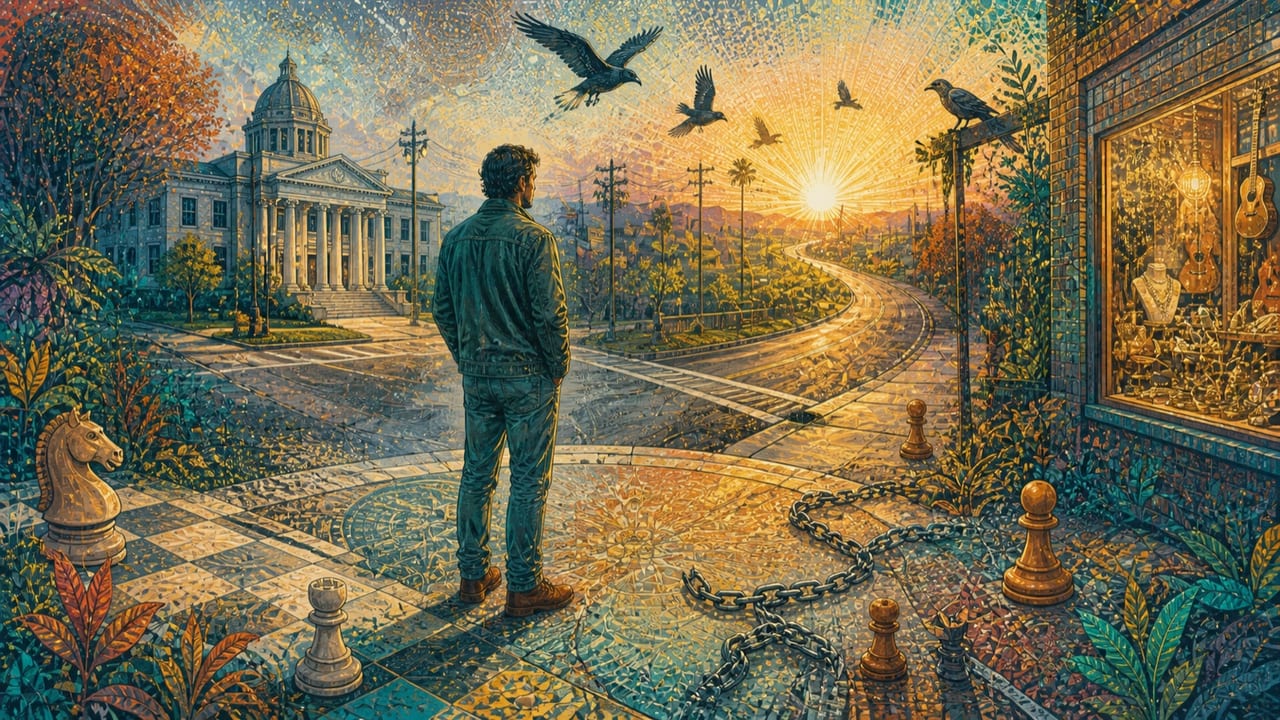
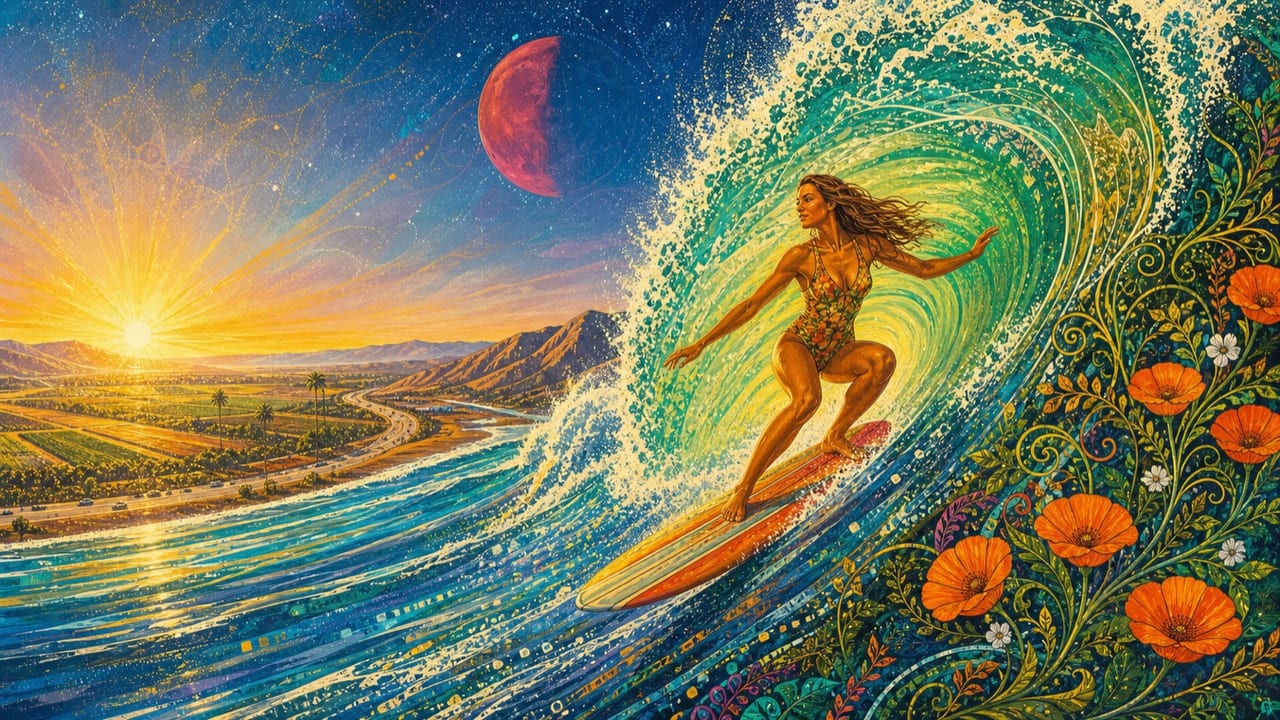
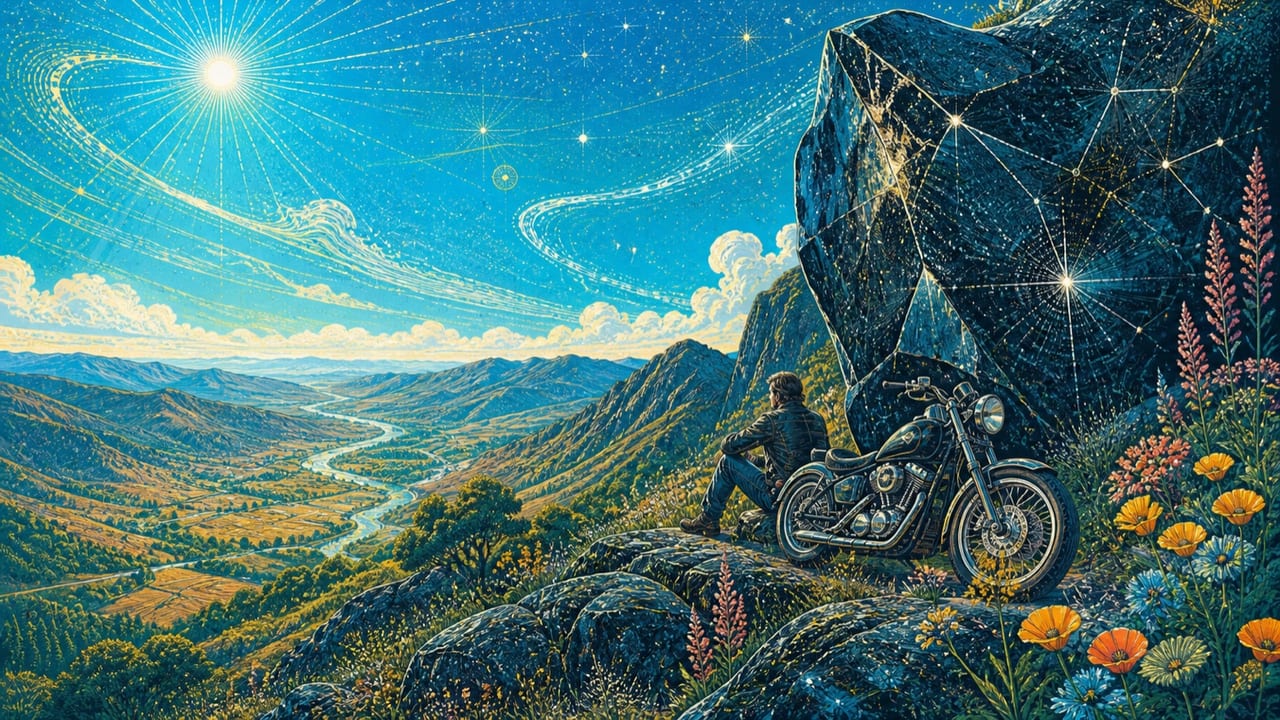
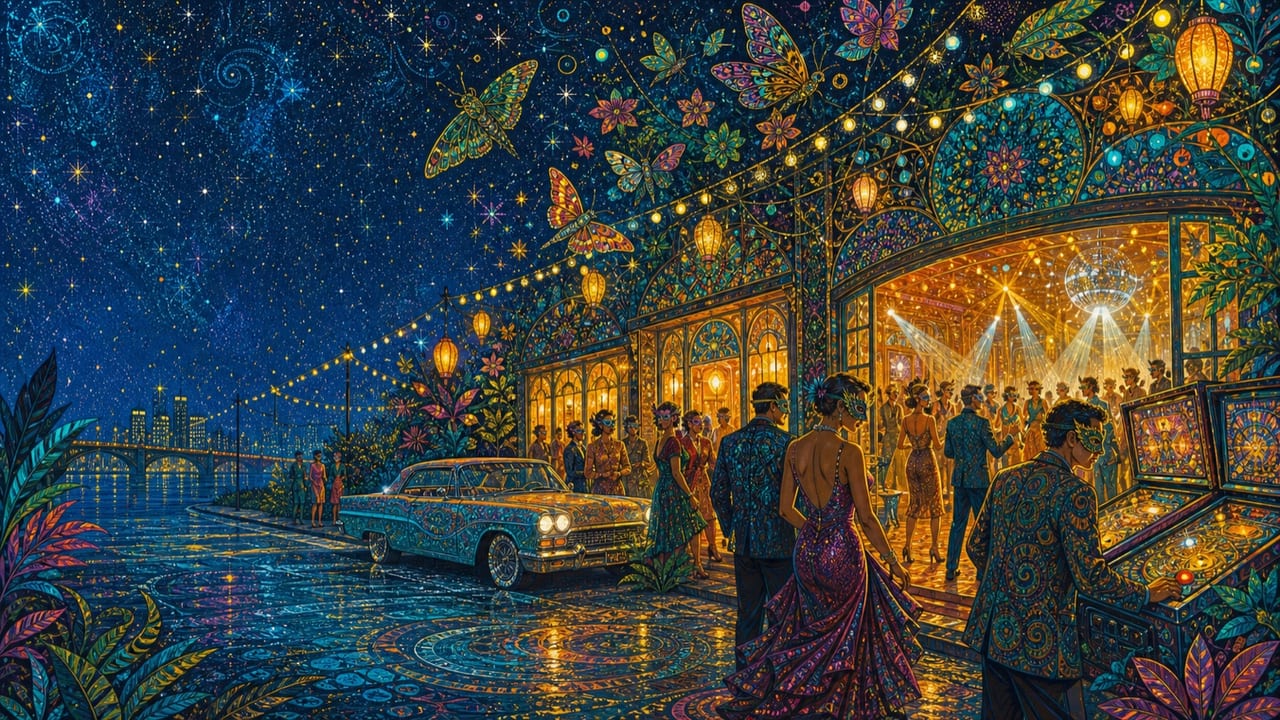
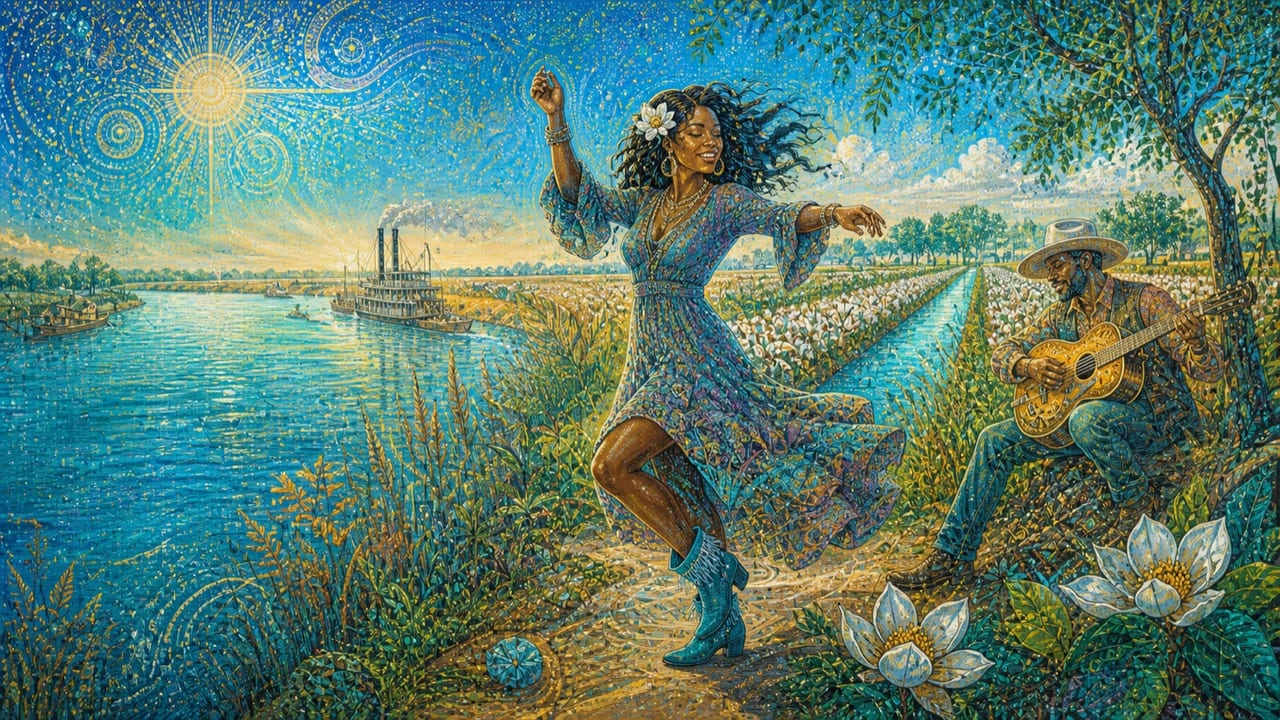
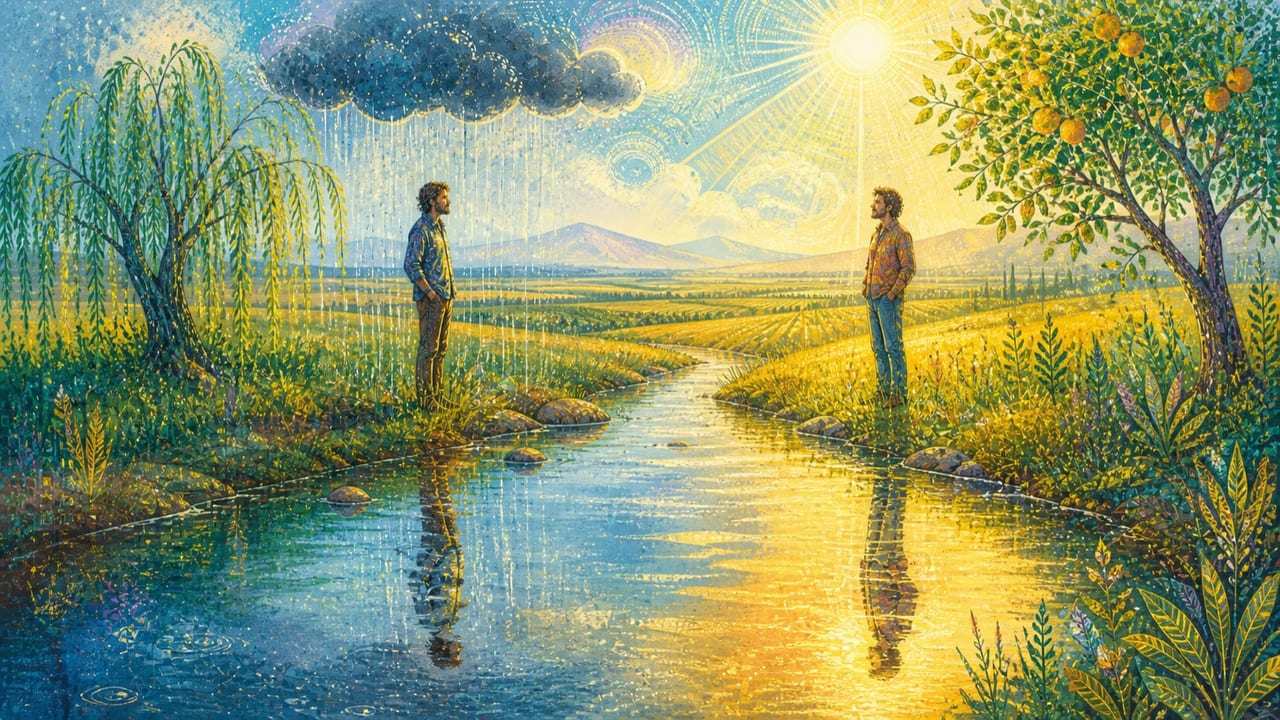
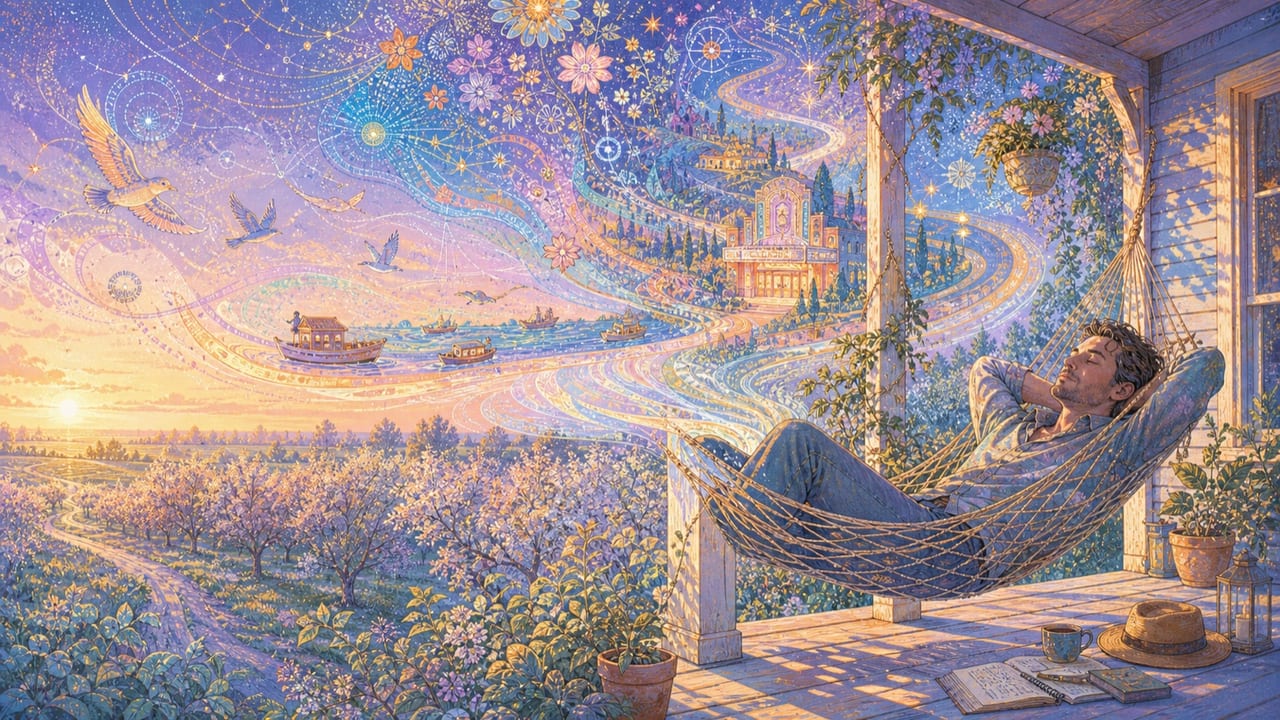
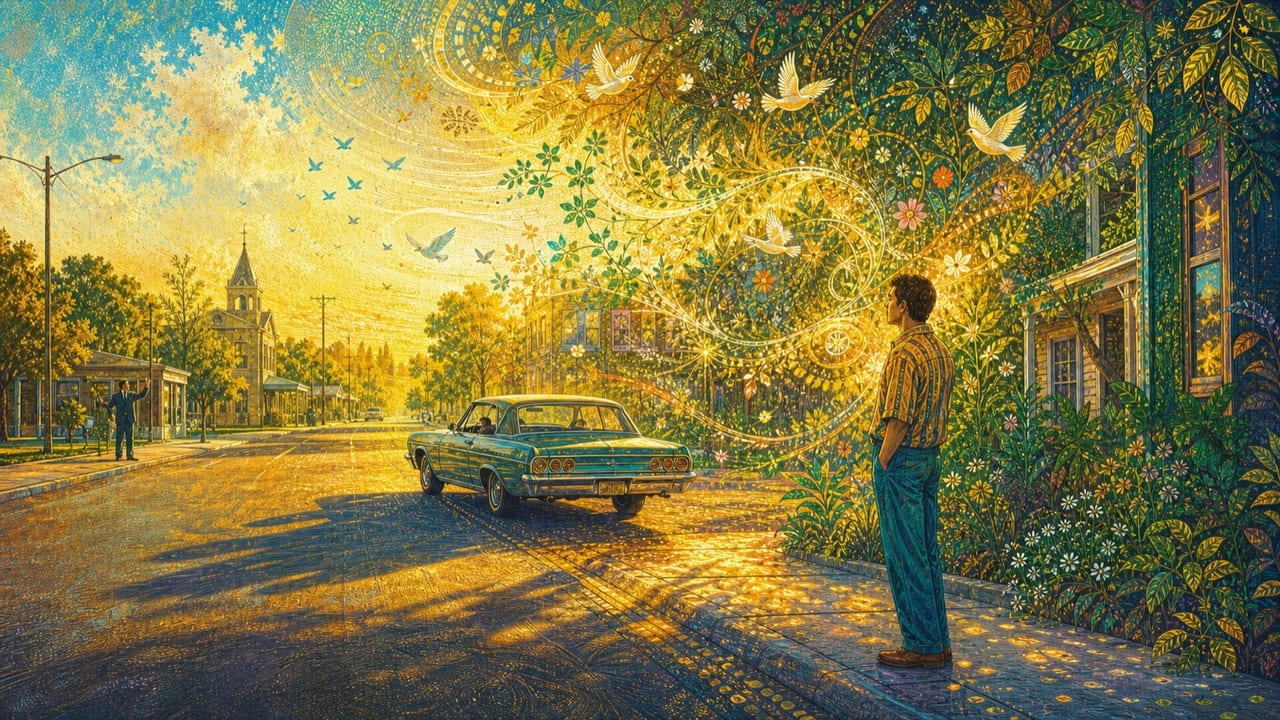
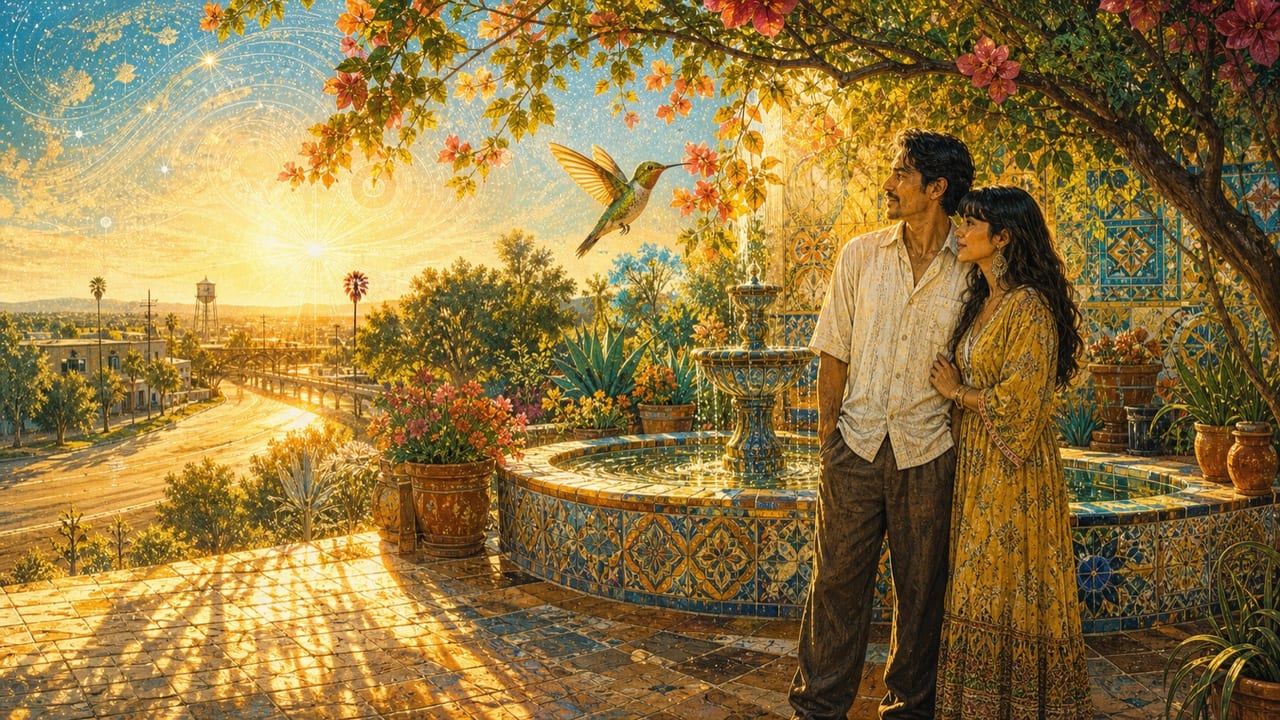
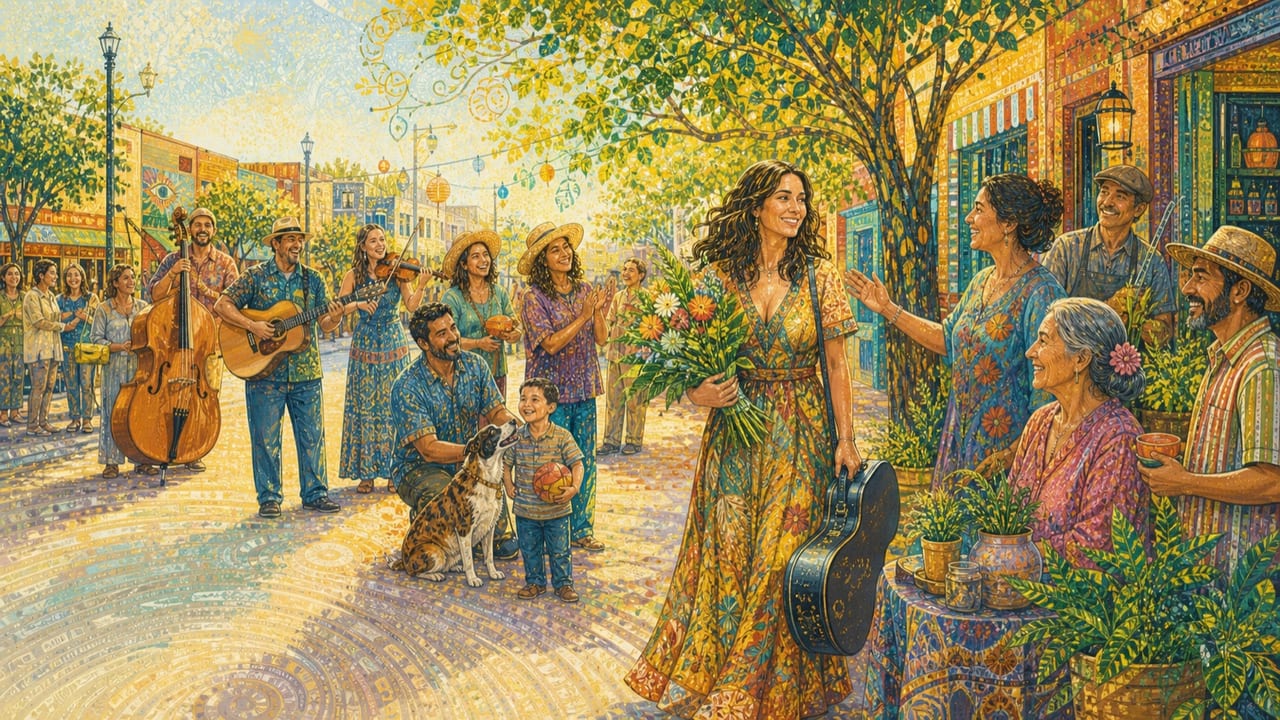
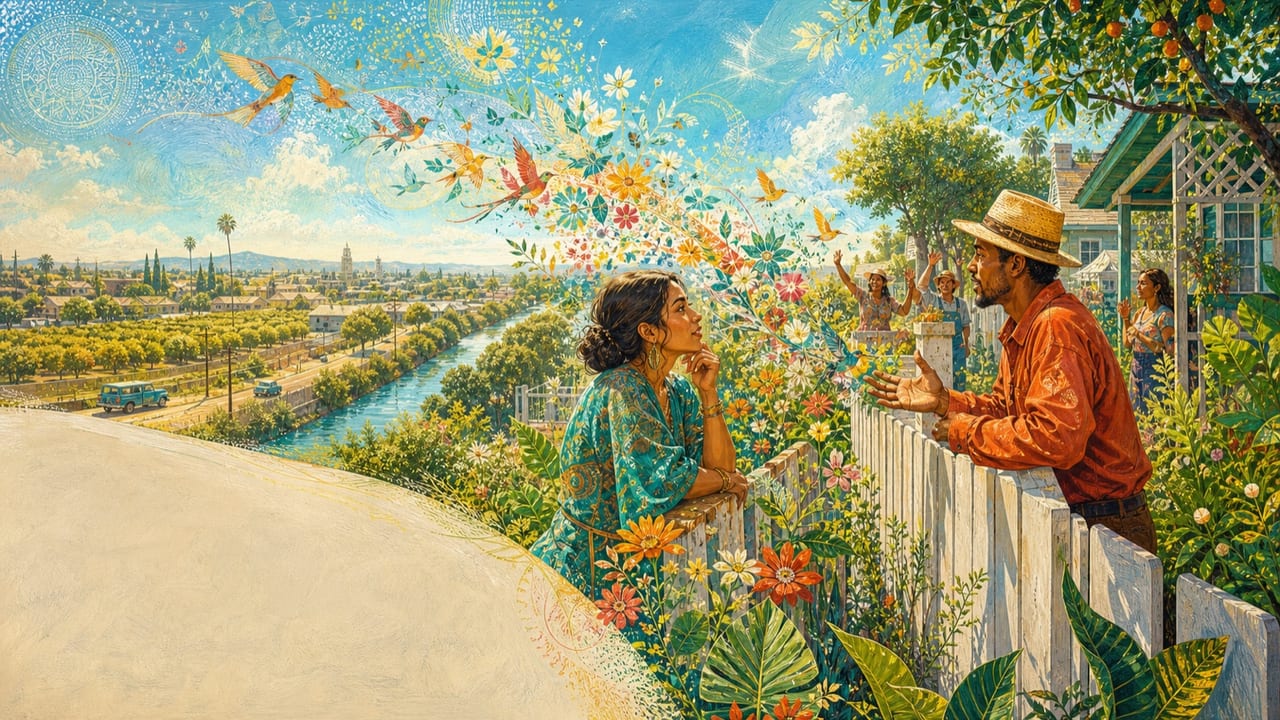
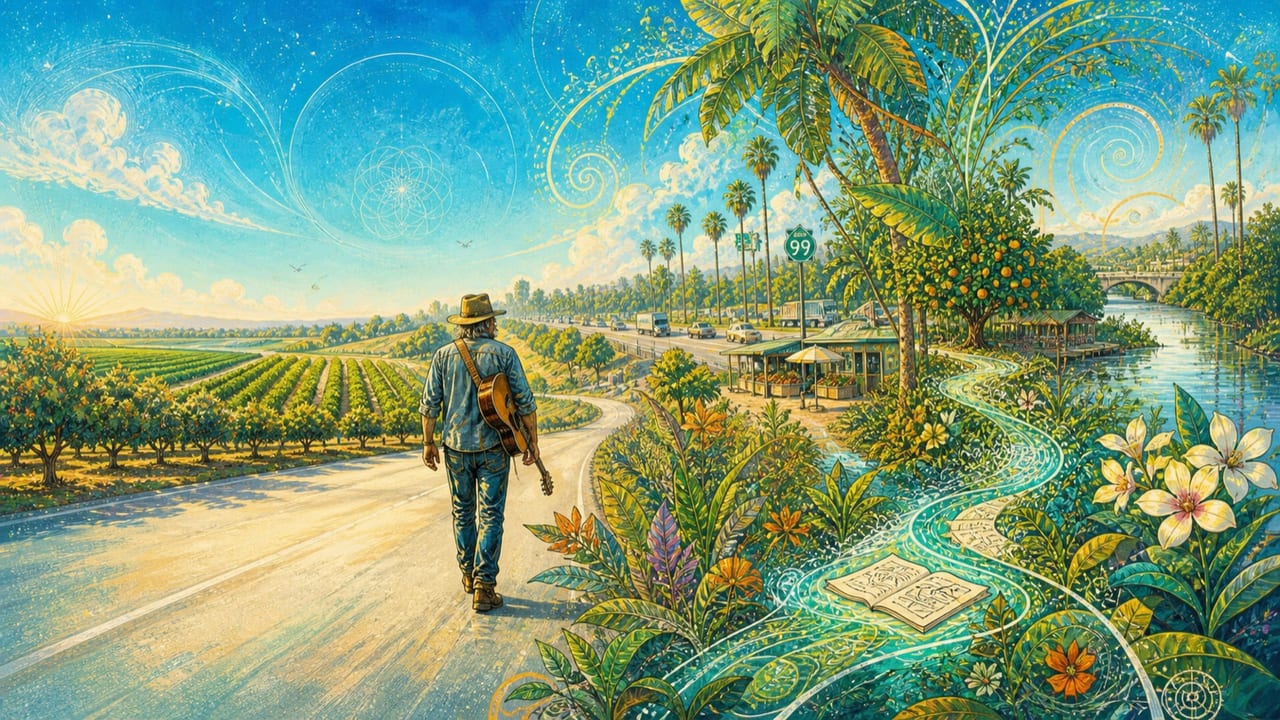
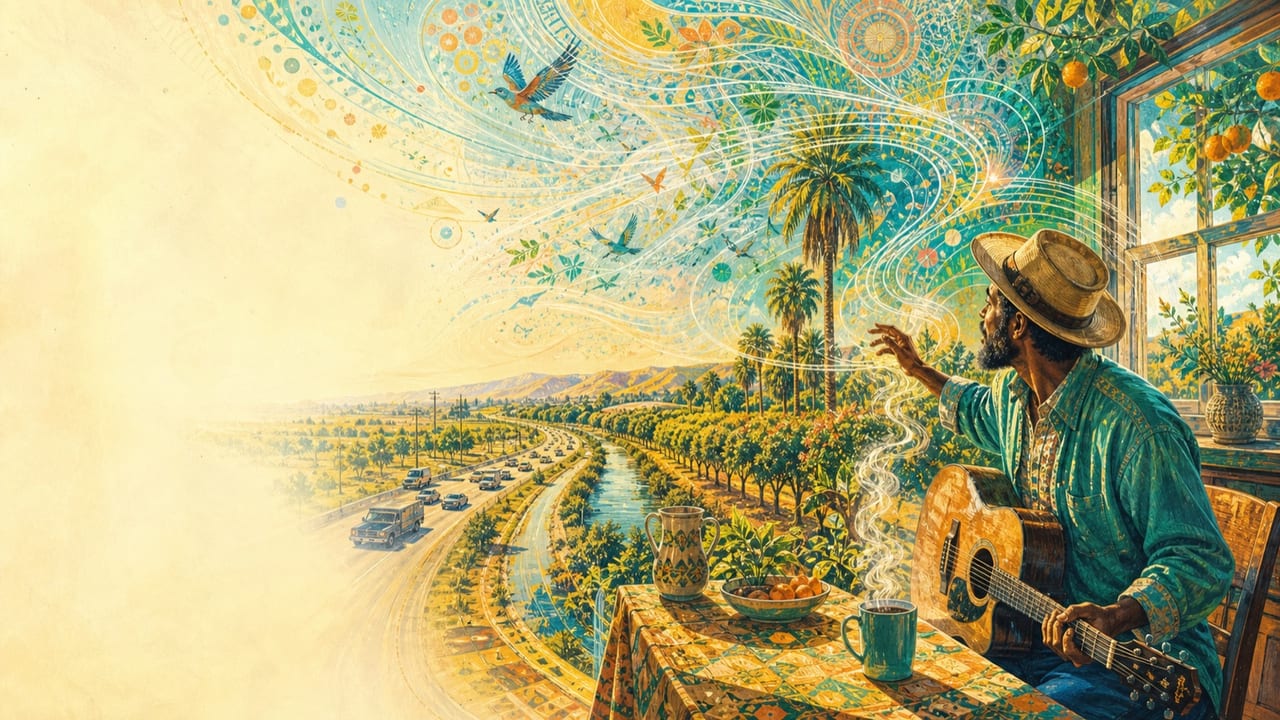
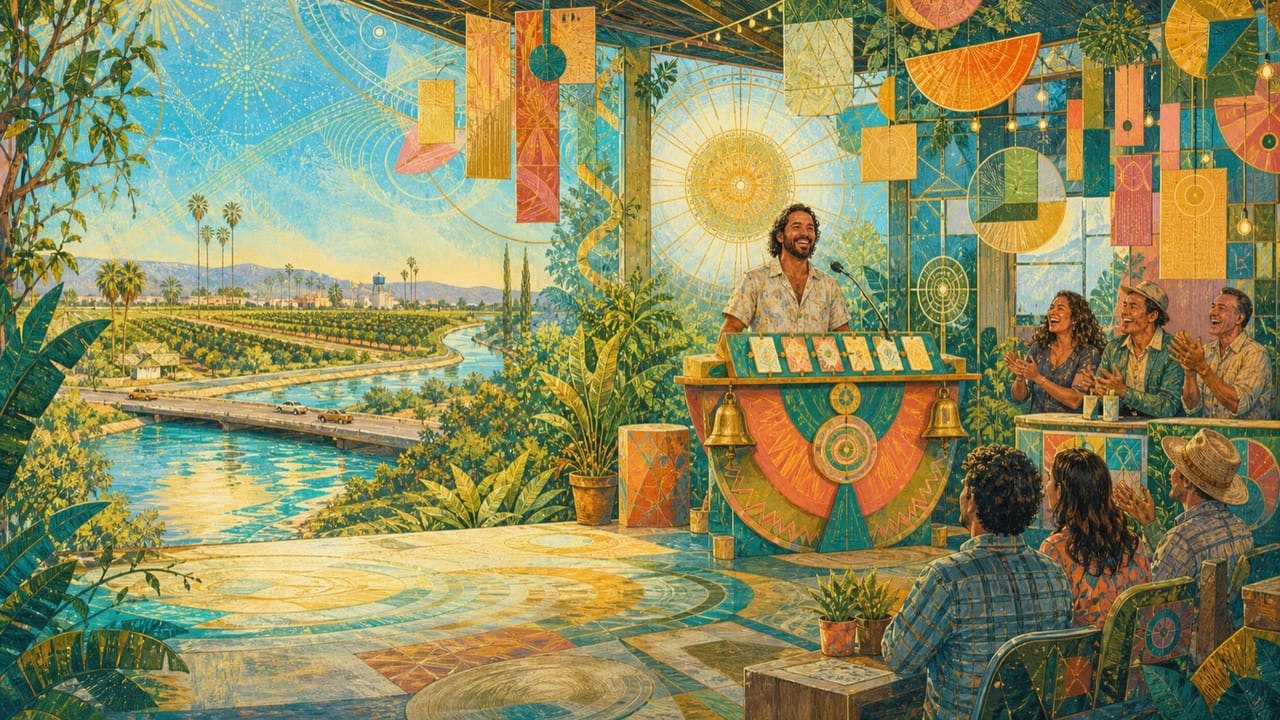
Every song opens into a world of its own.
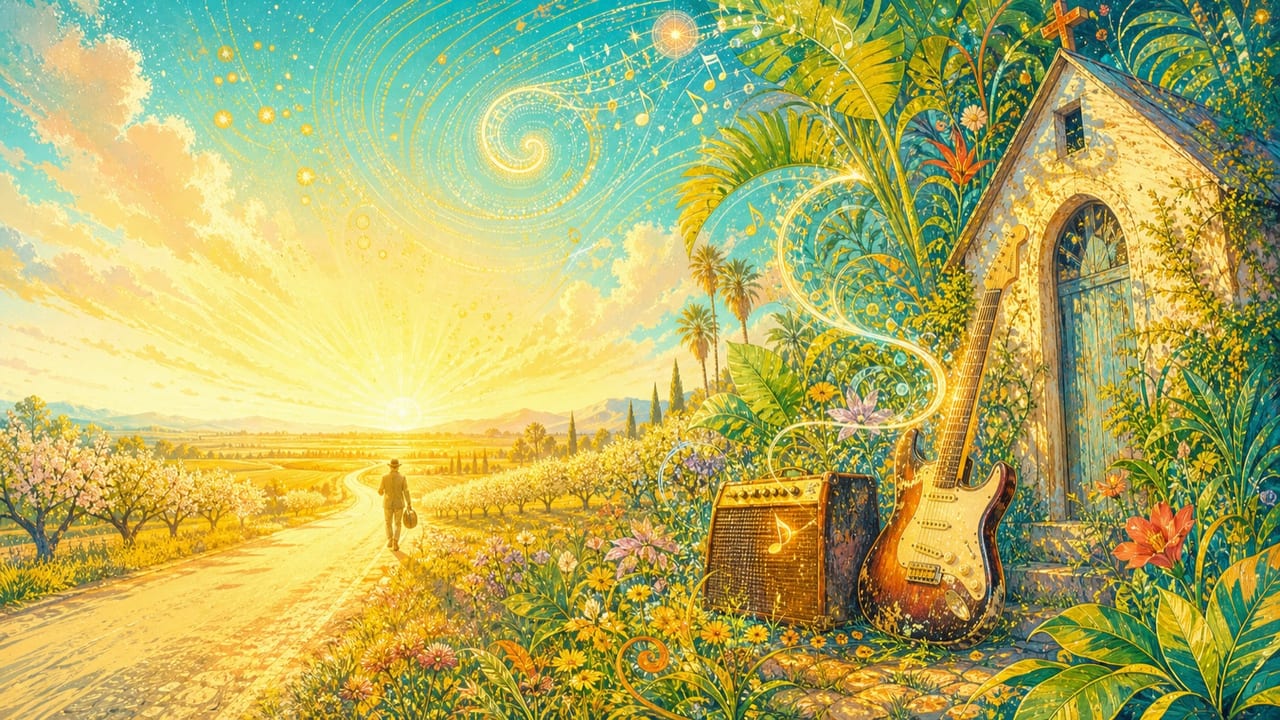
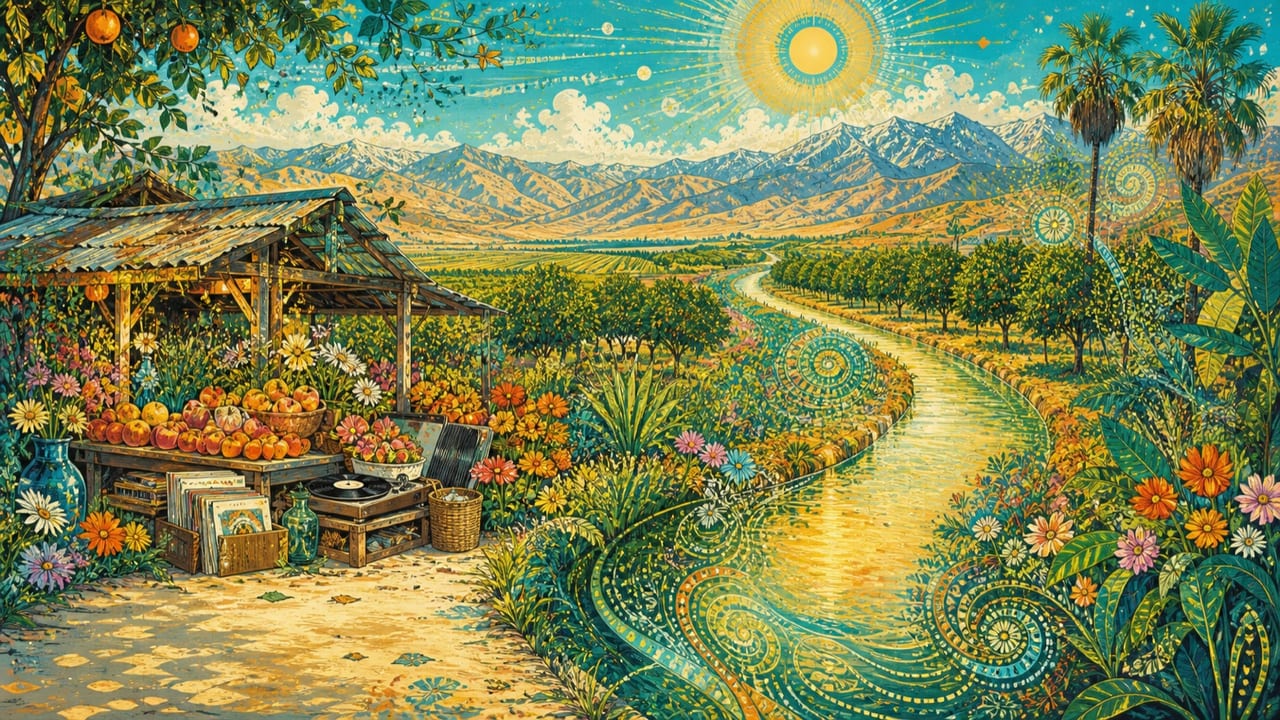
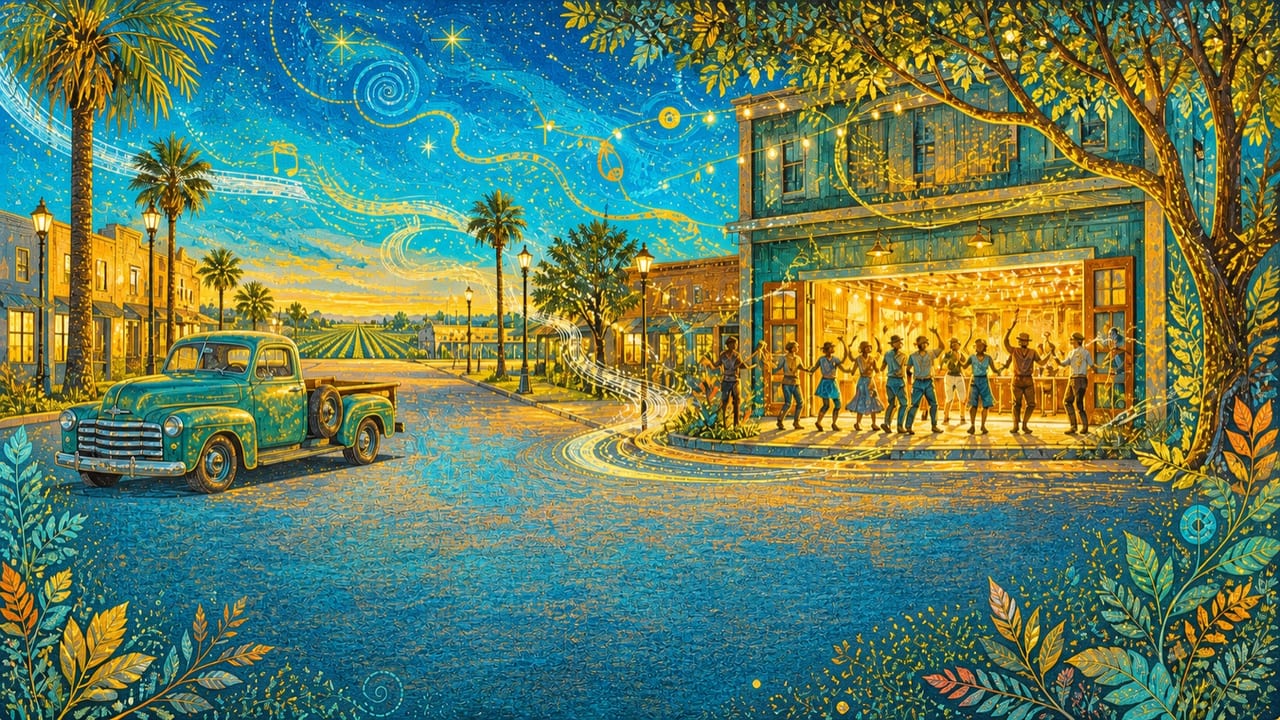
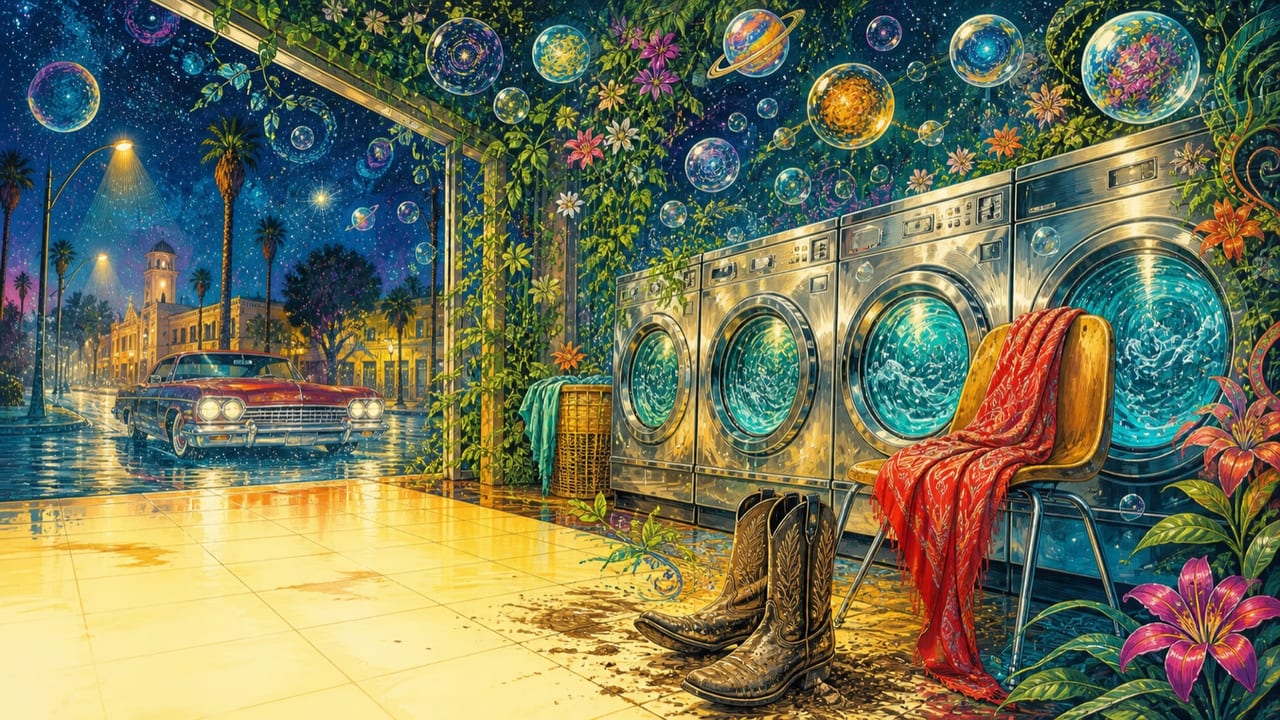
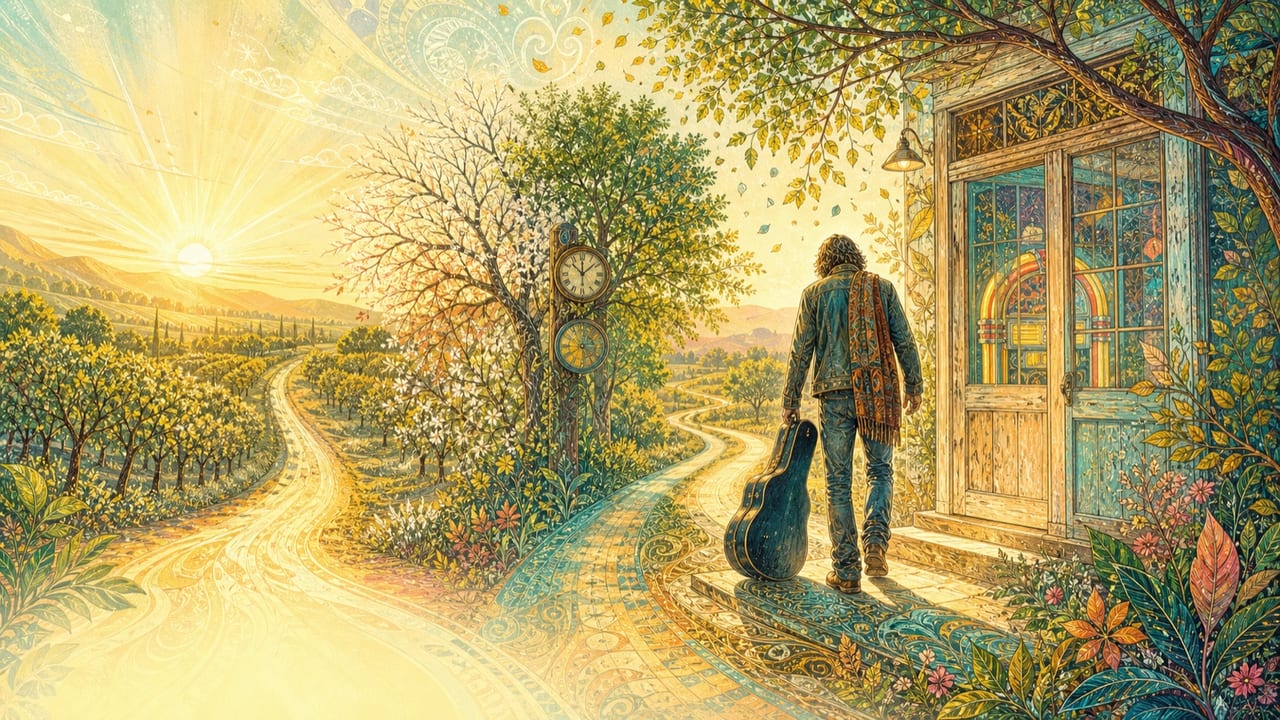
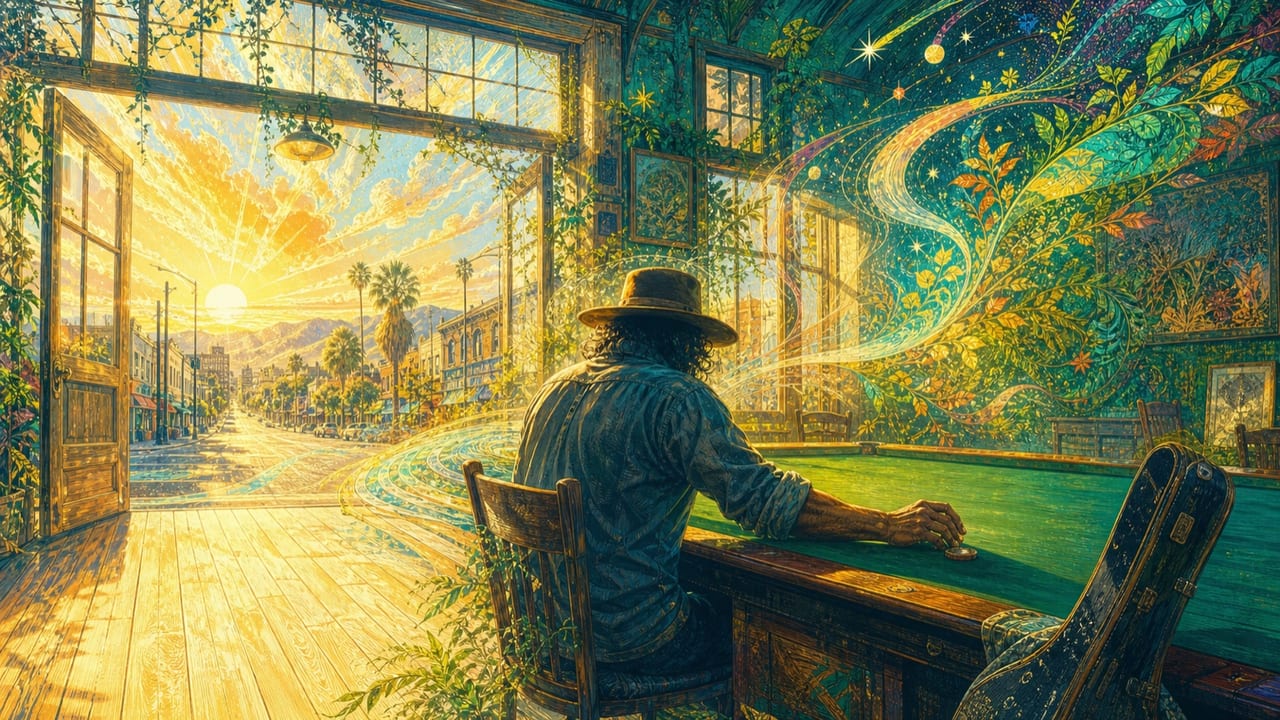
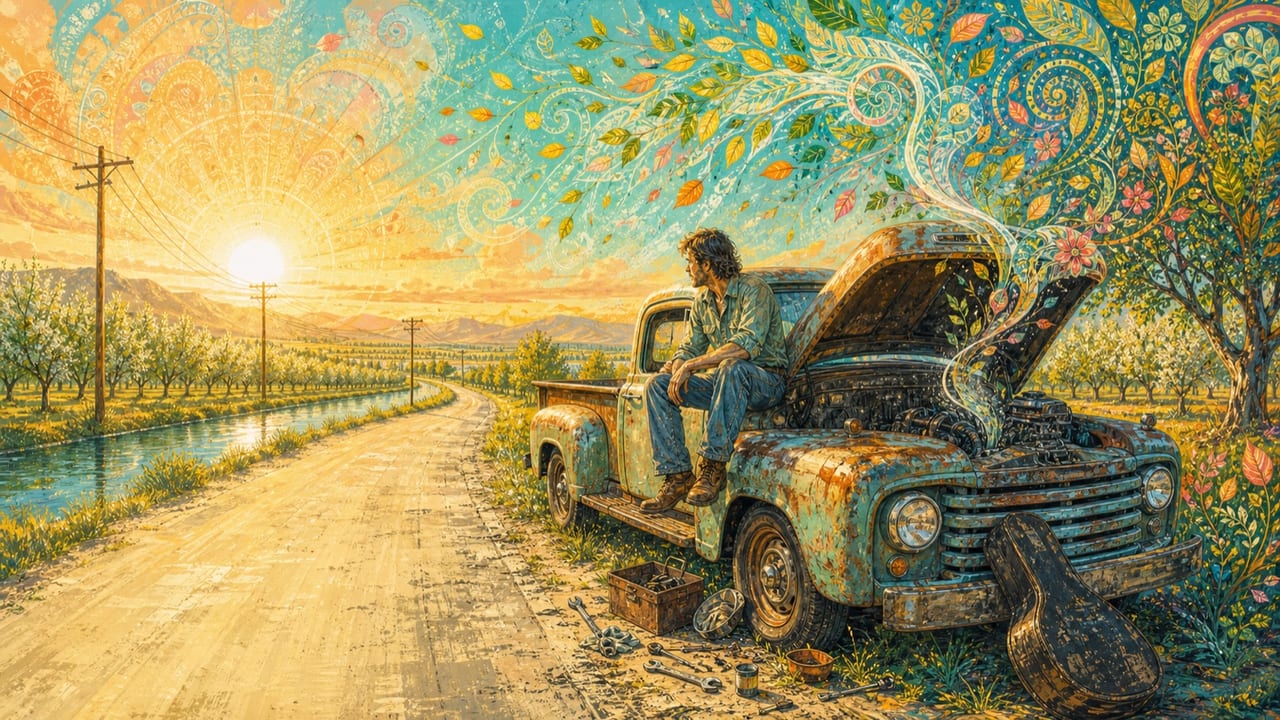
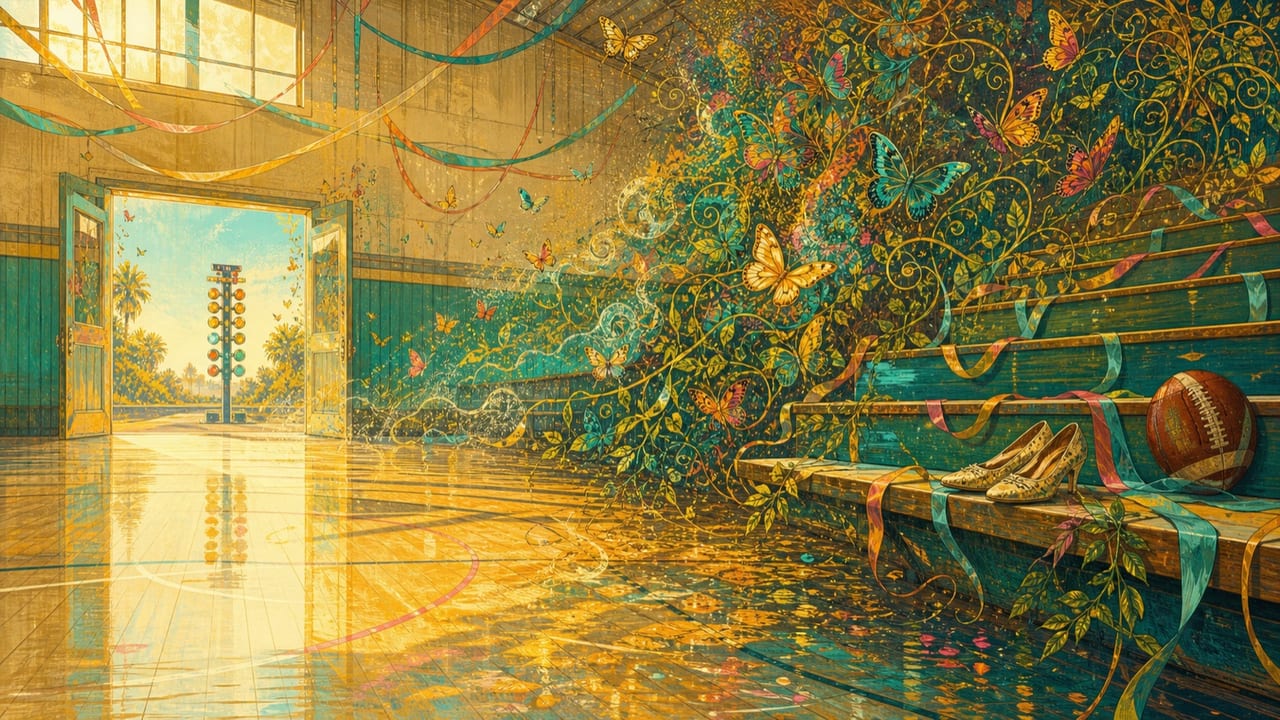
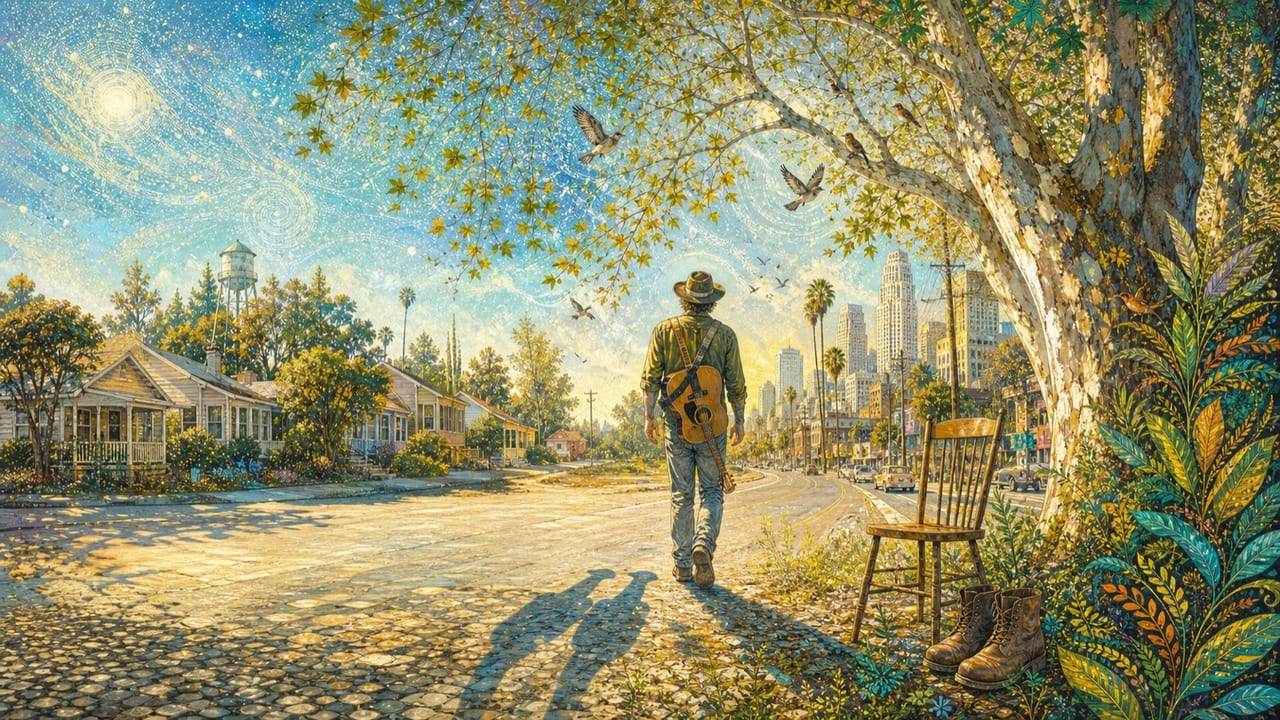
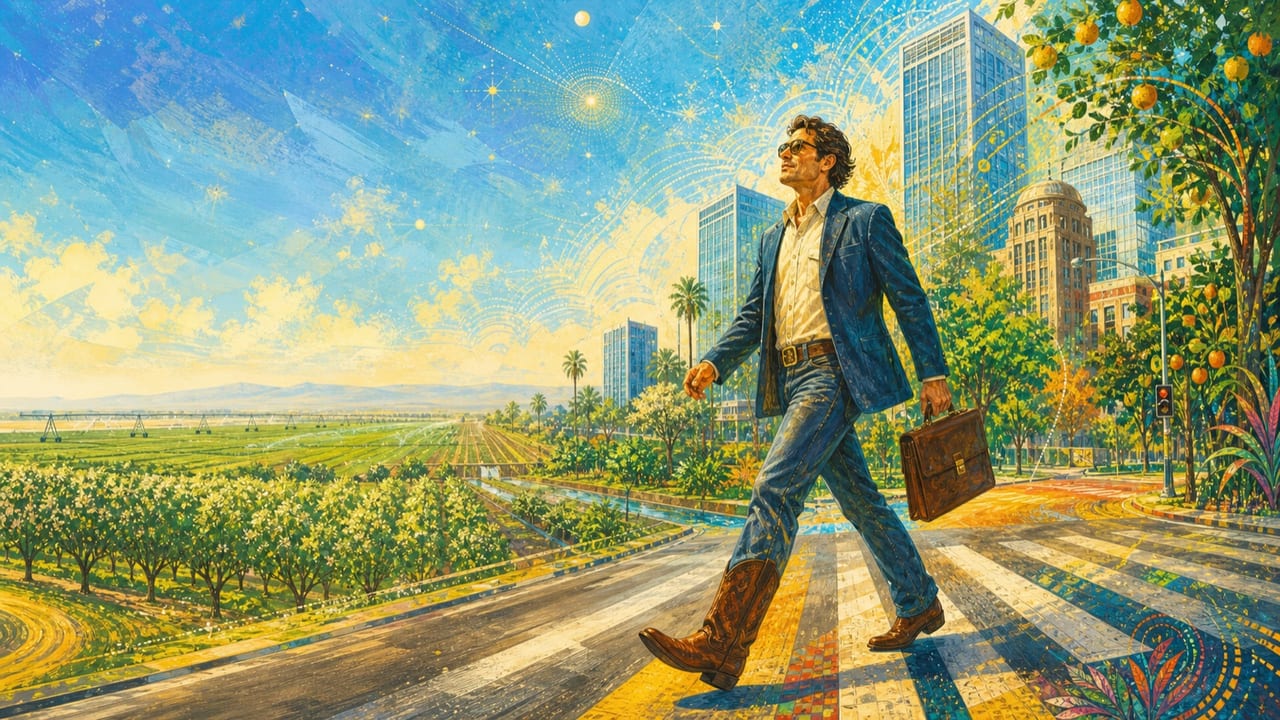
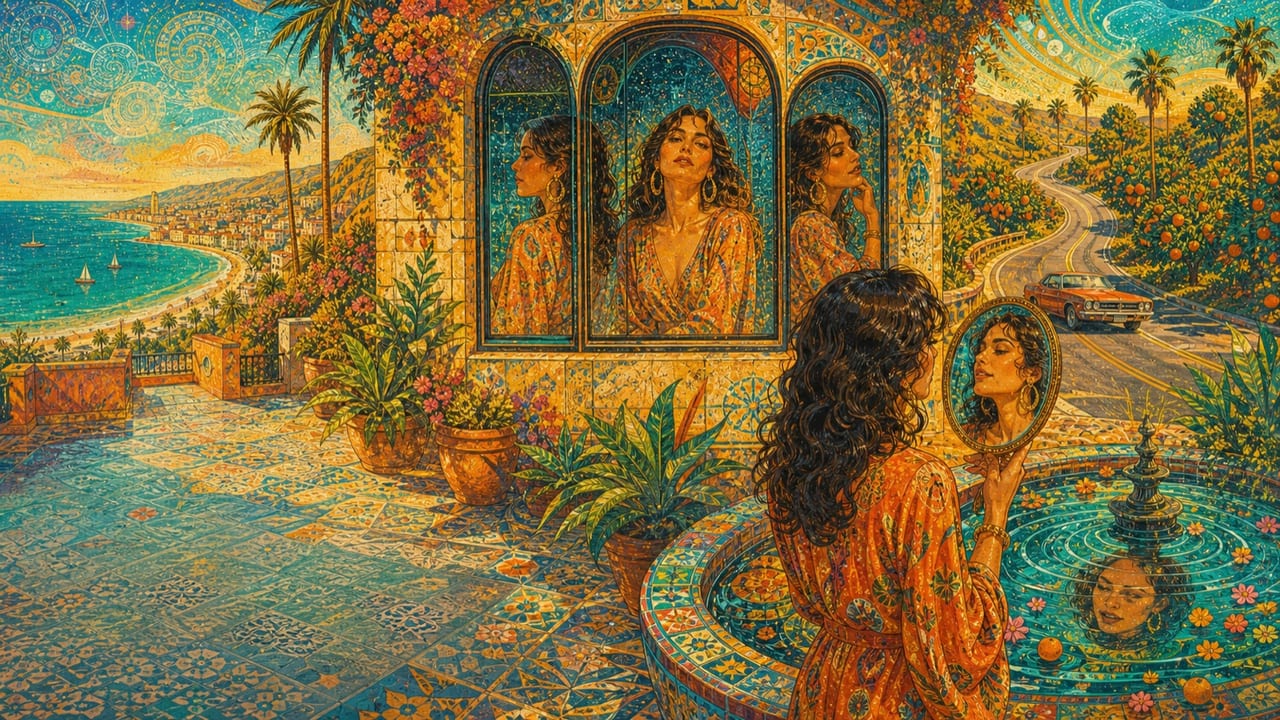
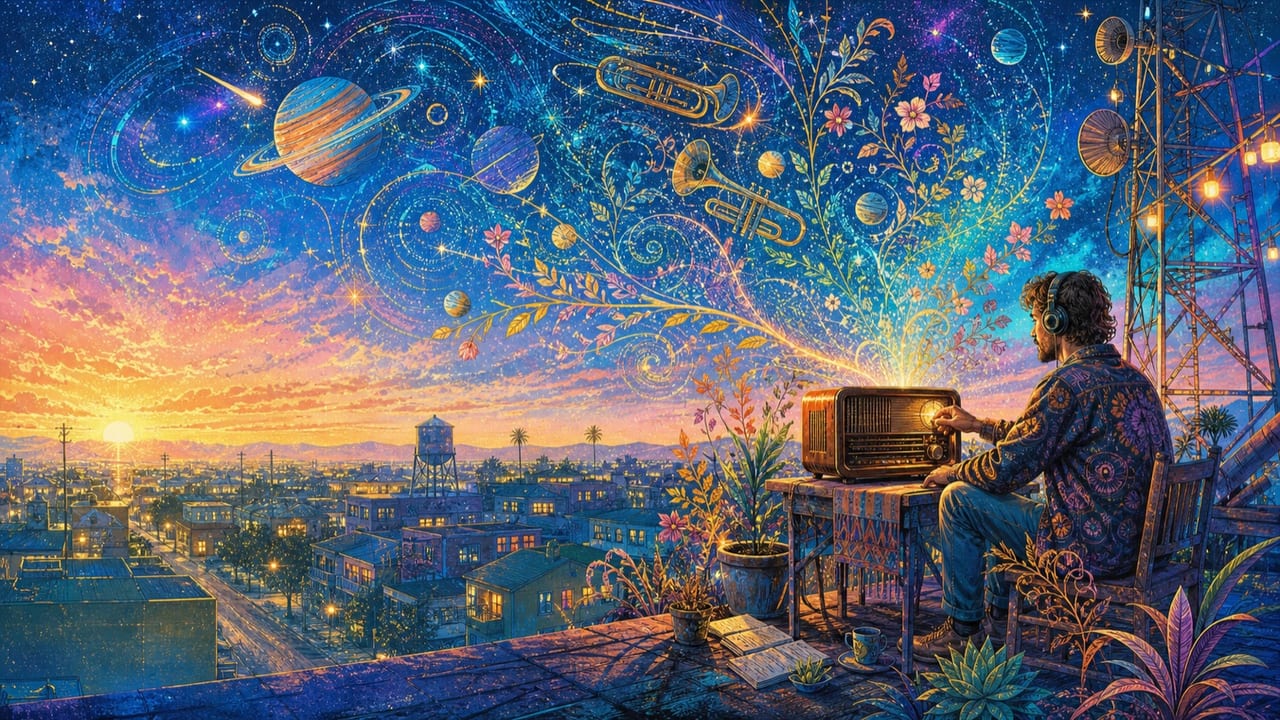
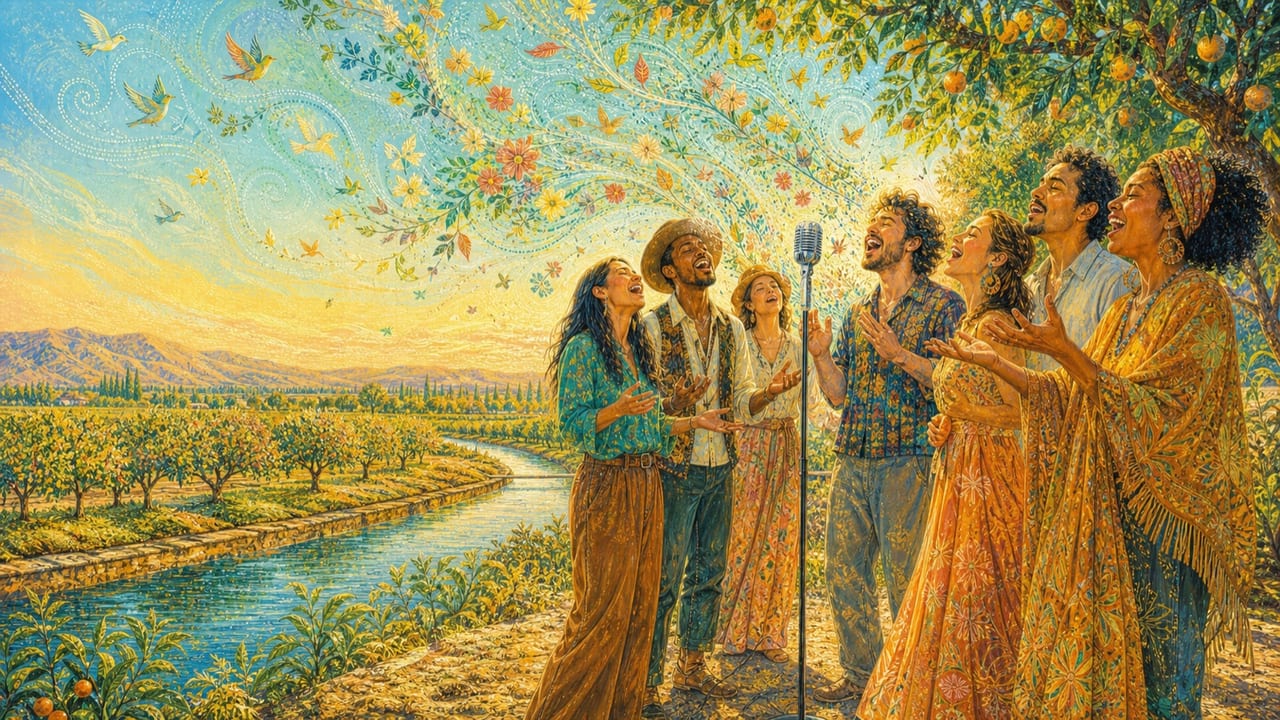
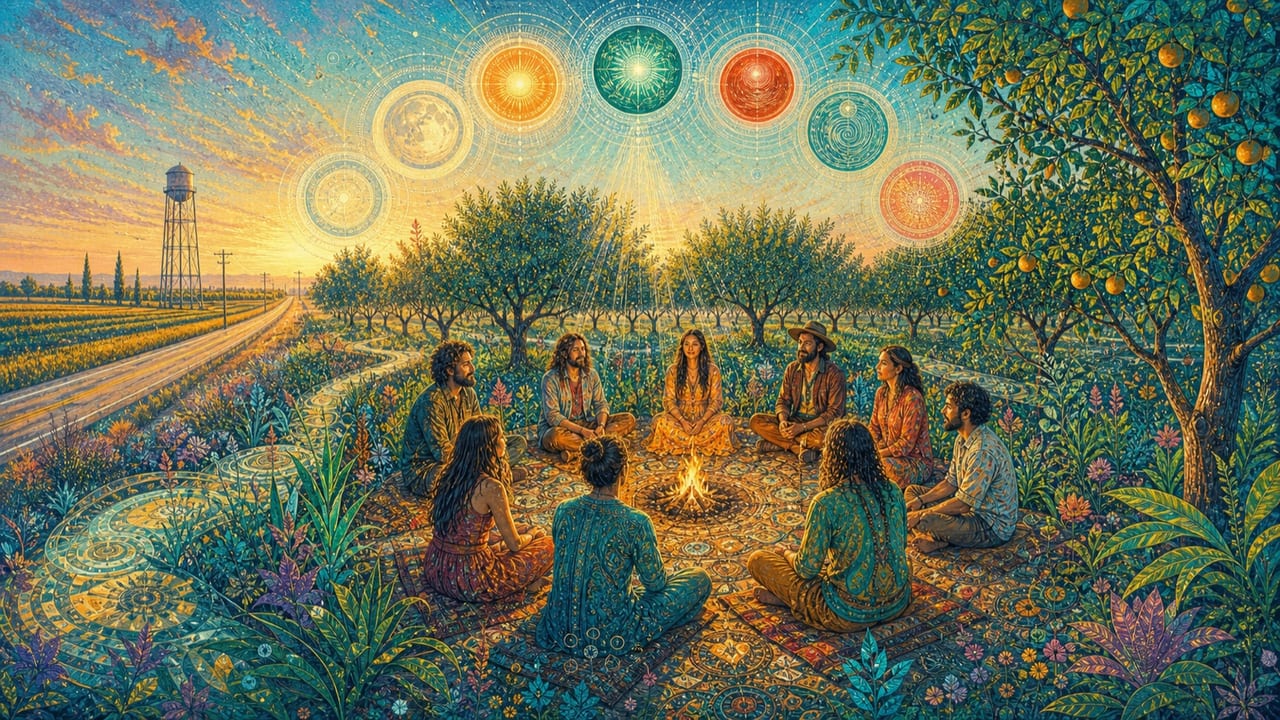
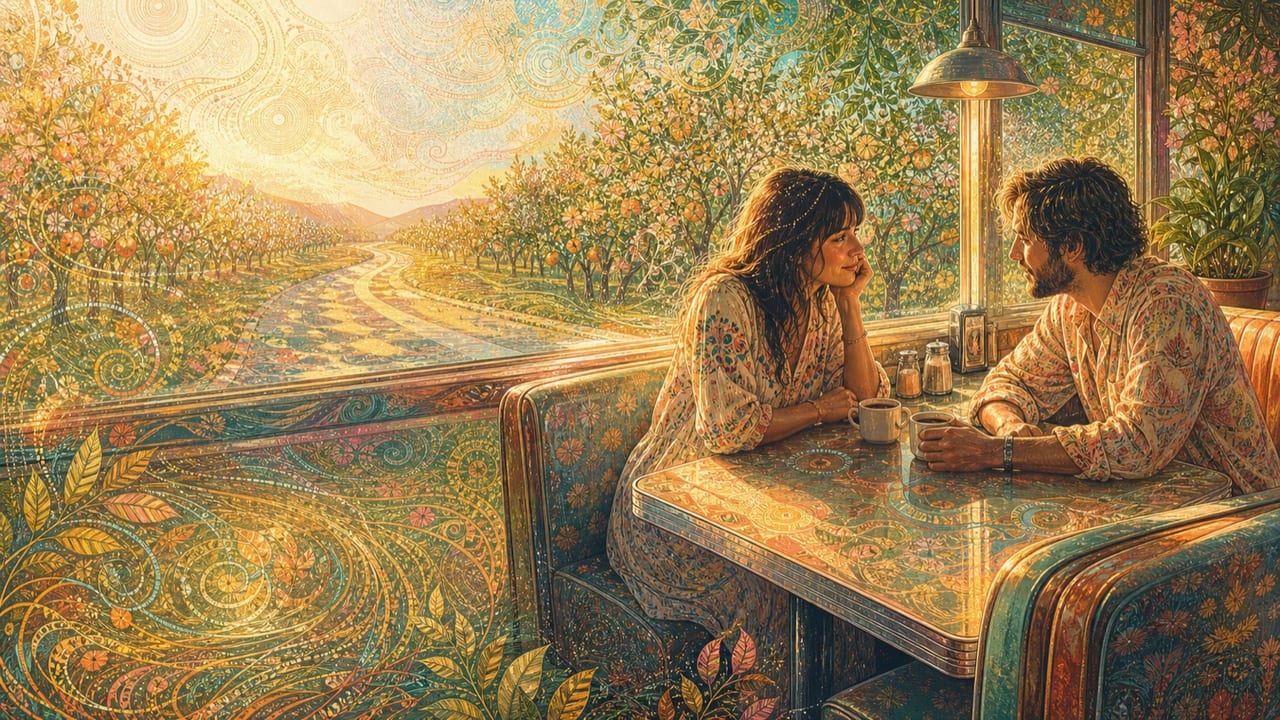
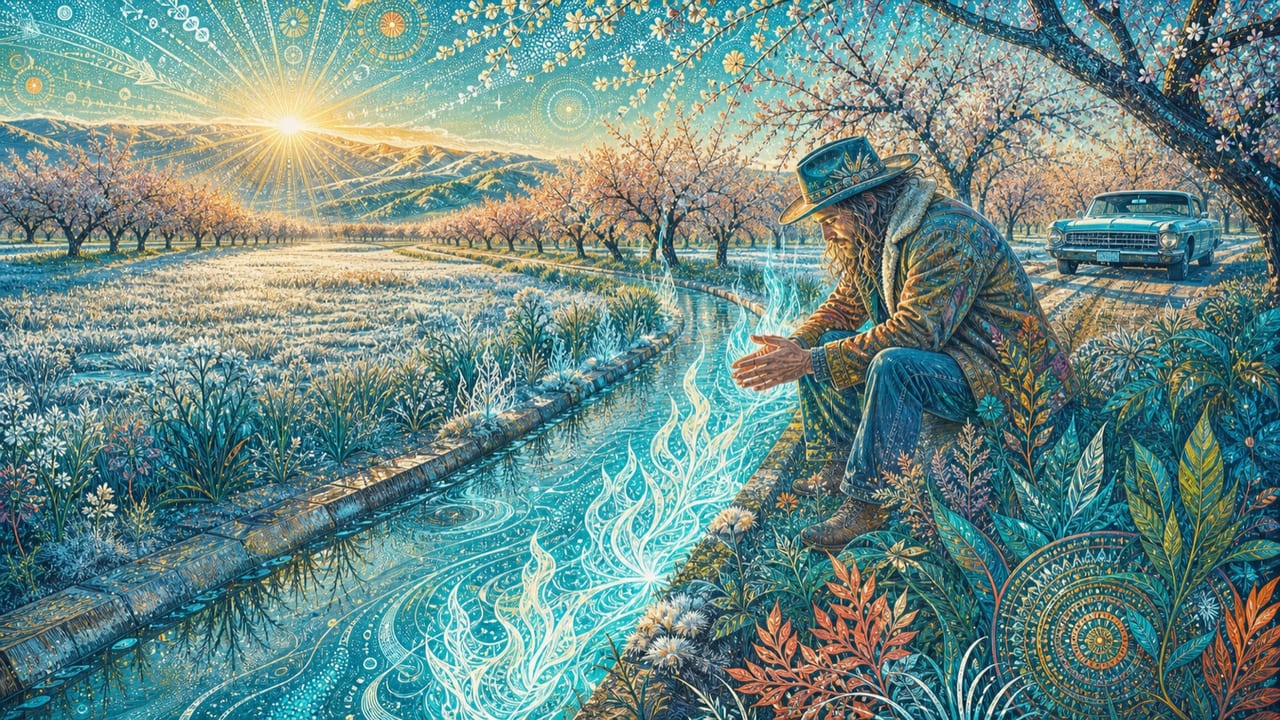
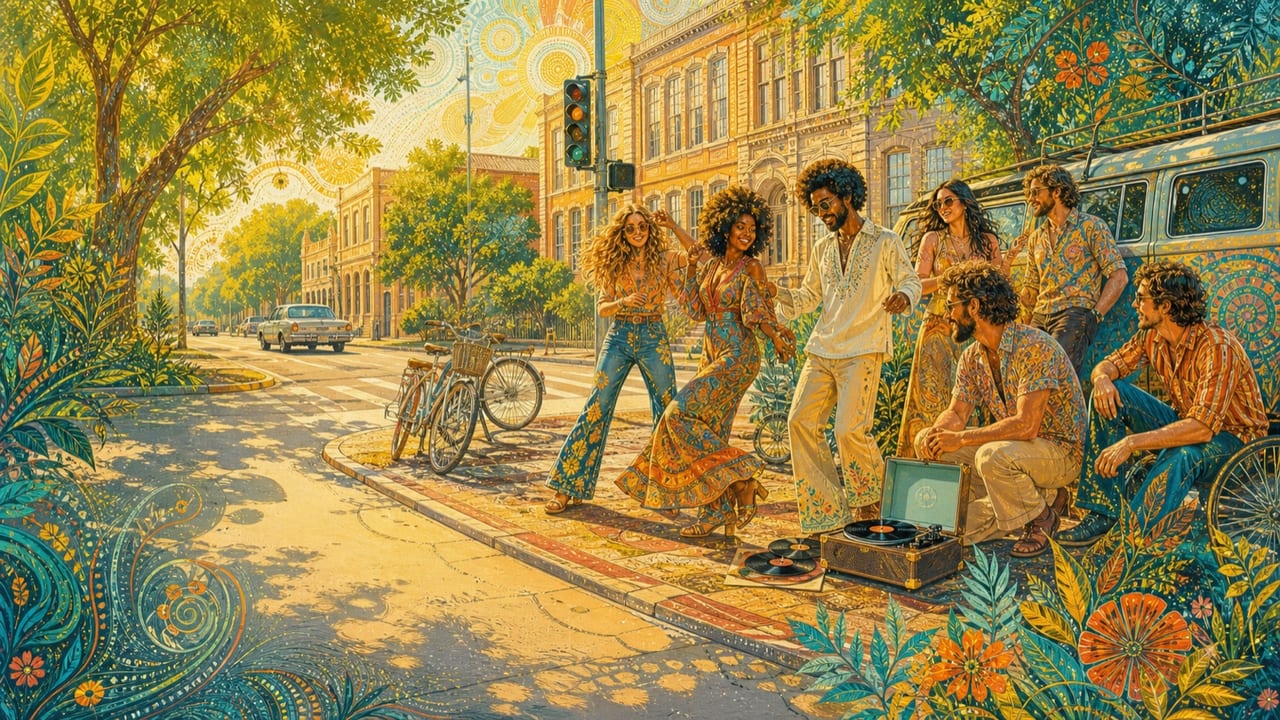
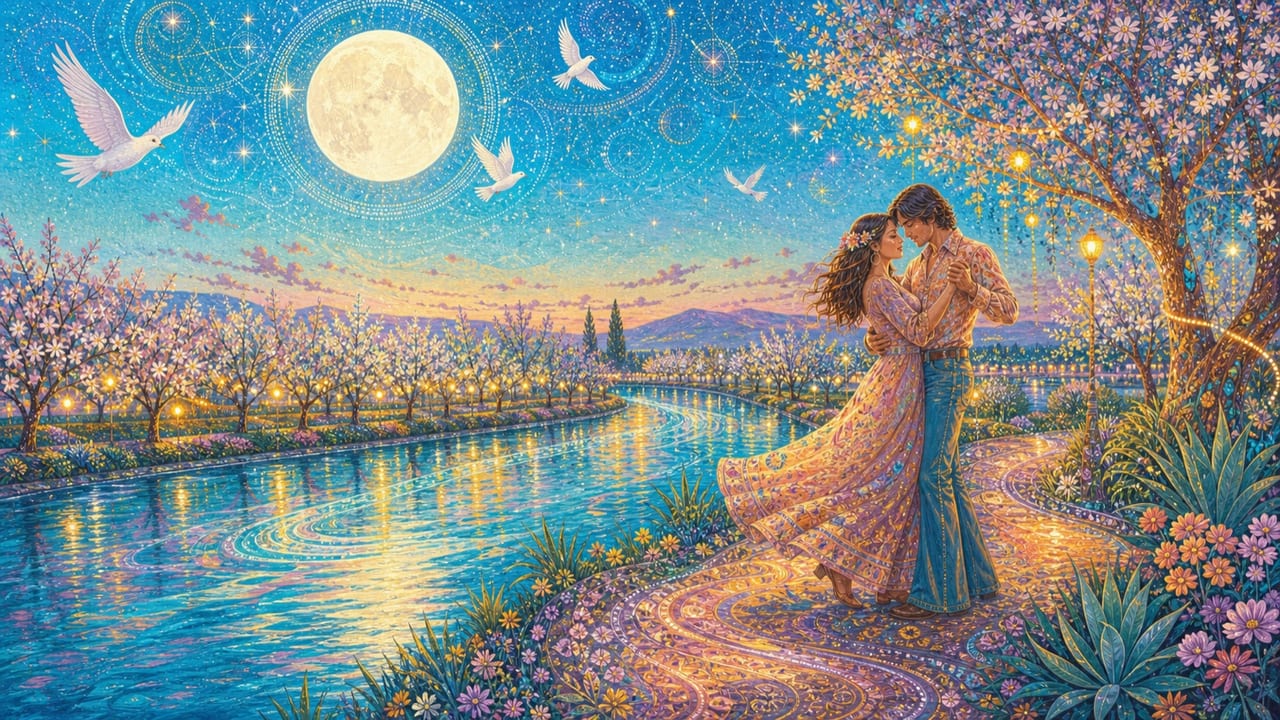
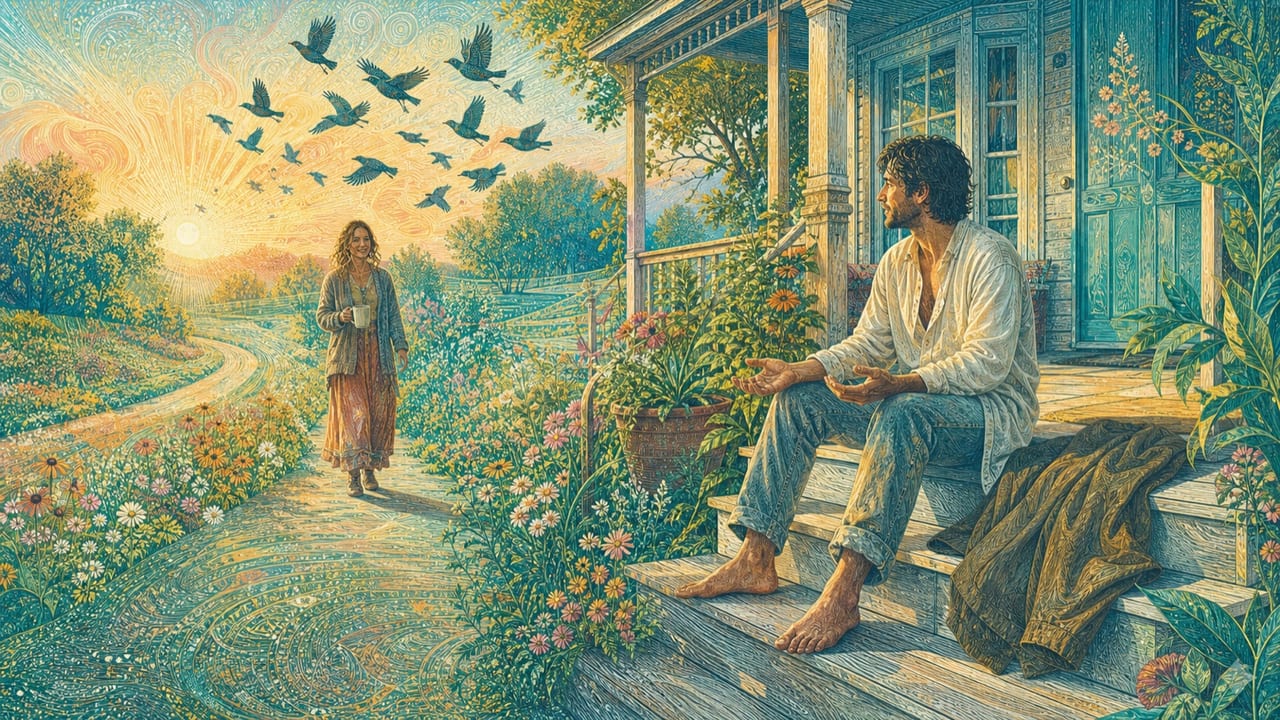
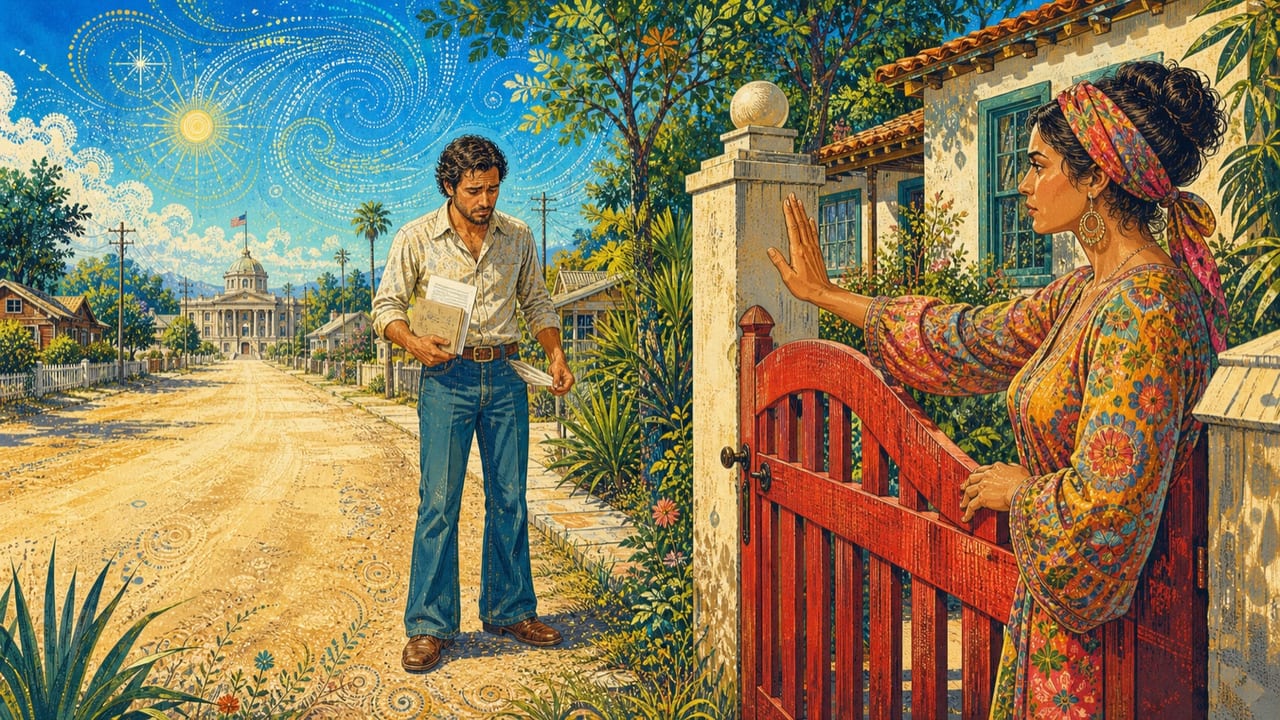
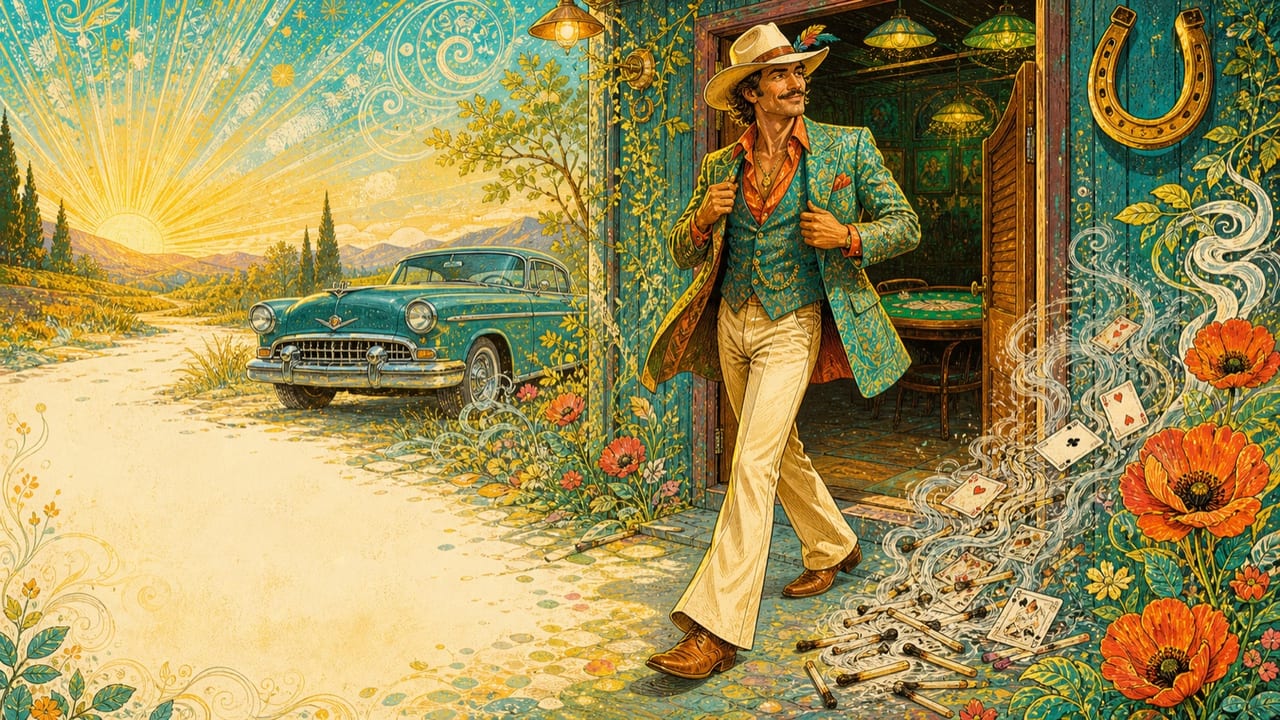
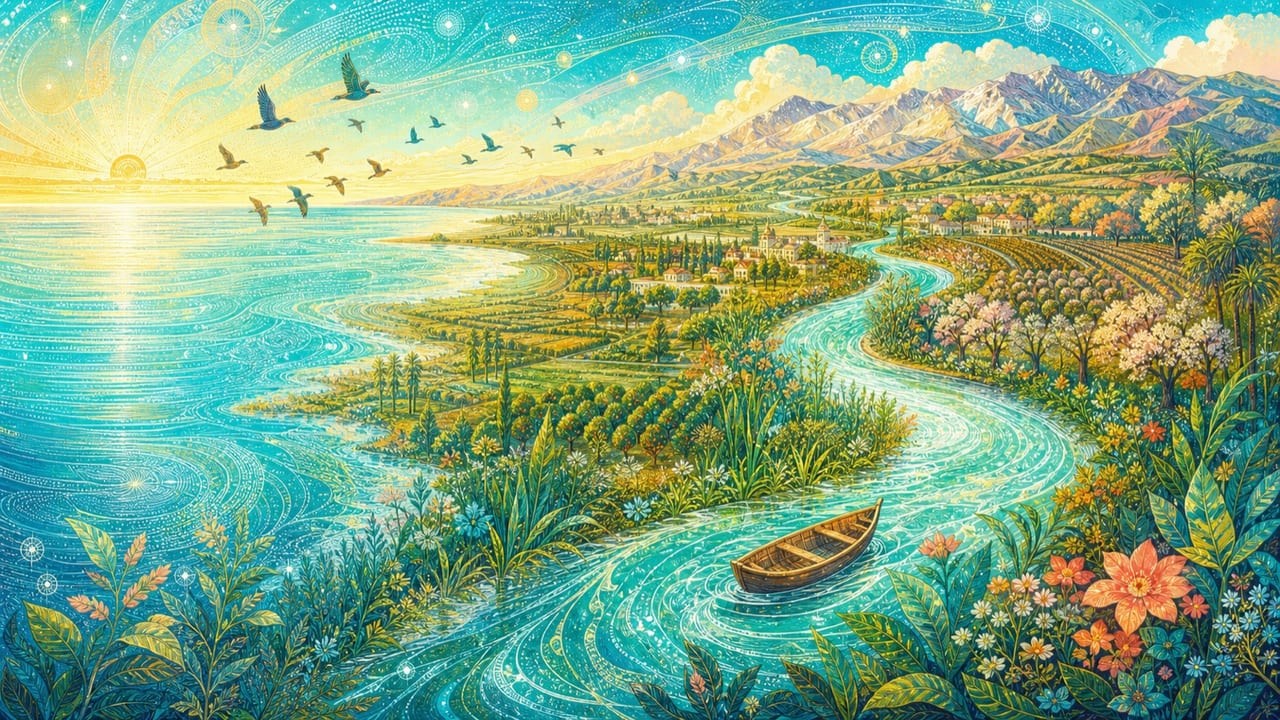
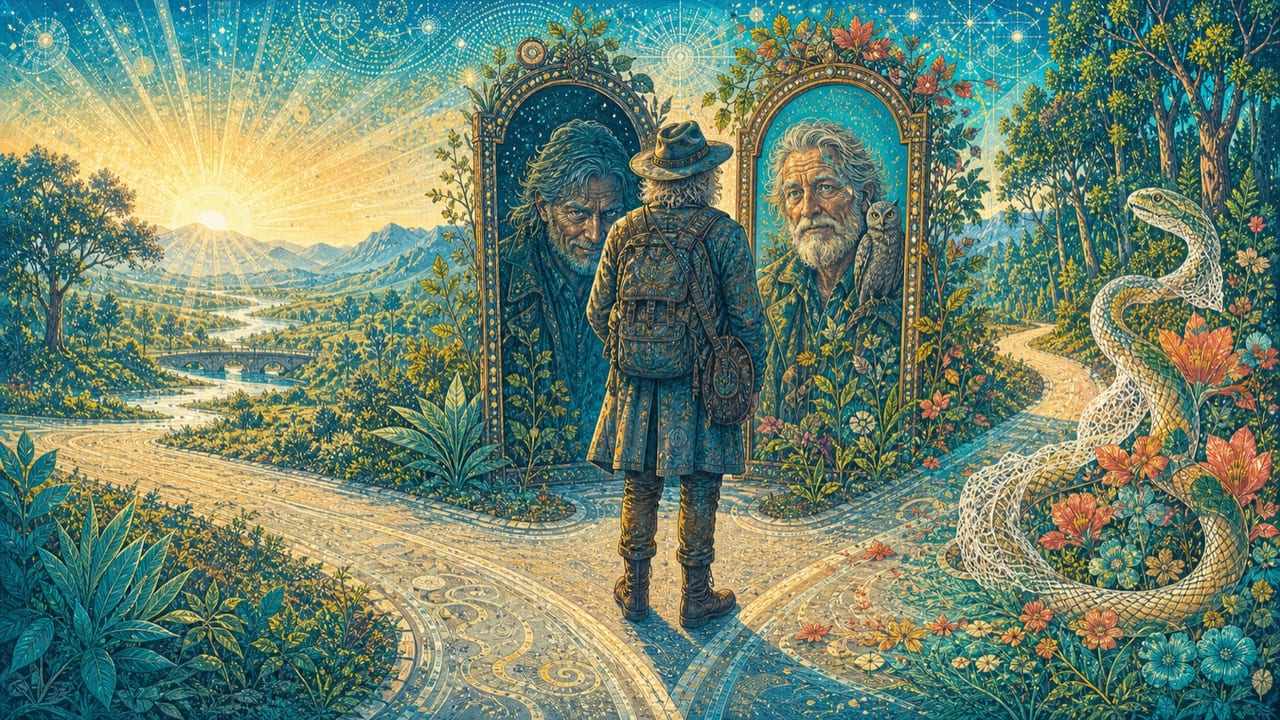
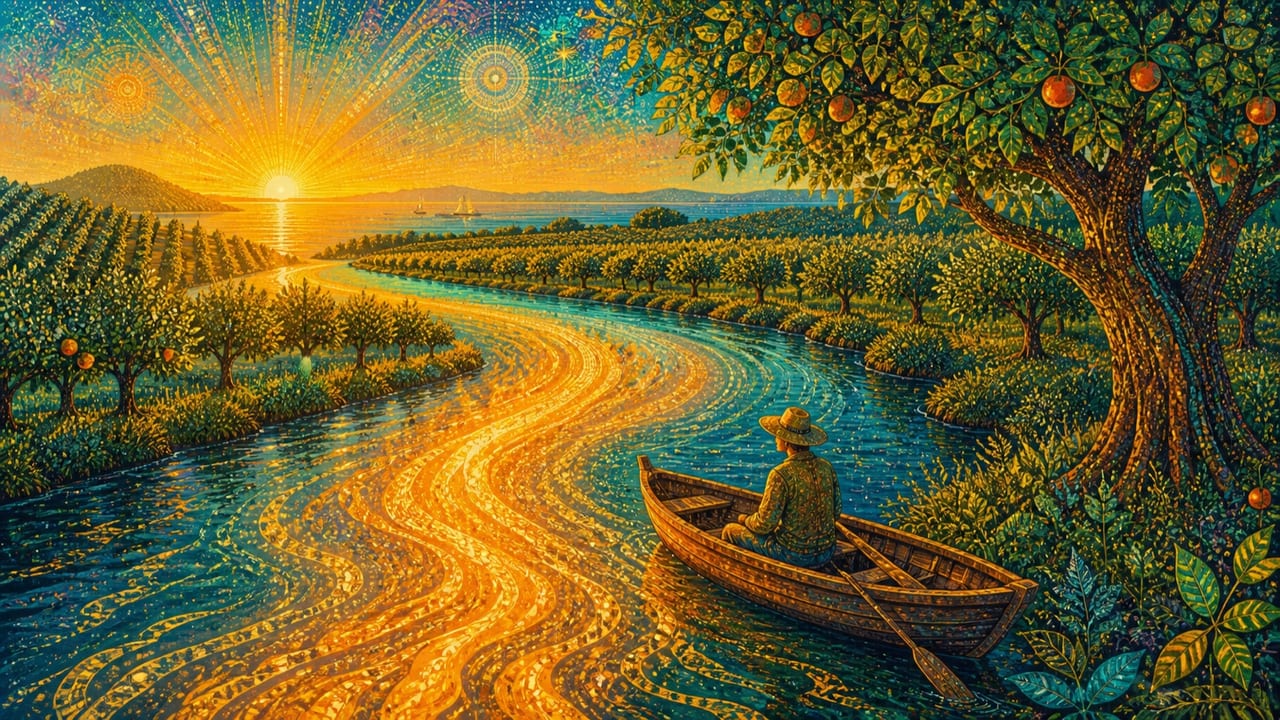
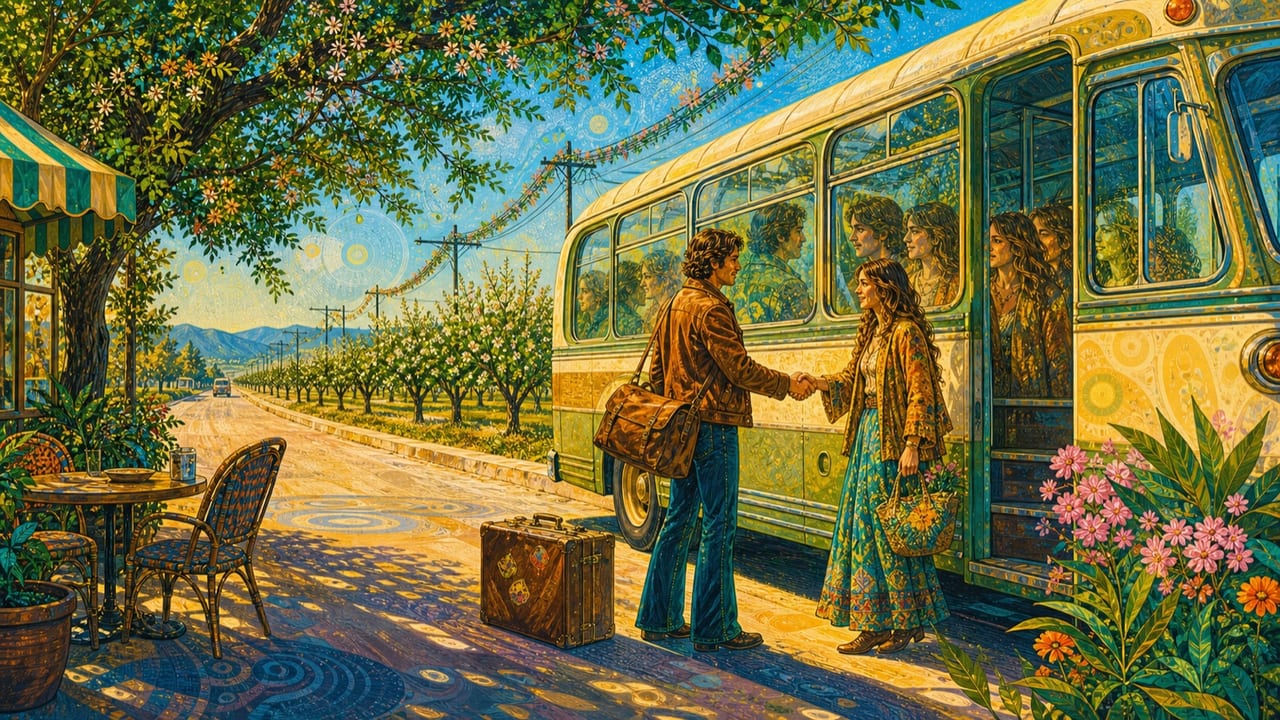
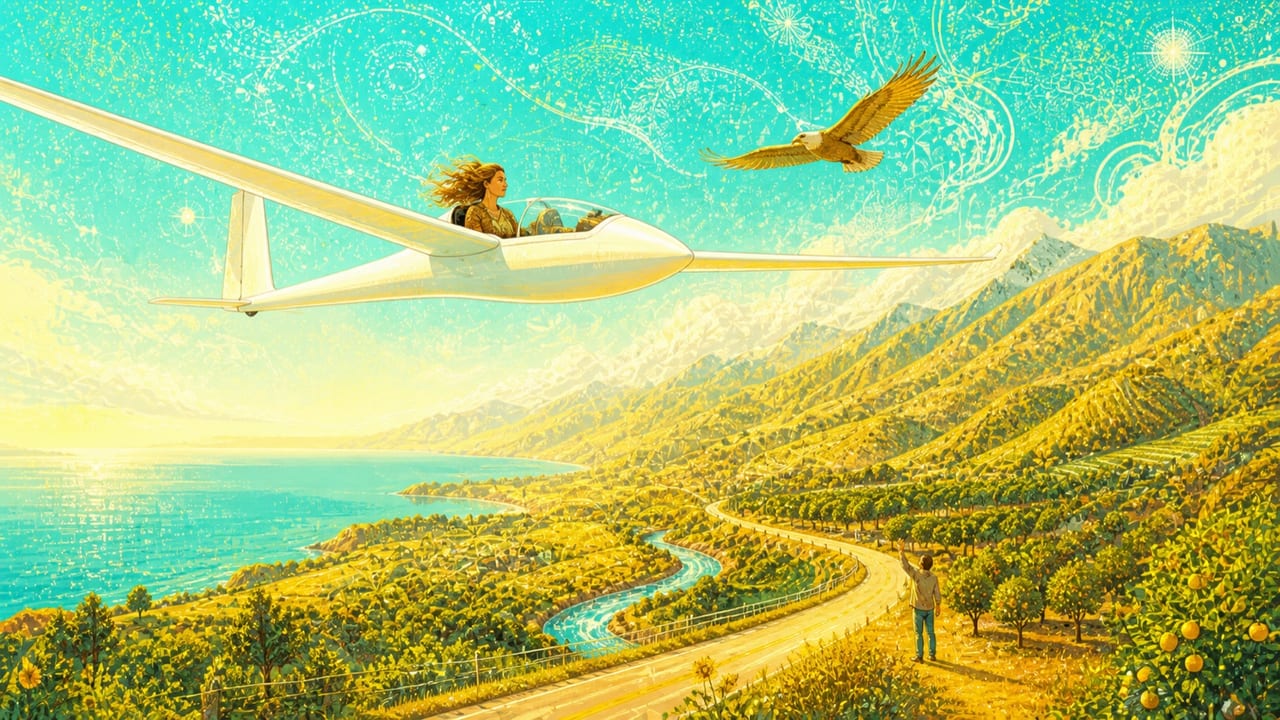
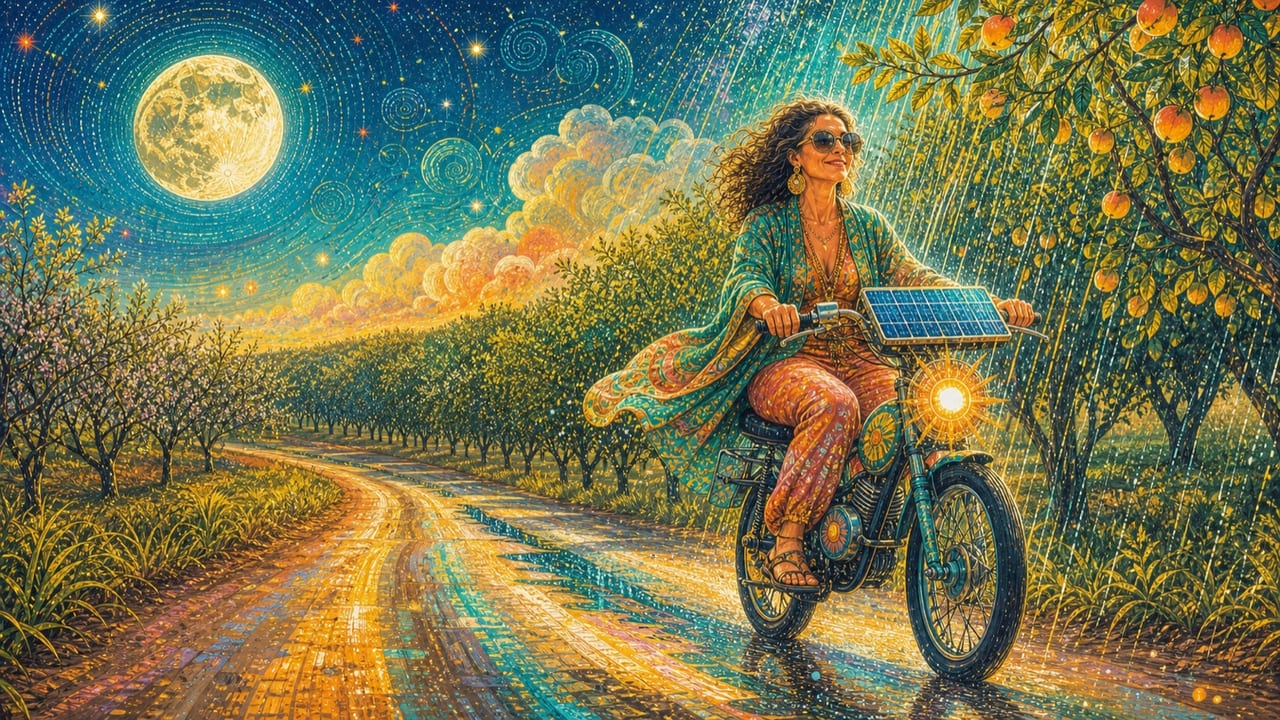
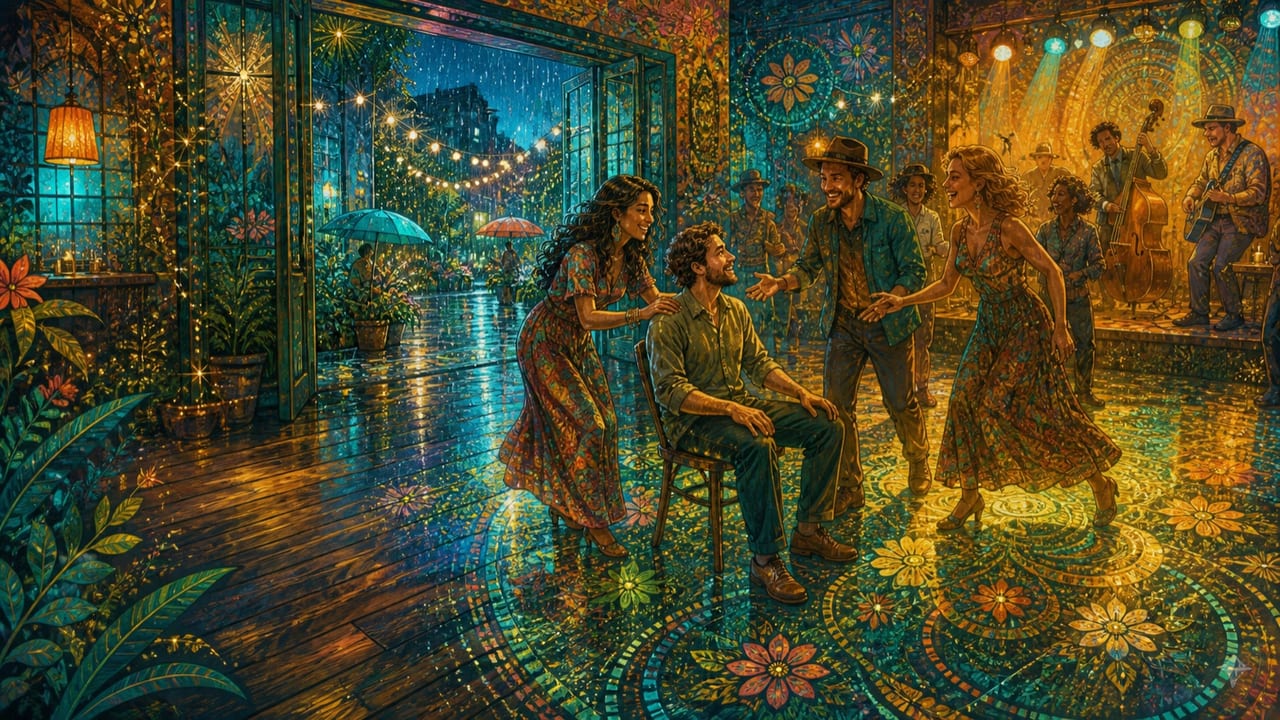
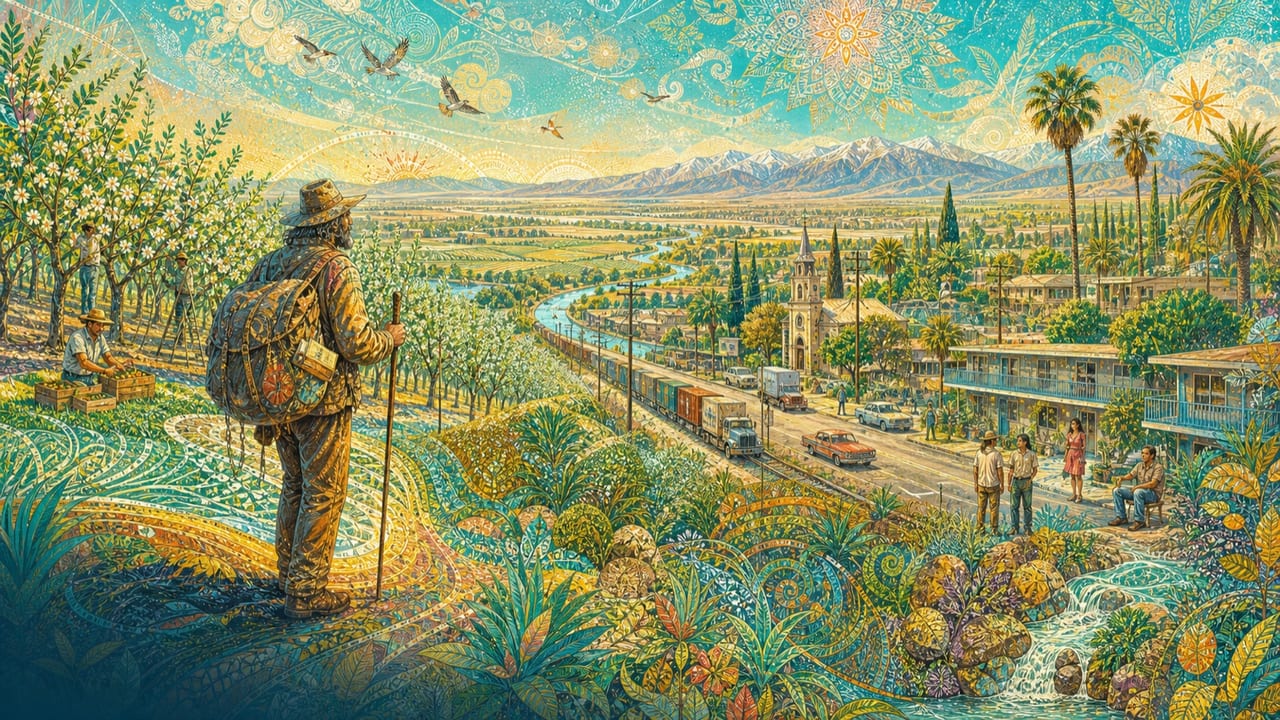
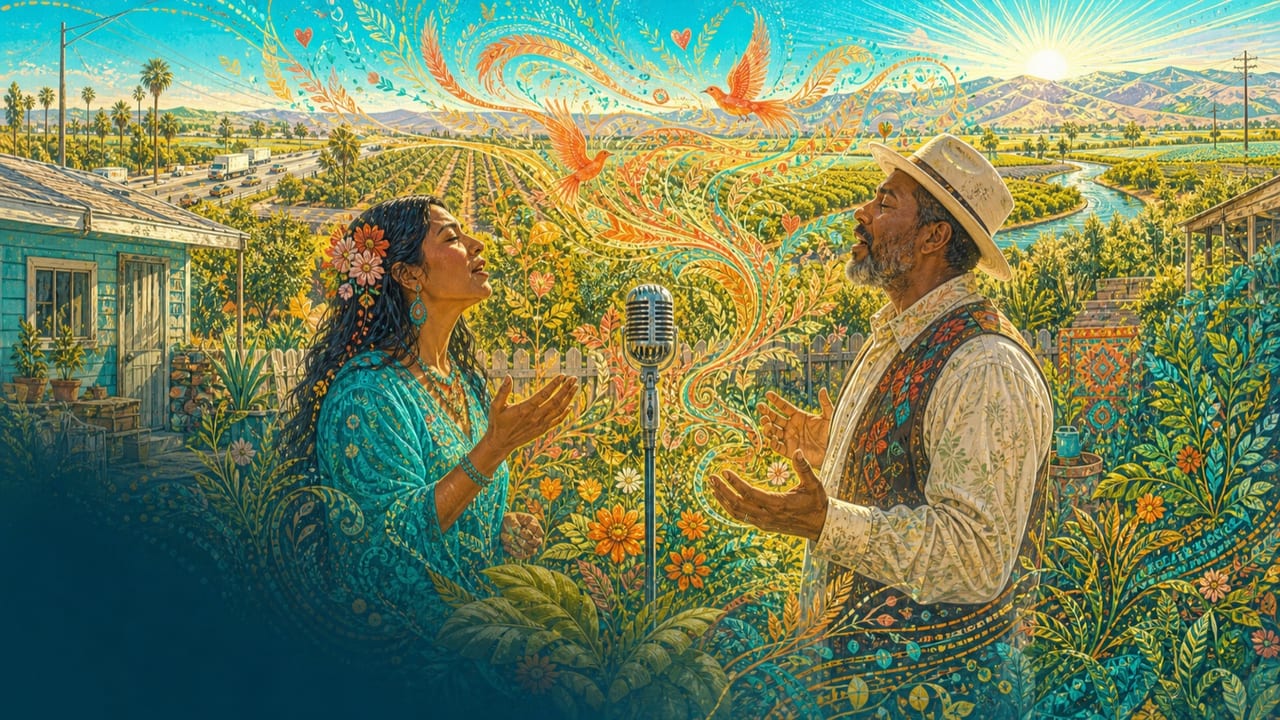
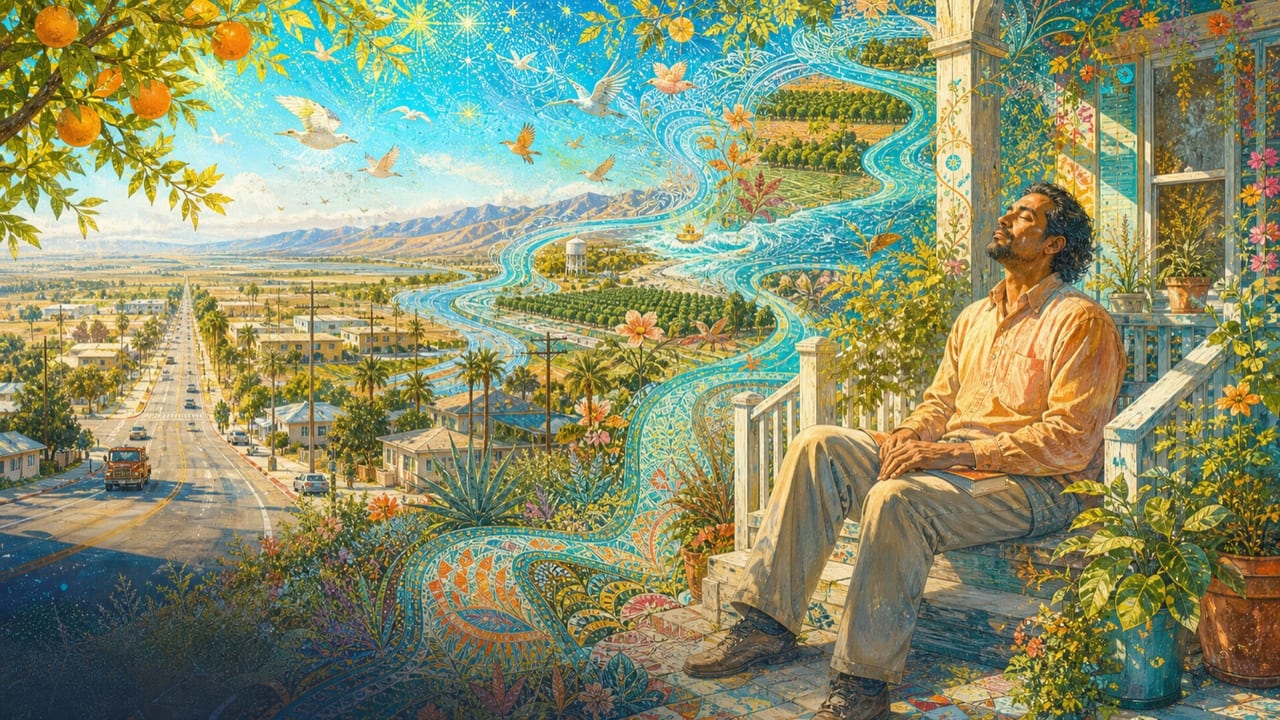
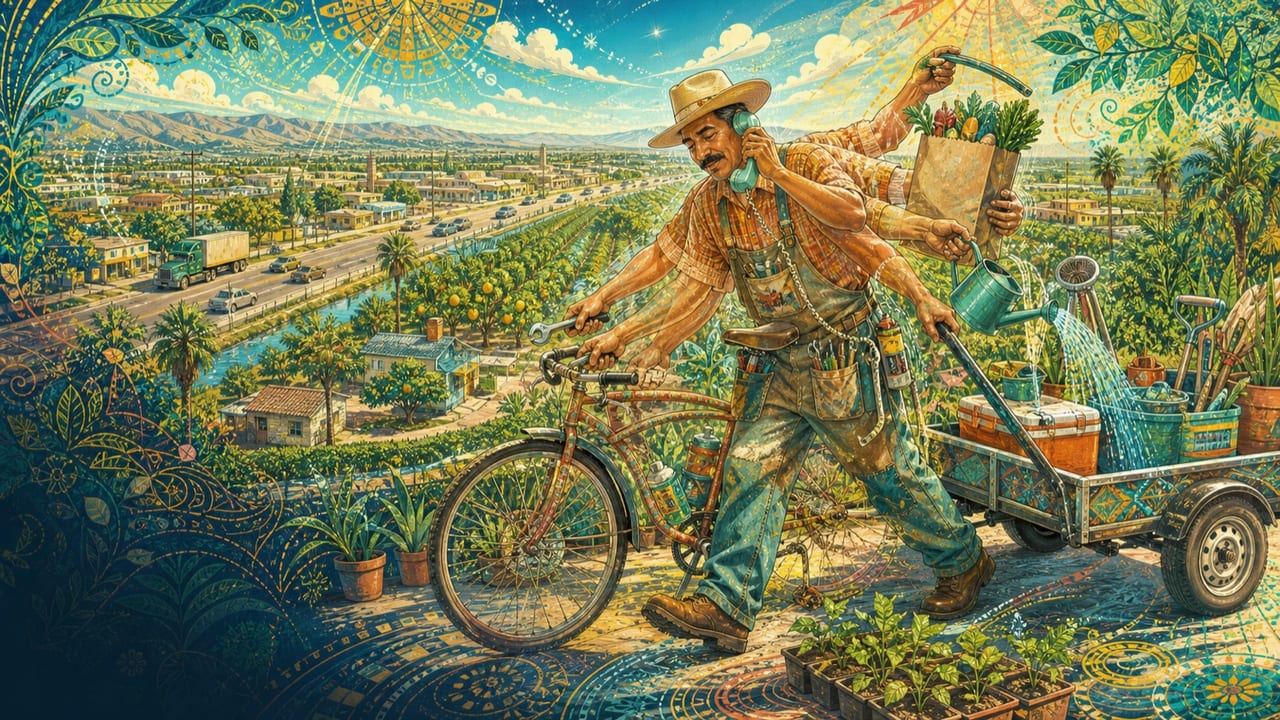
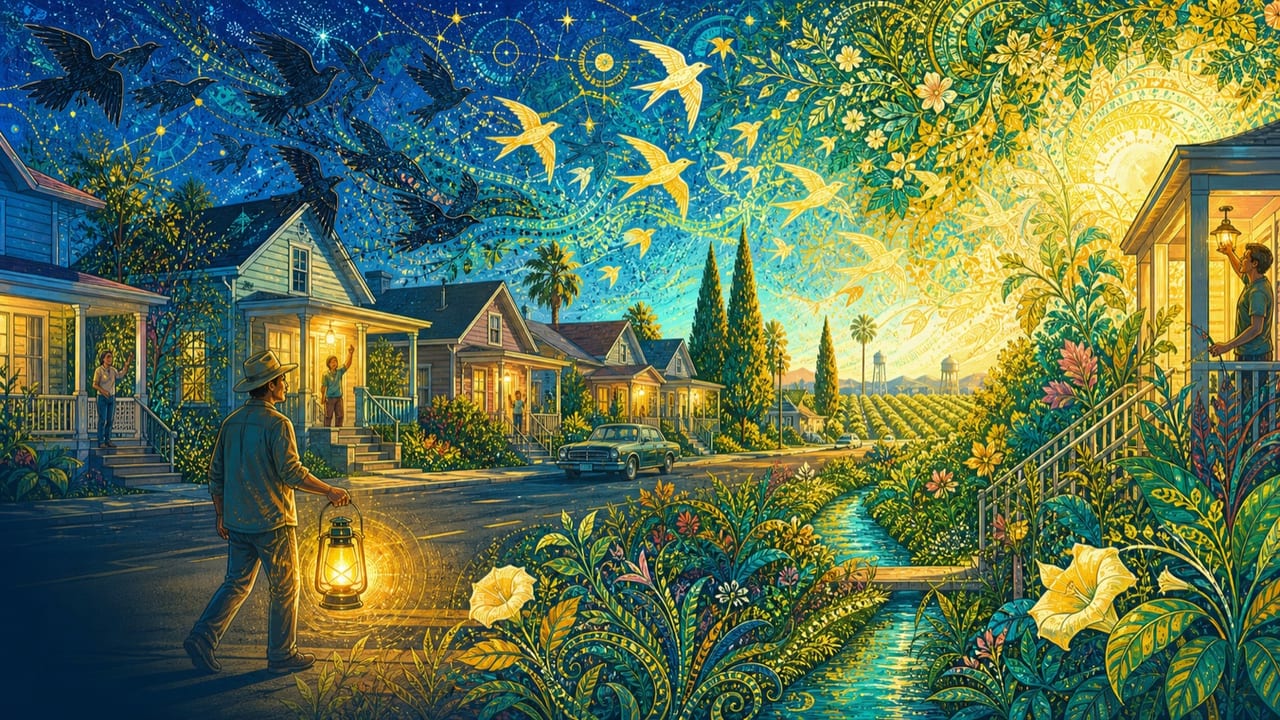
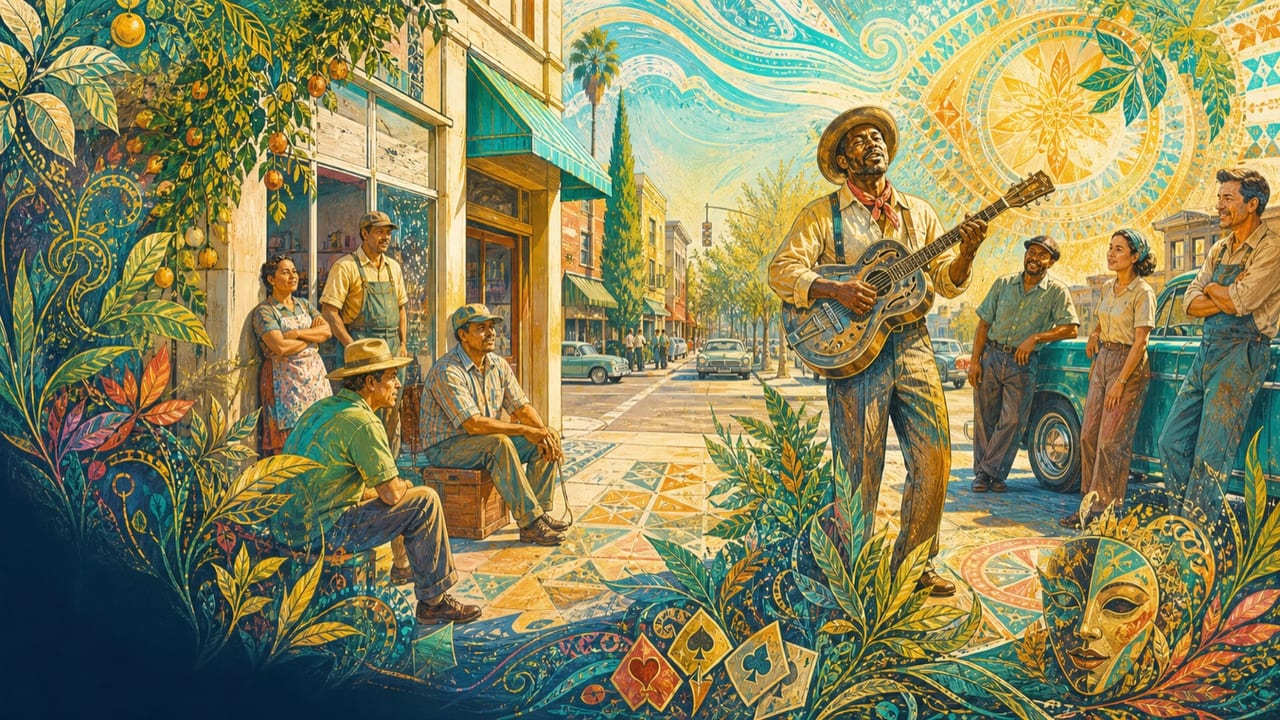
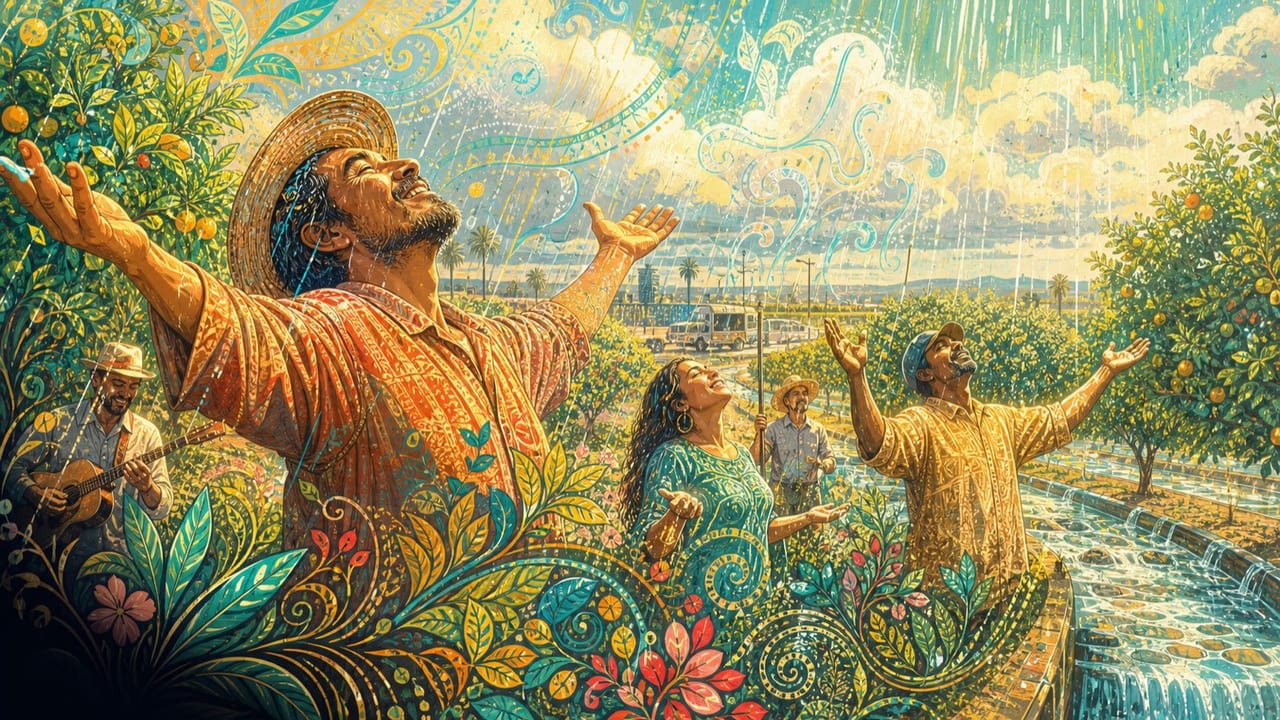
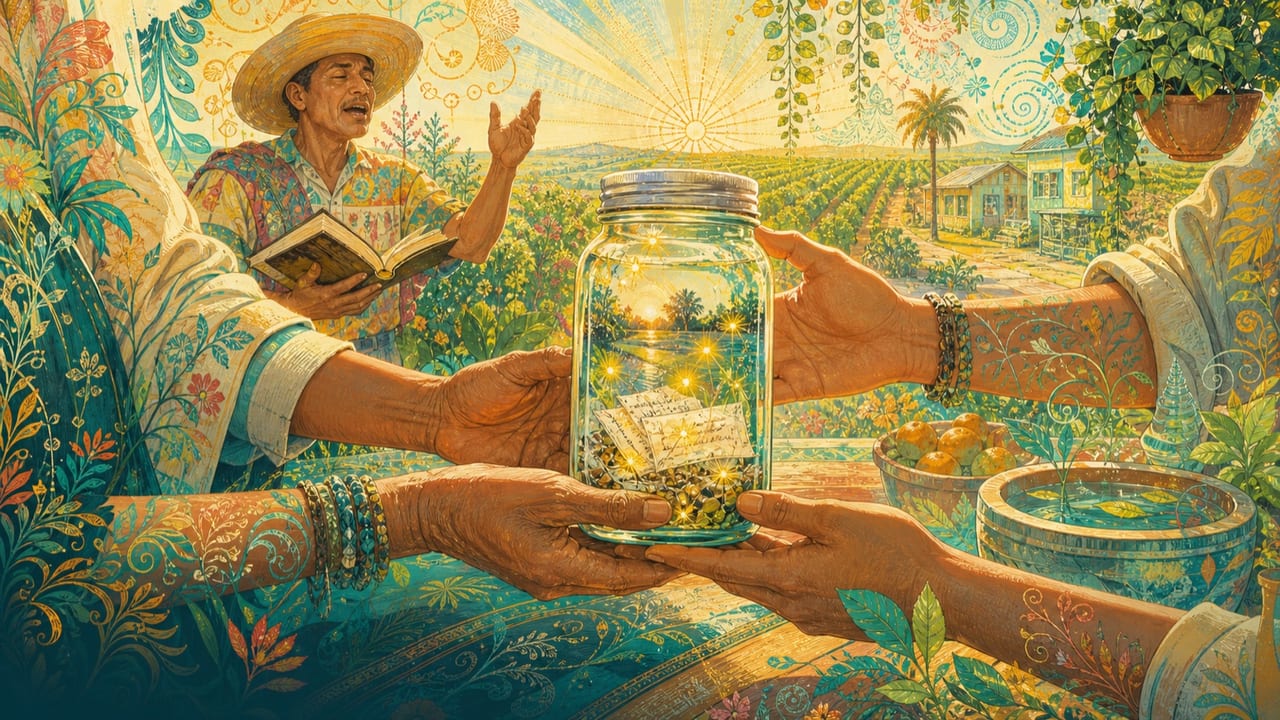
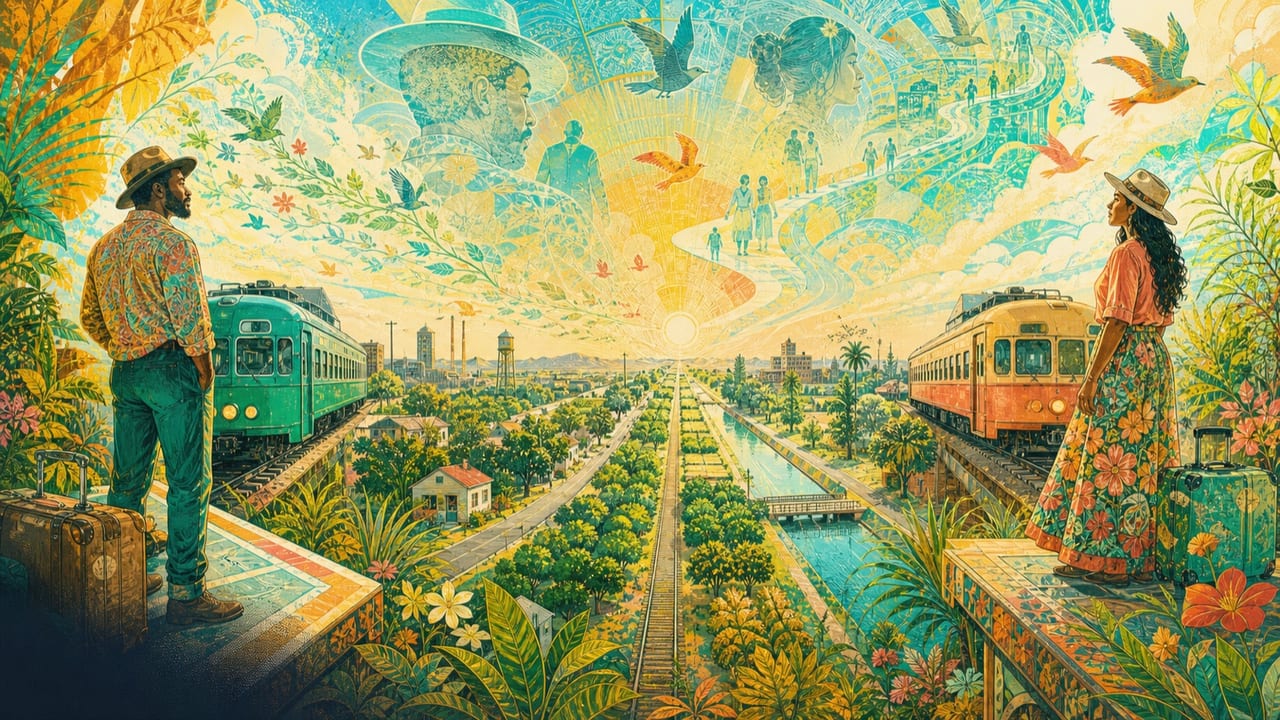
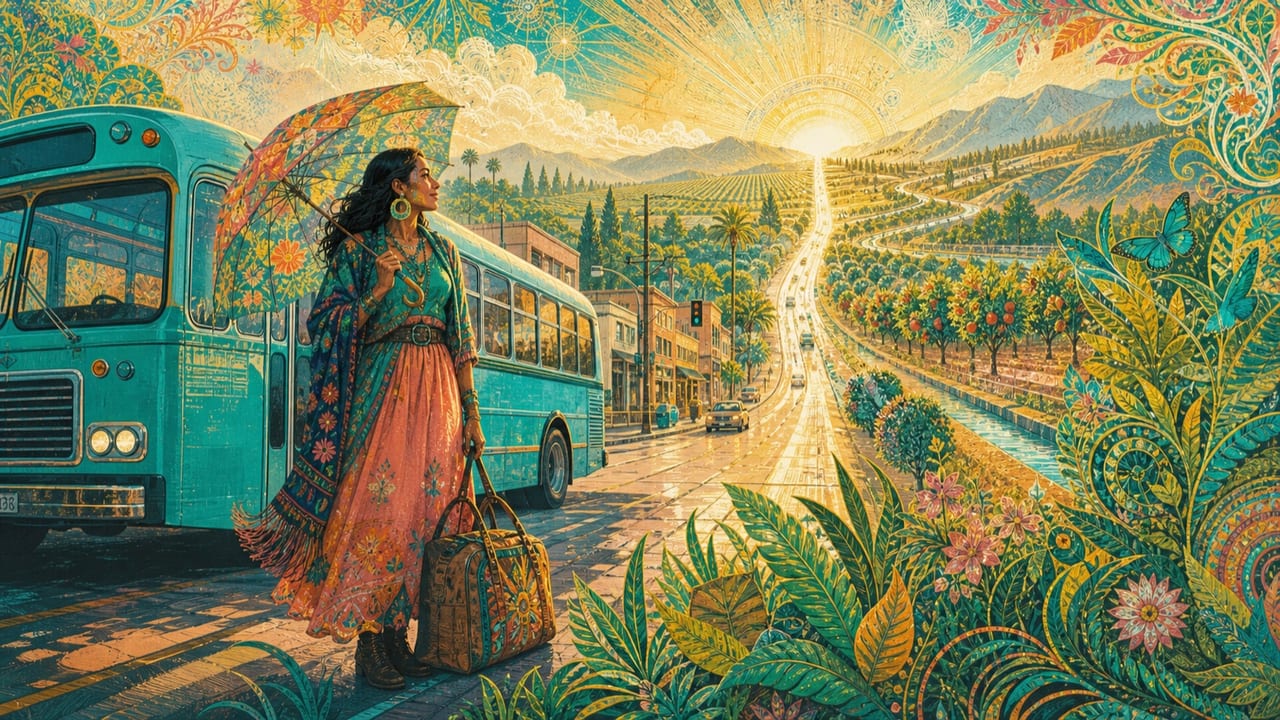
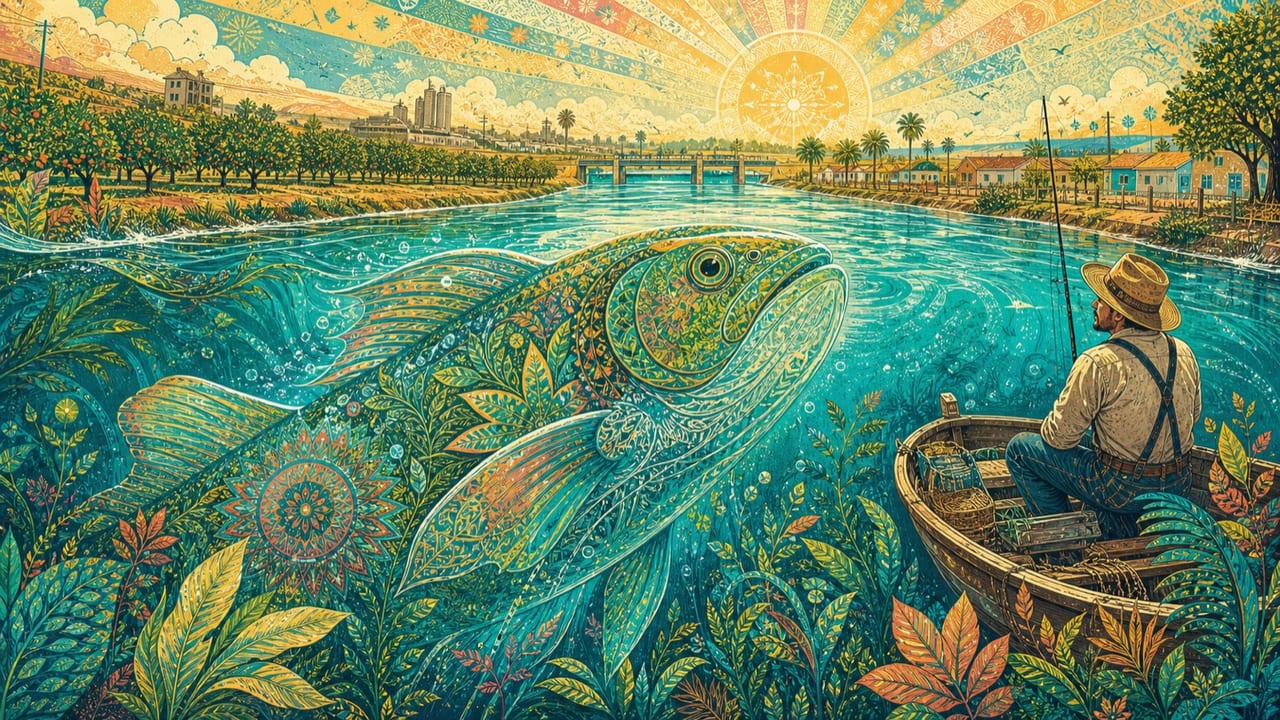
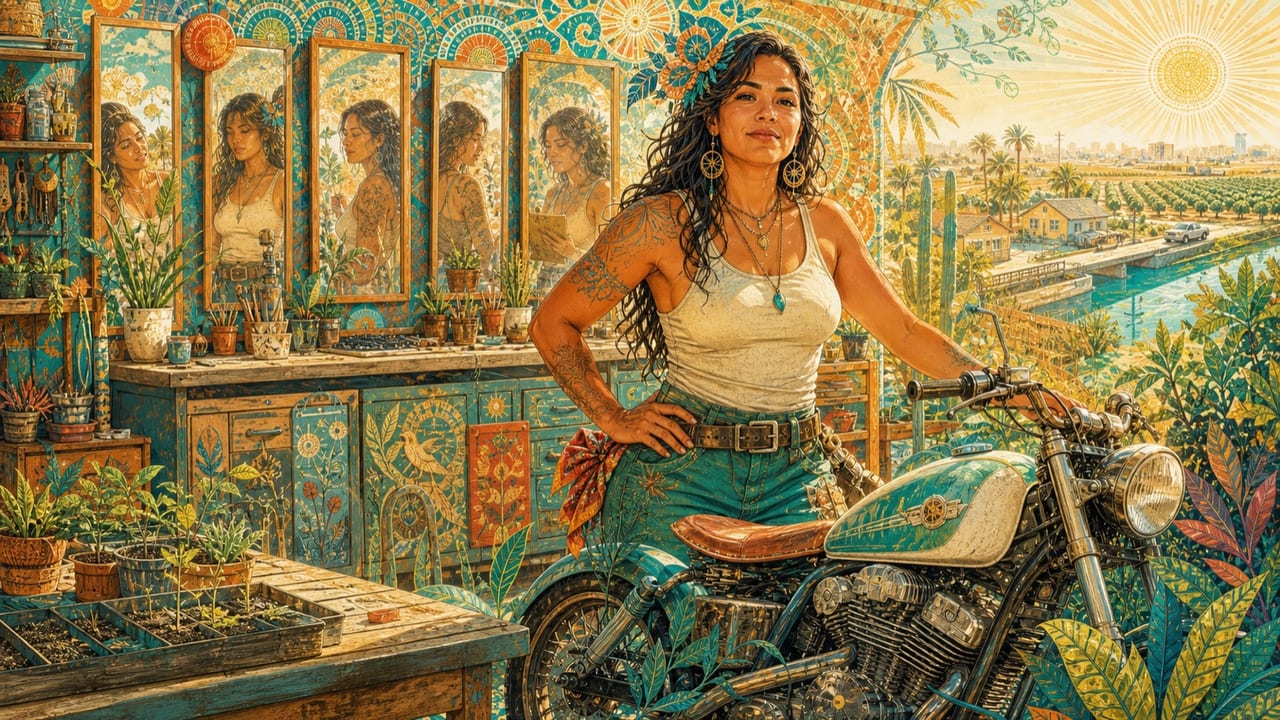
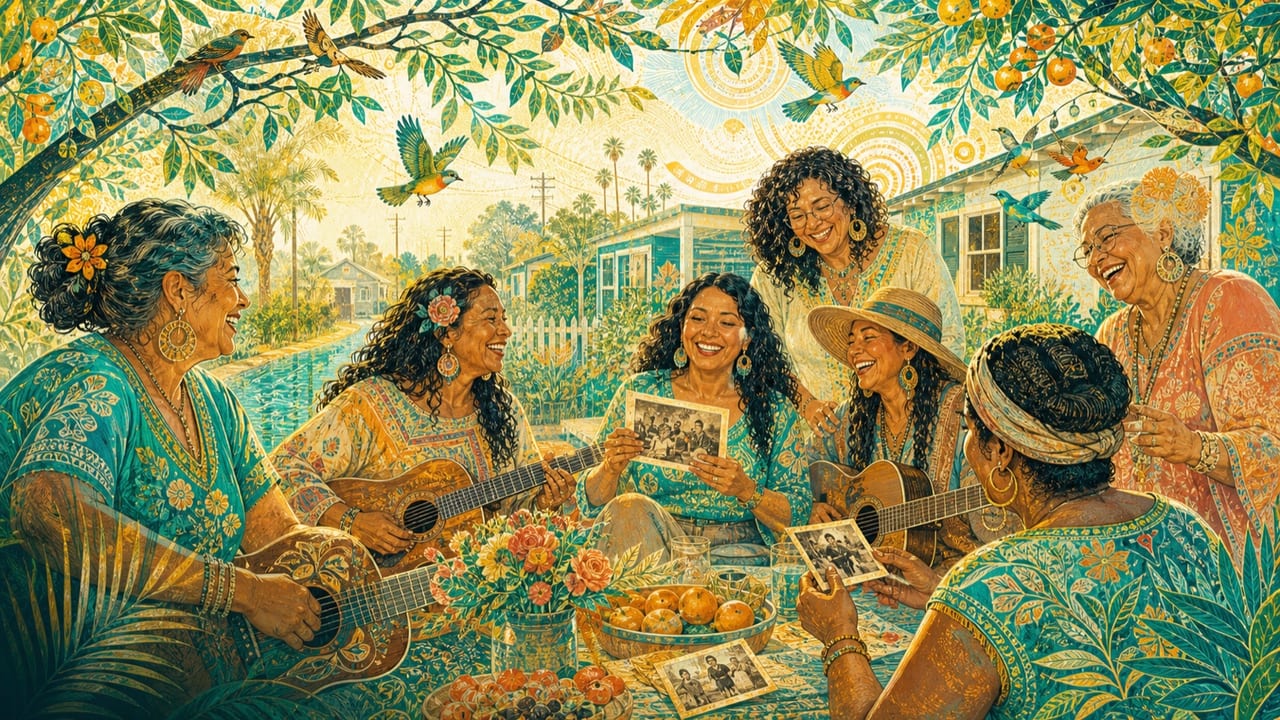
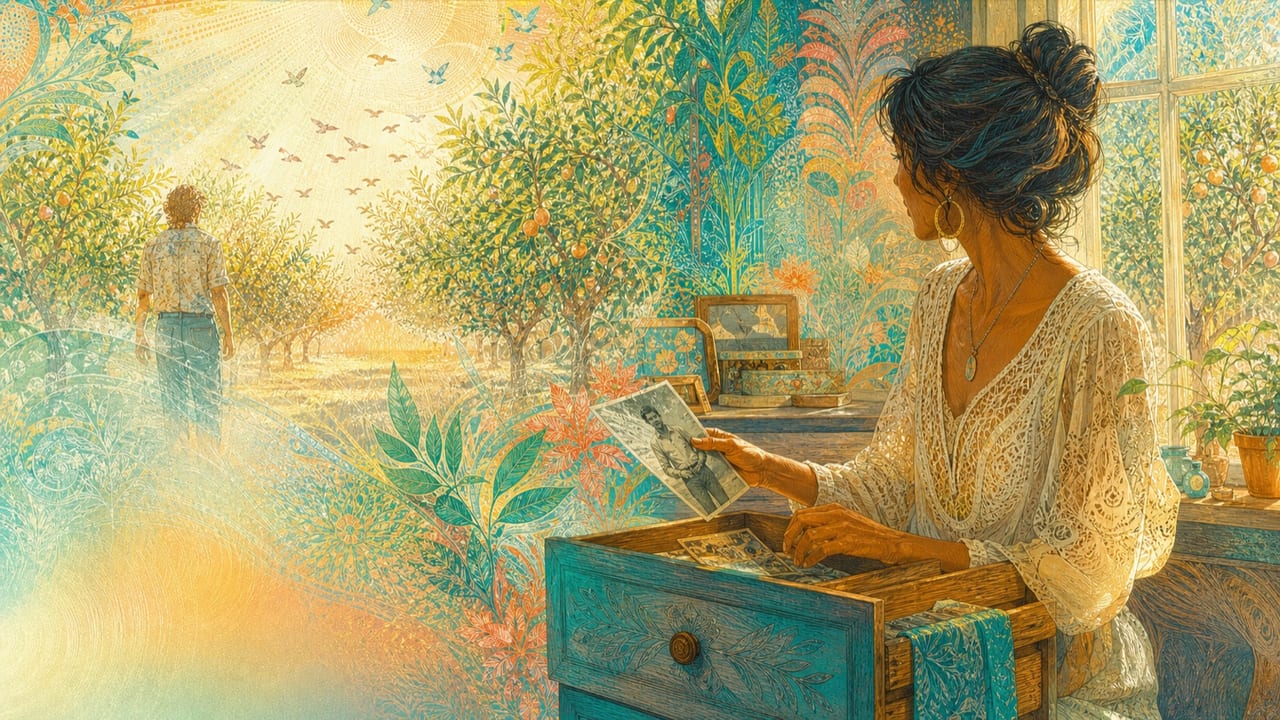
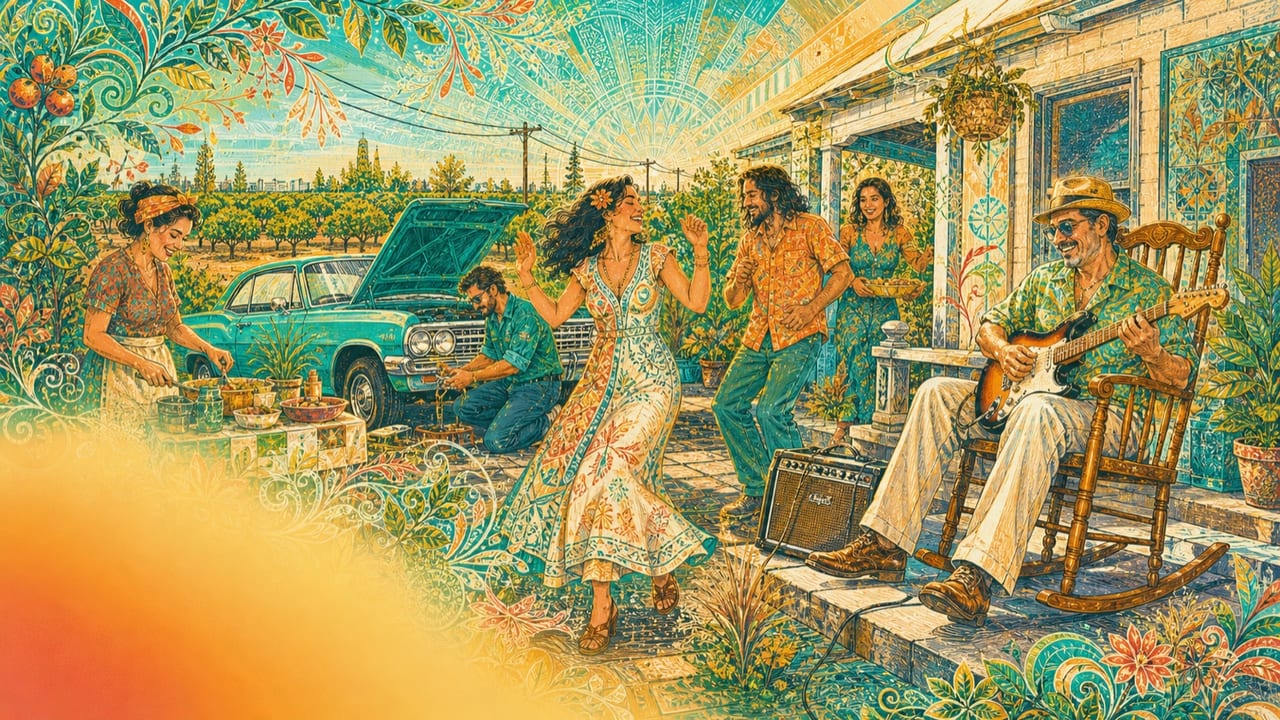
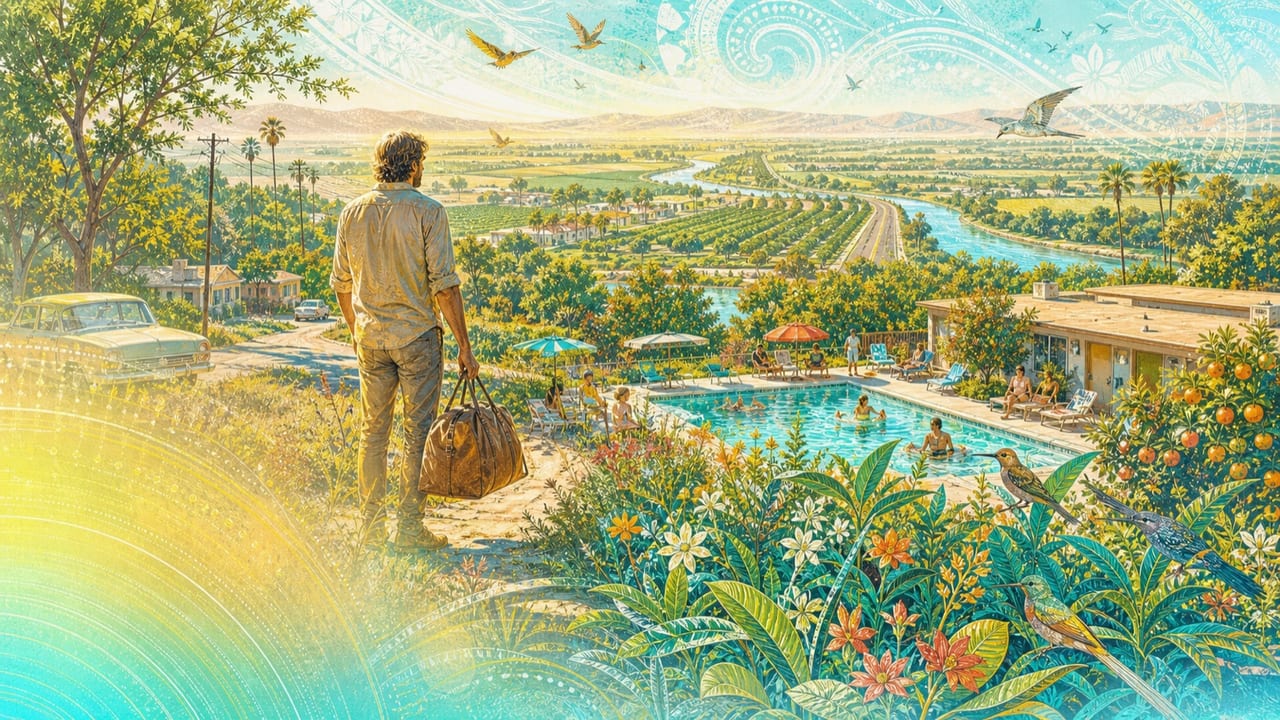
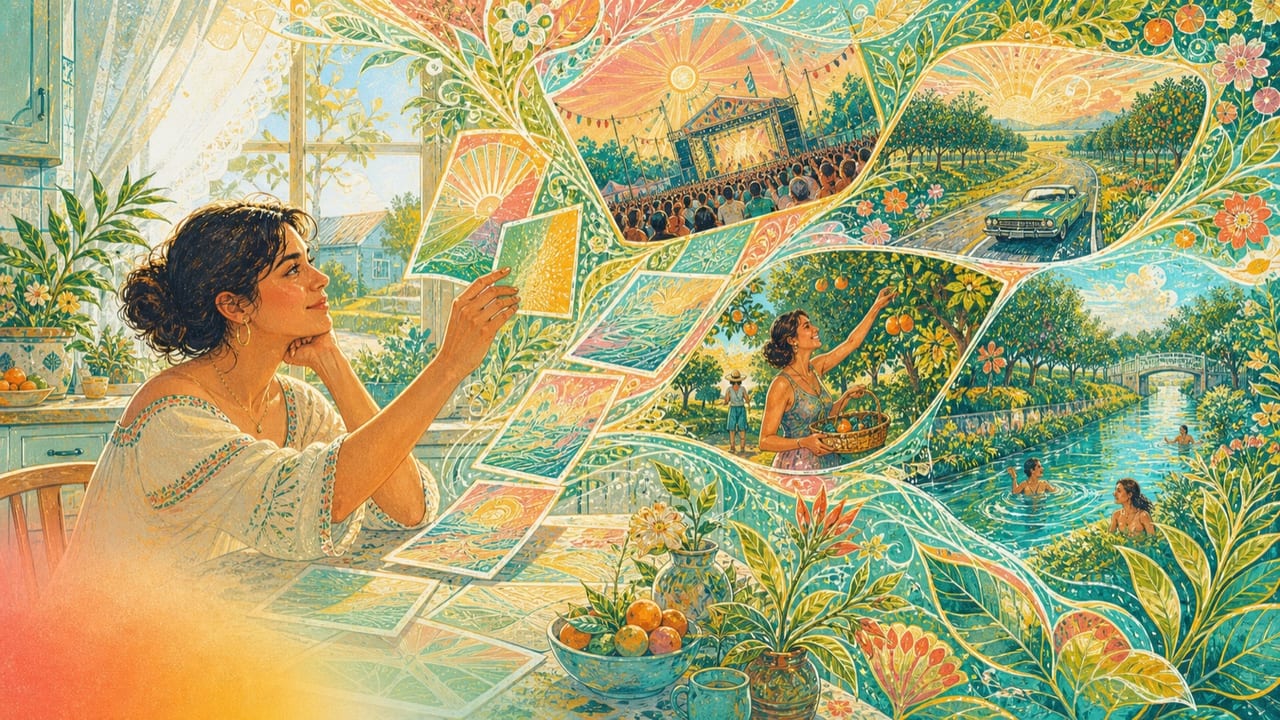
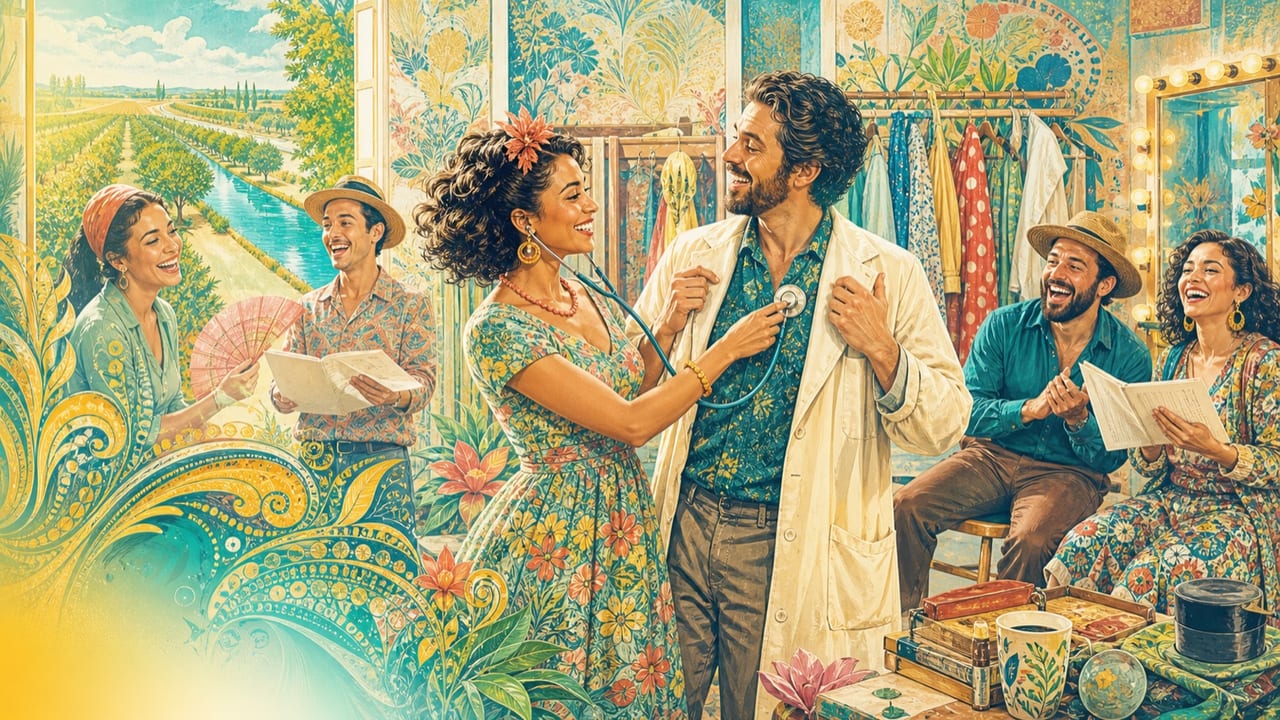
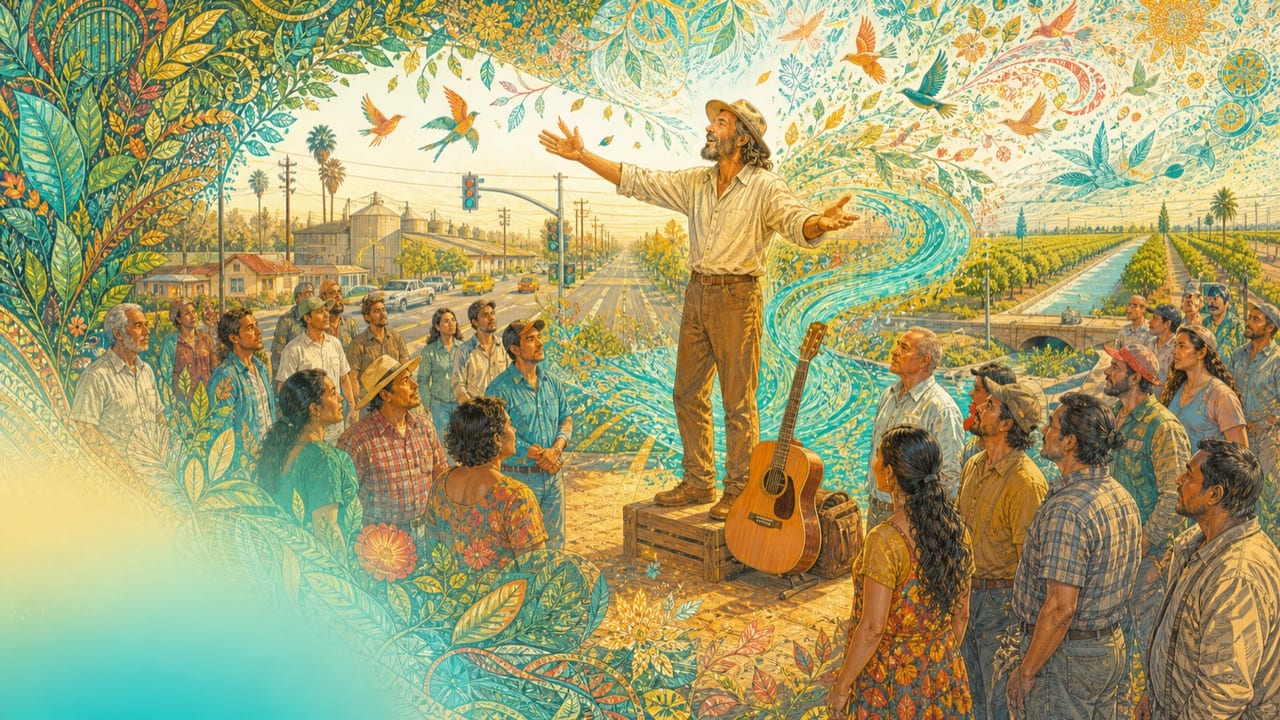
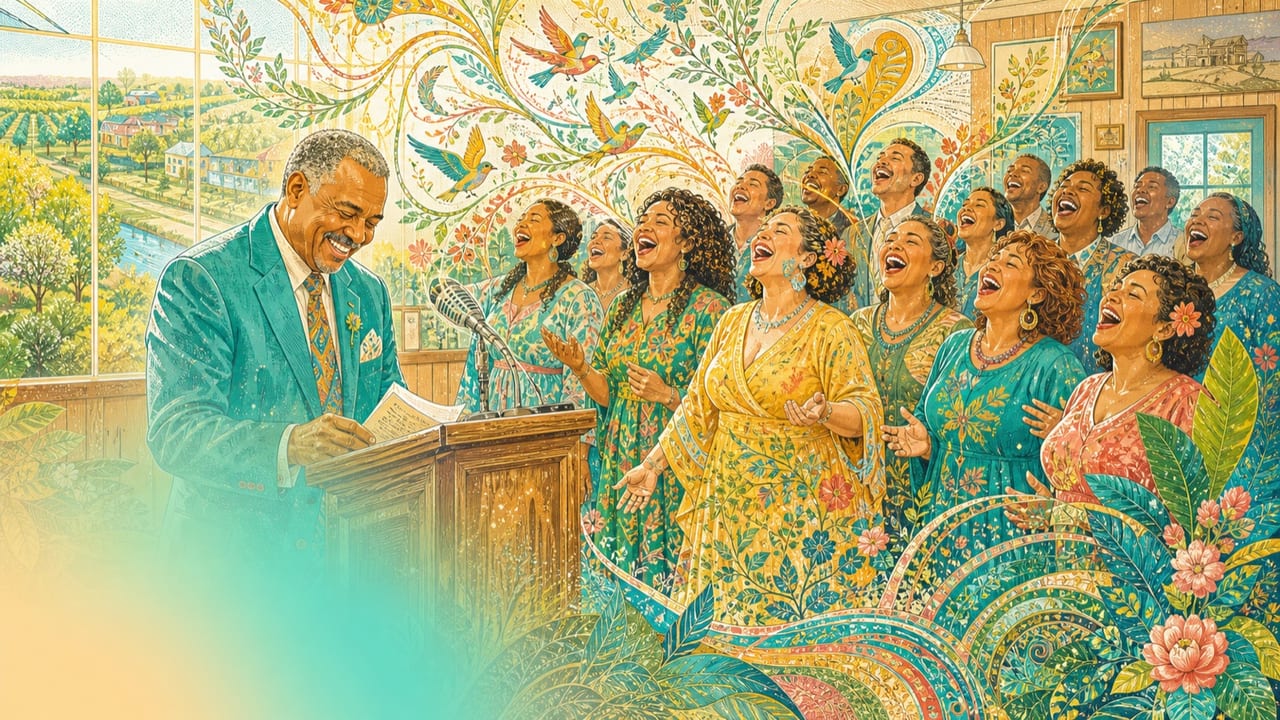
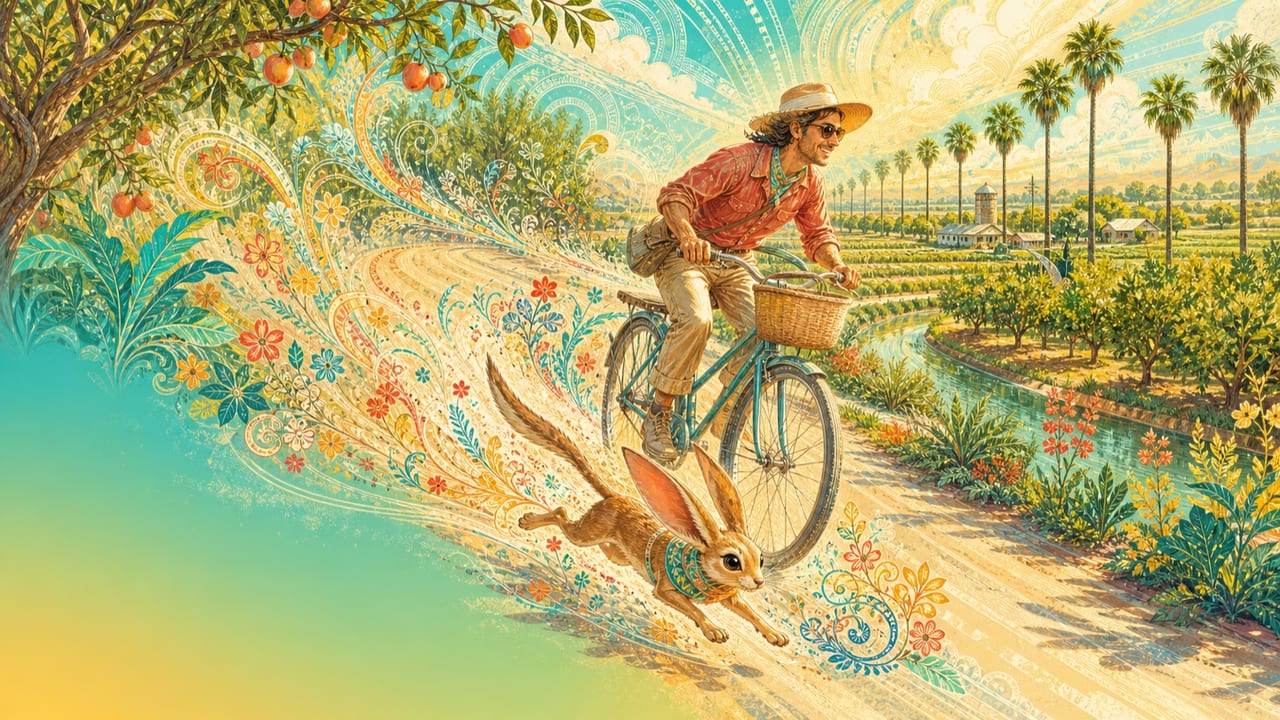
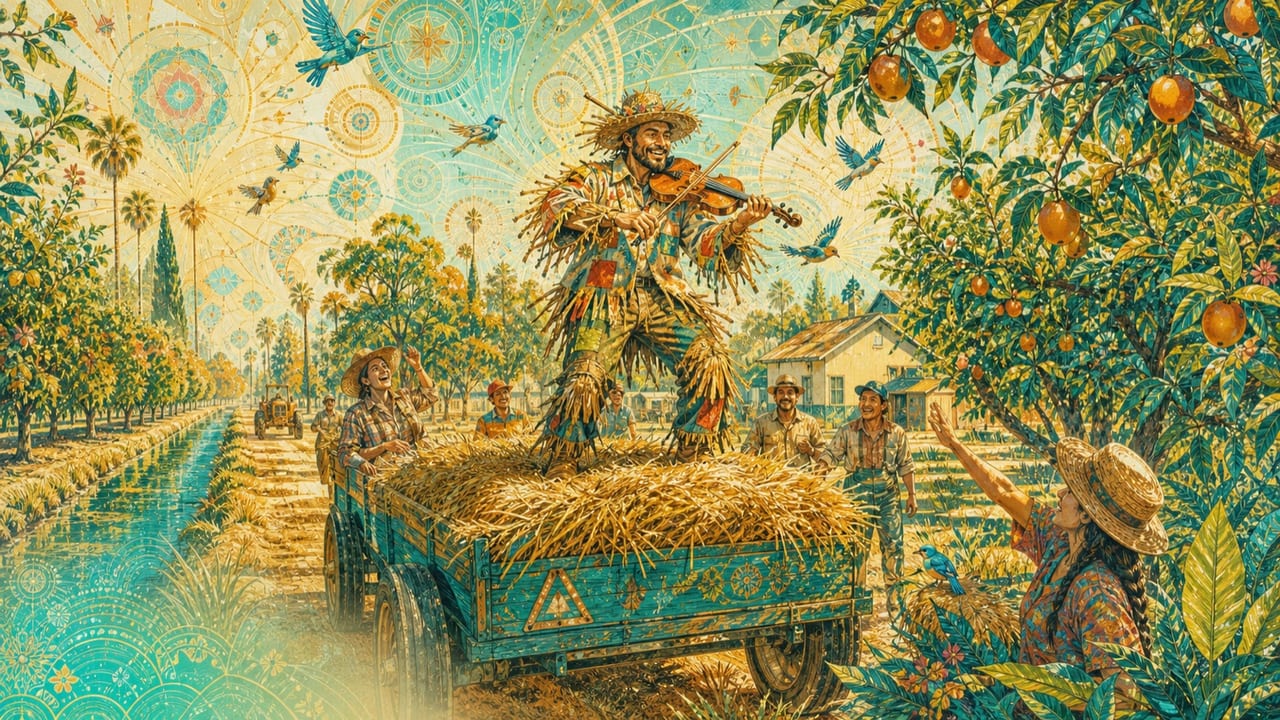
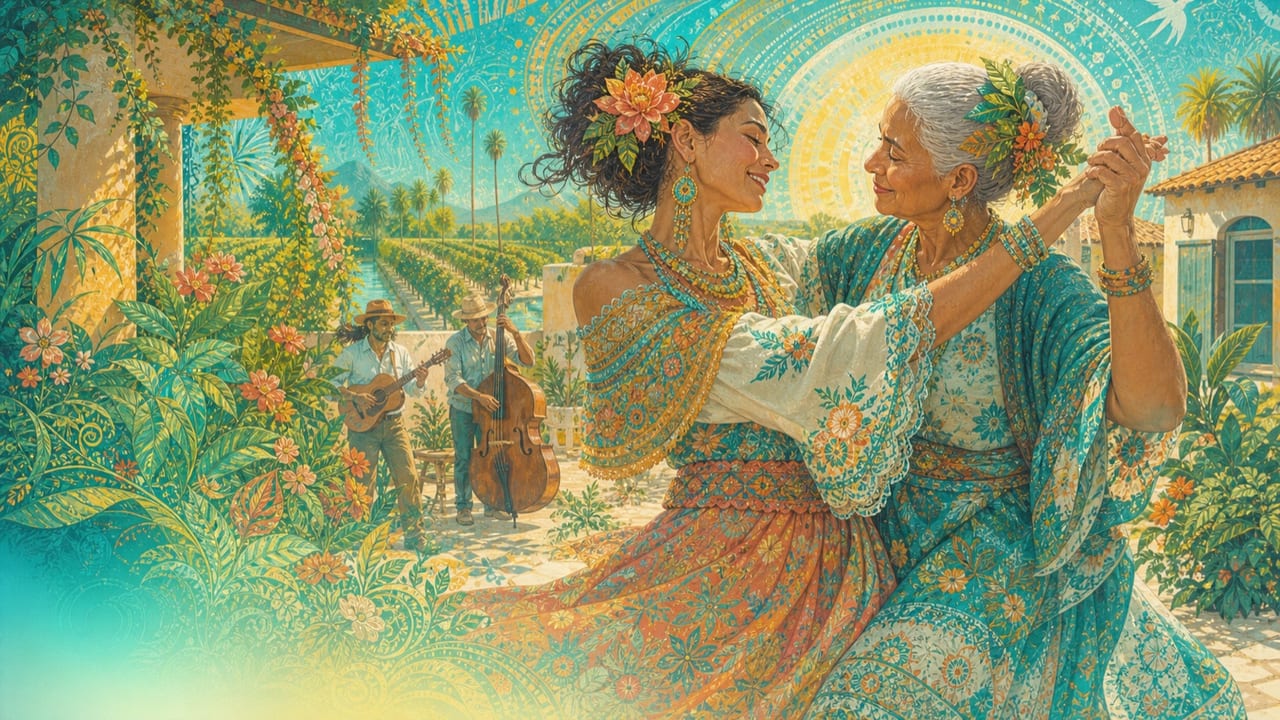
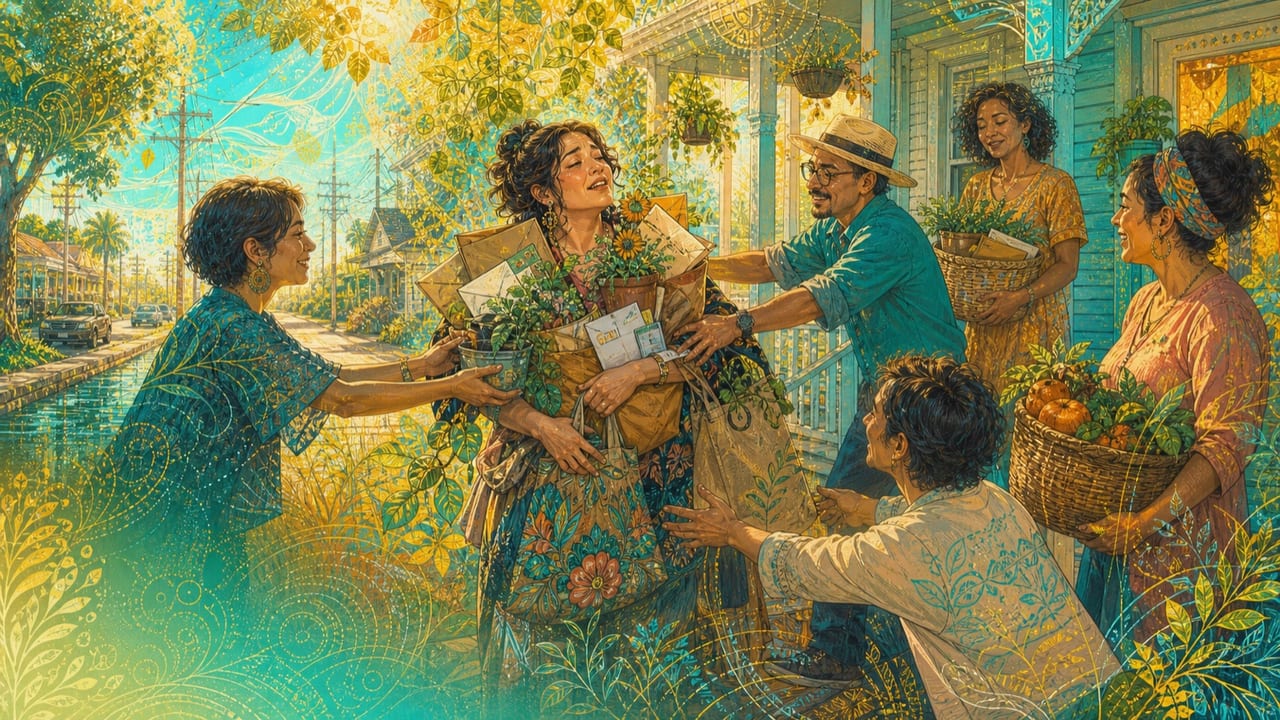
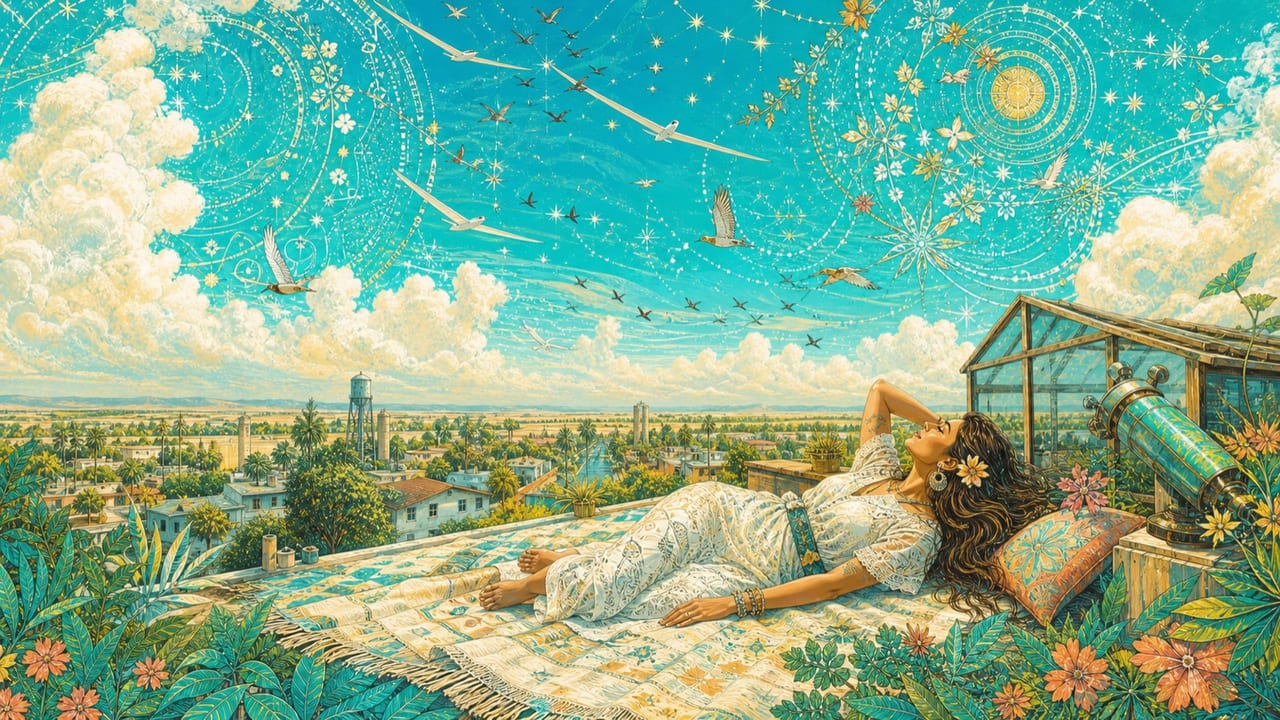
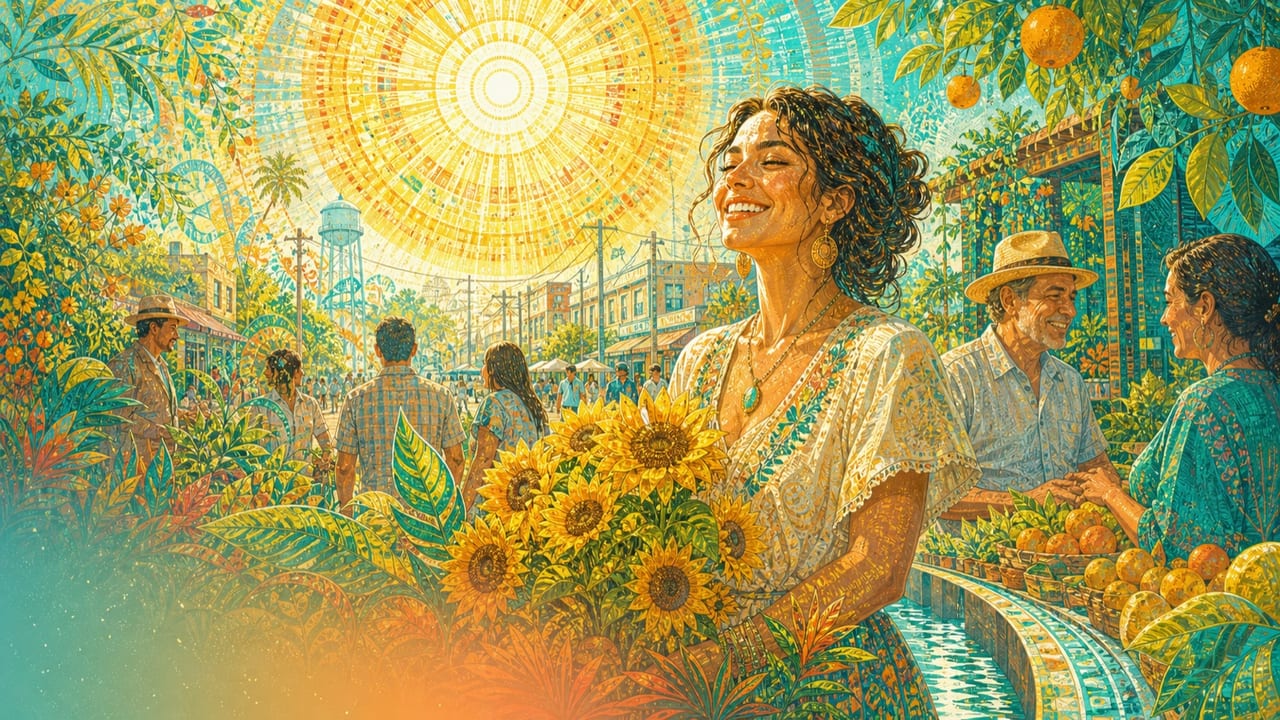
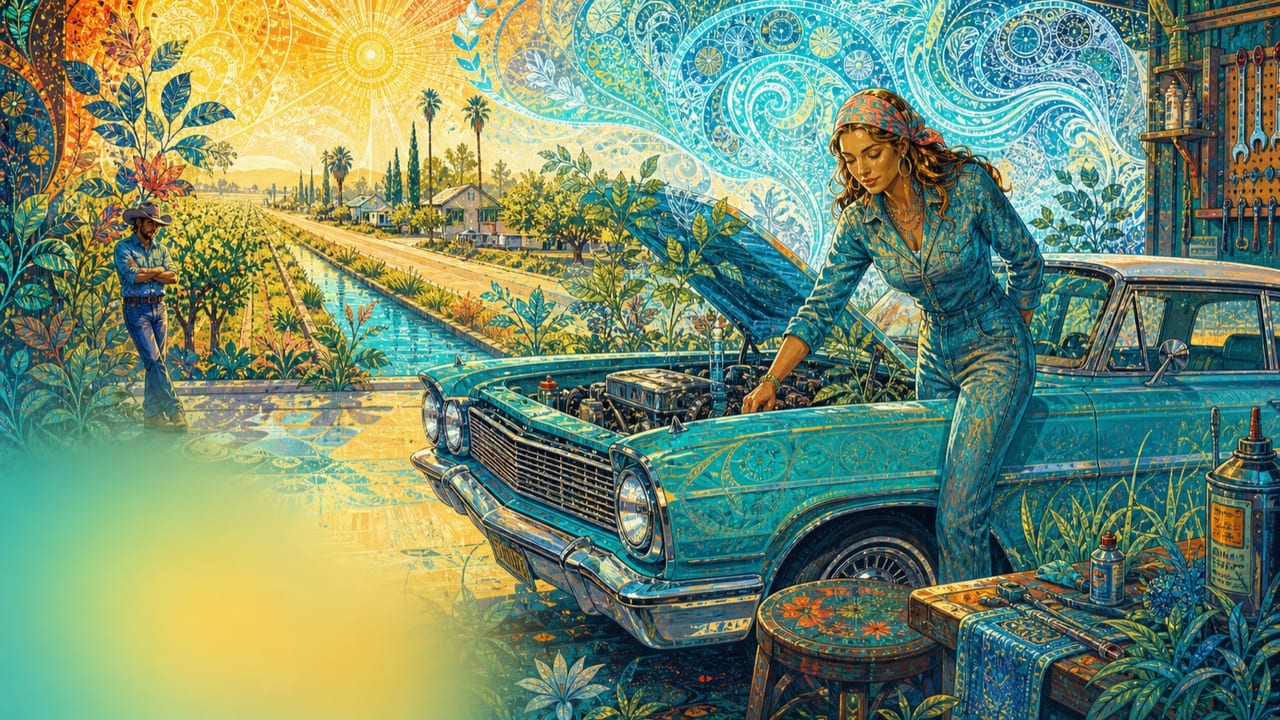
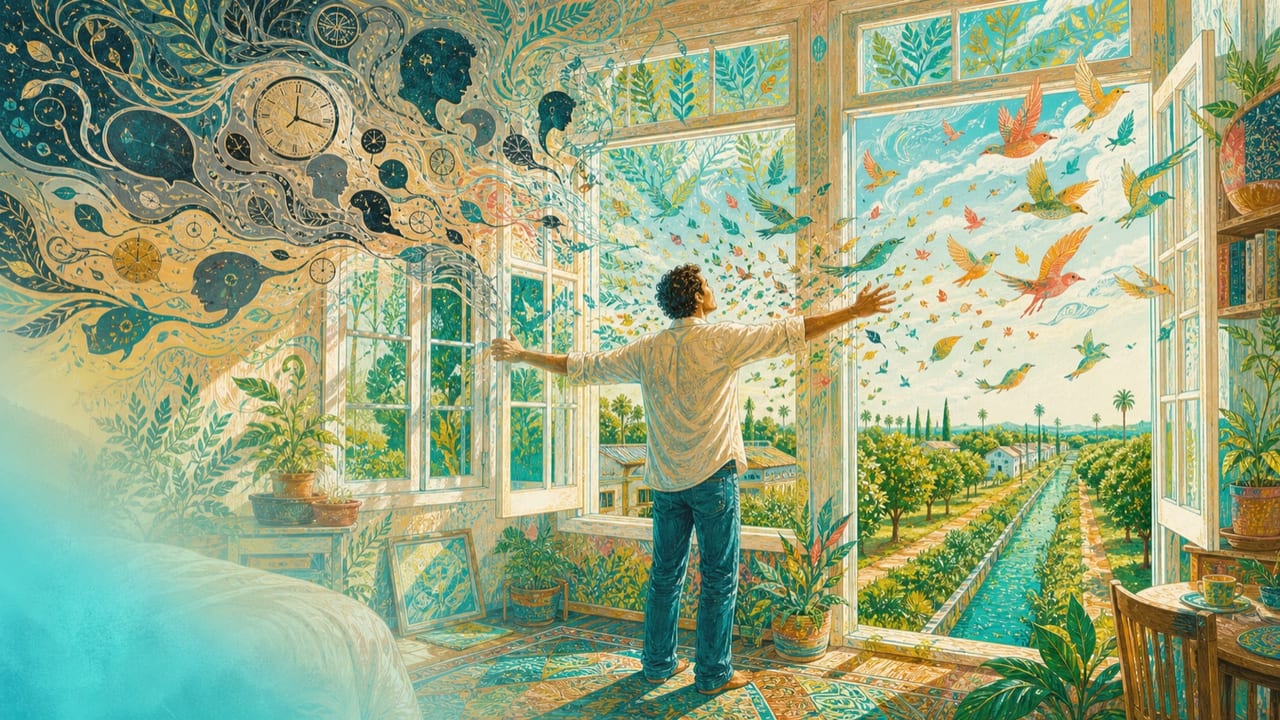
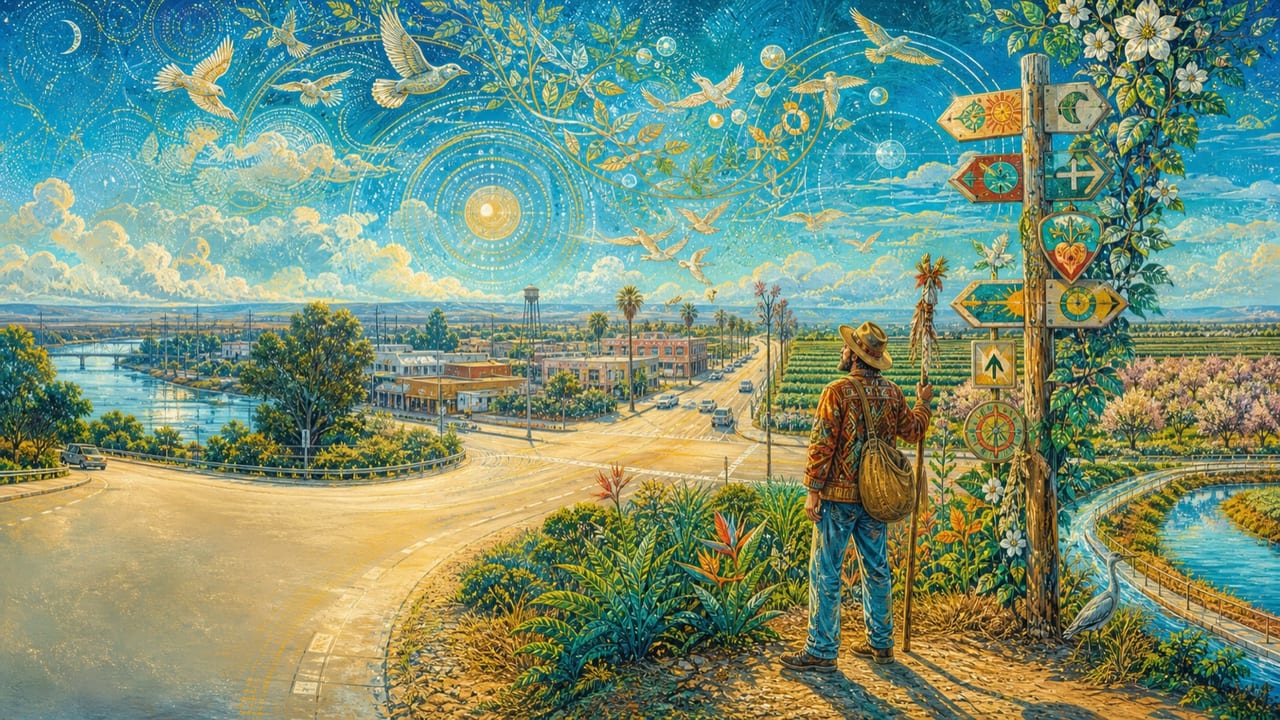
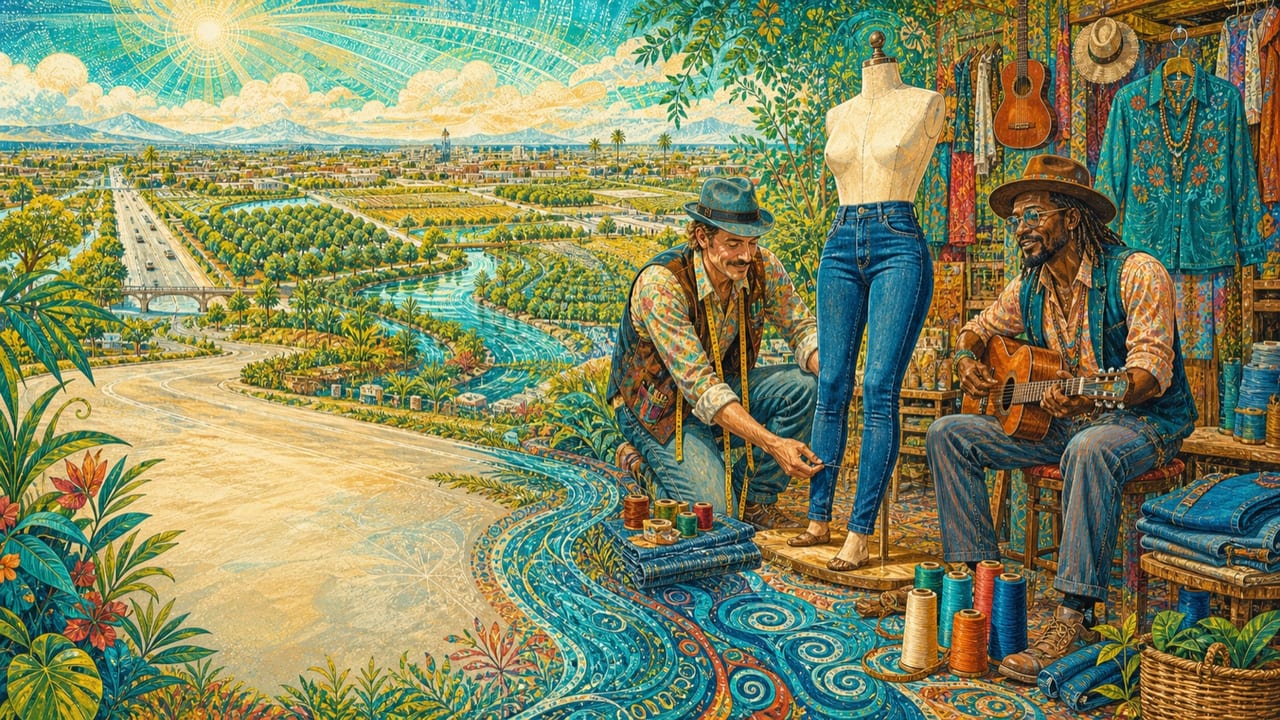
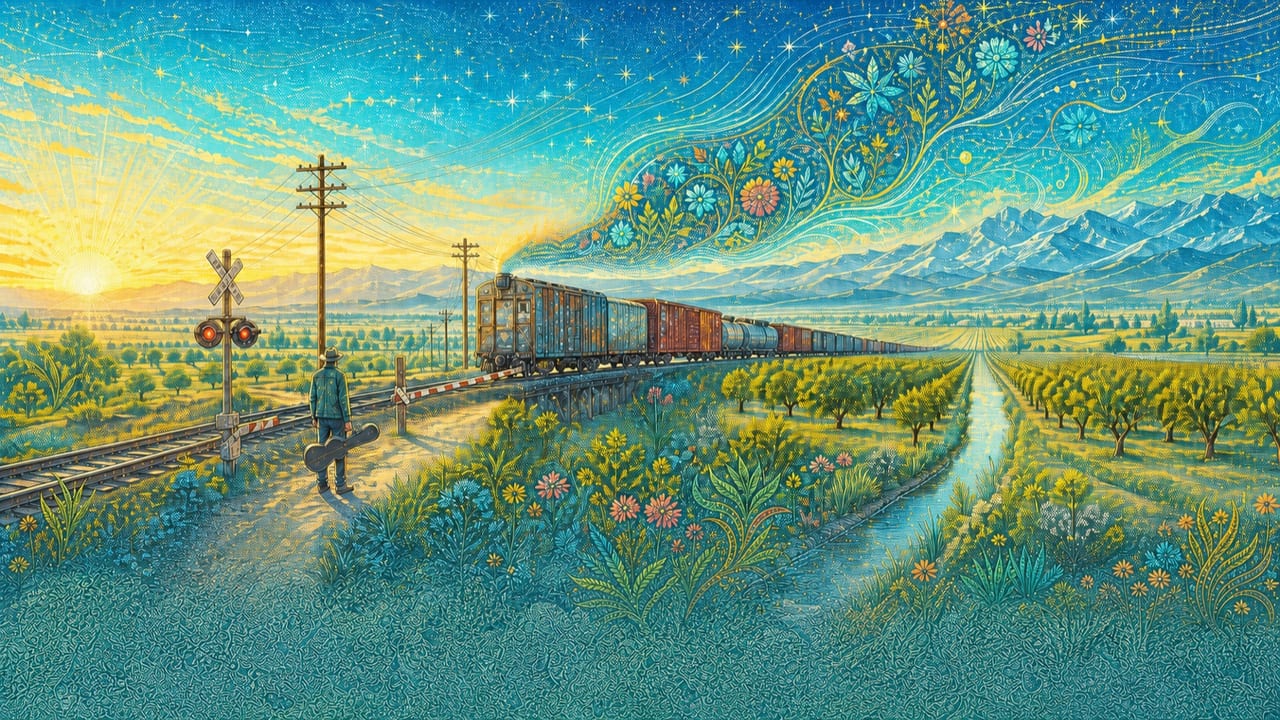
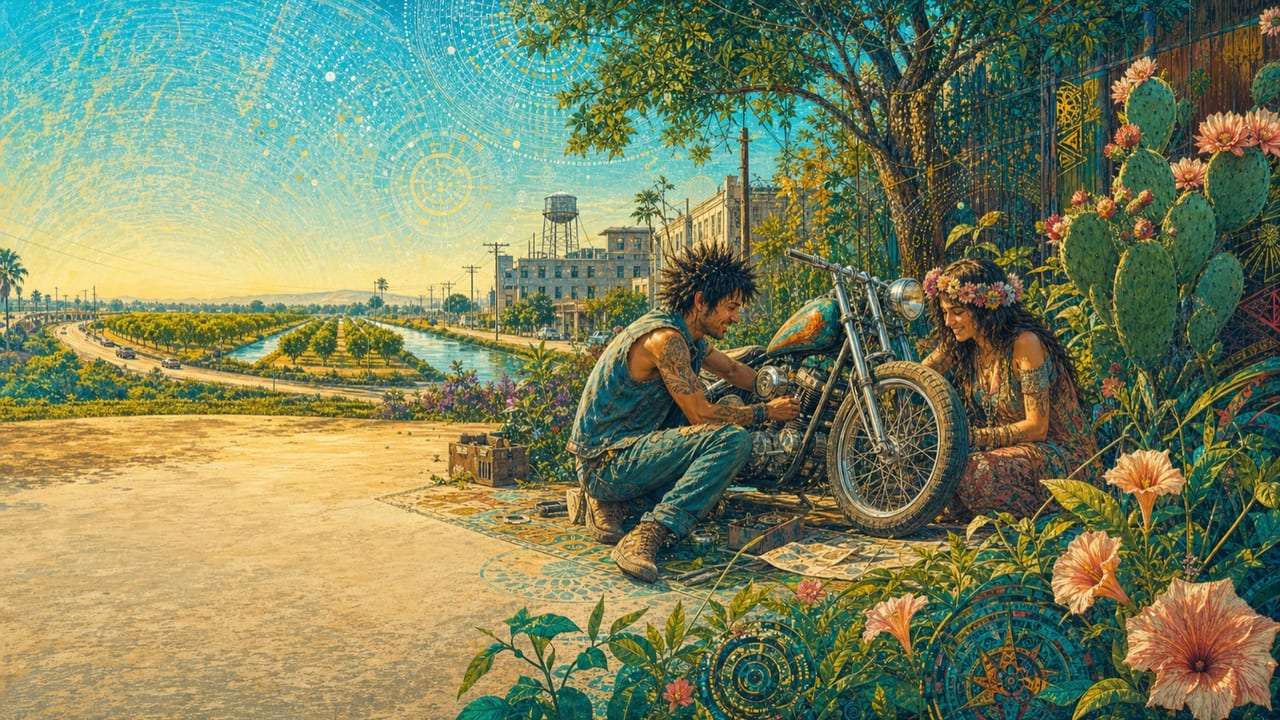
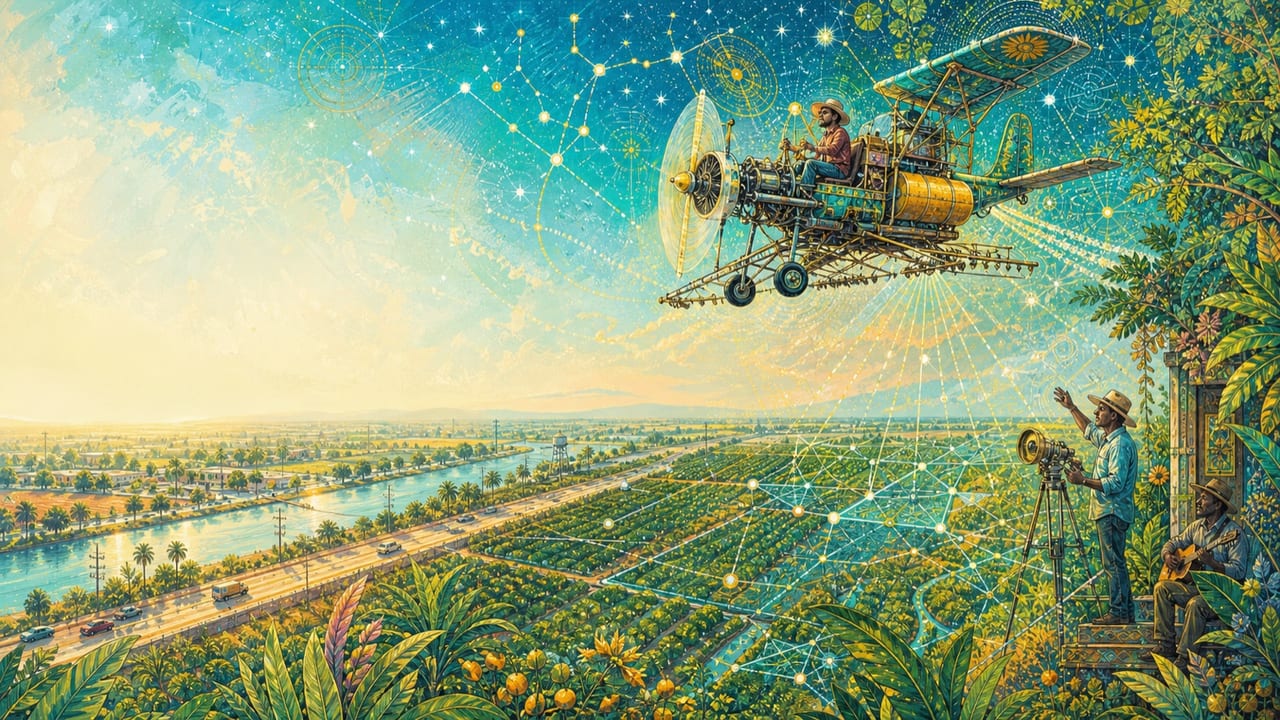
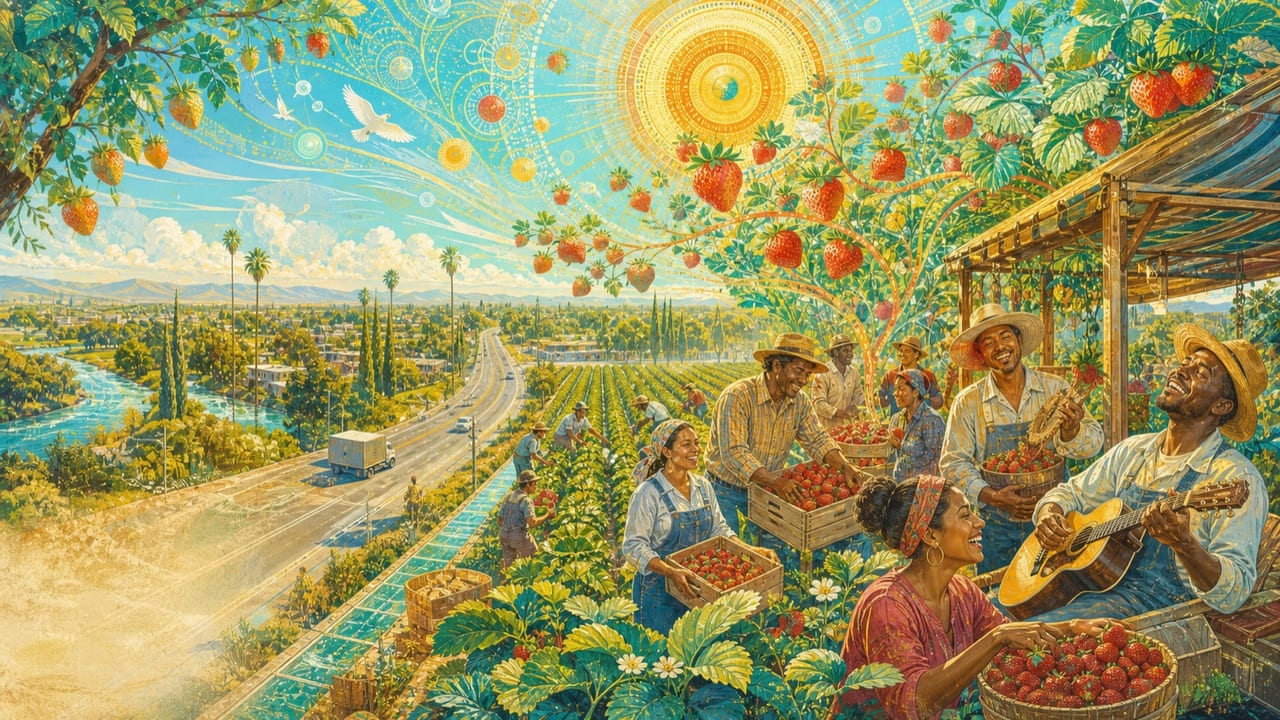
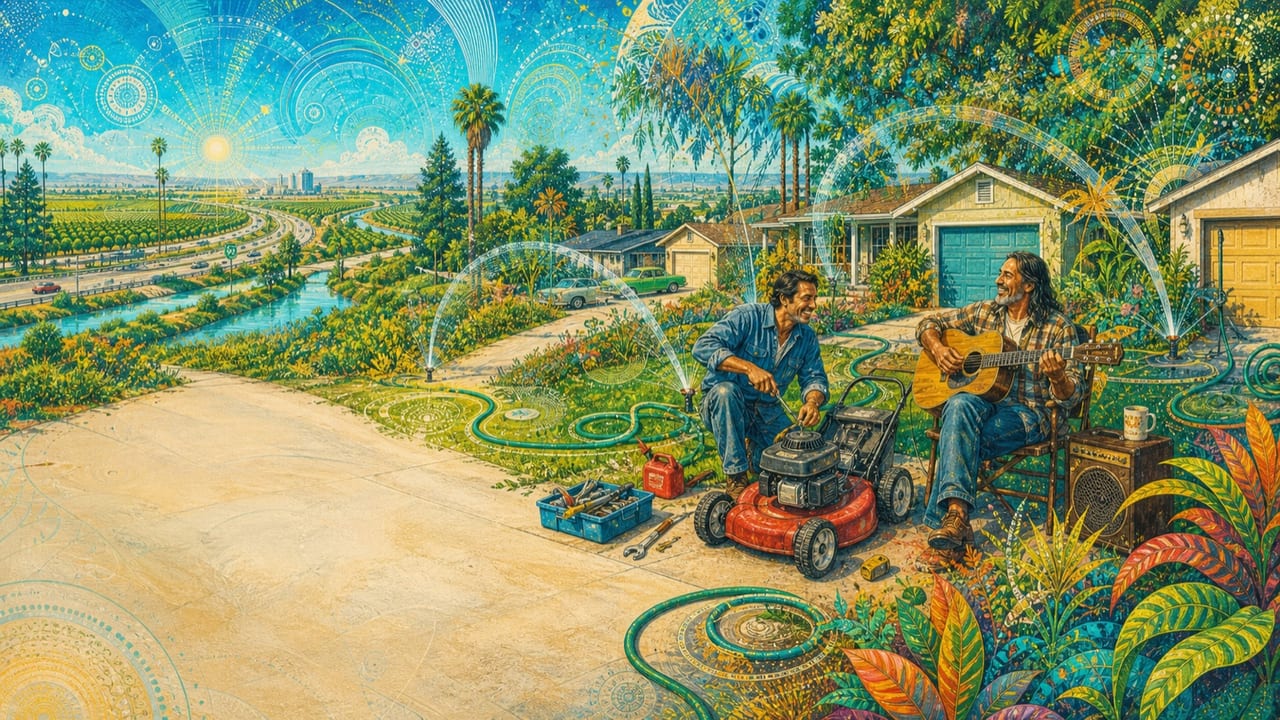
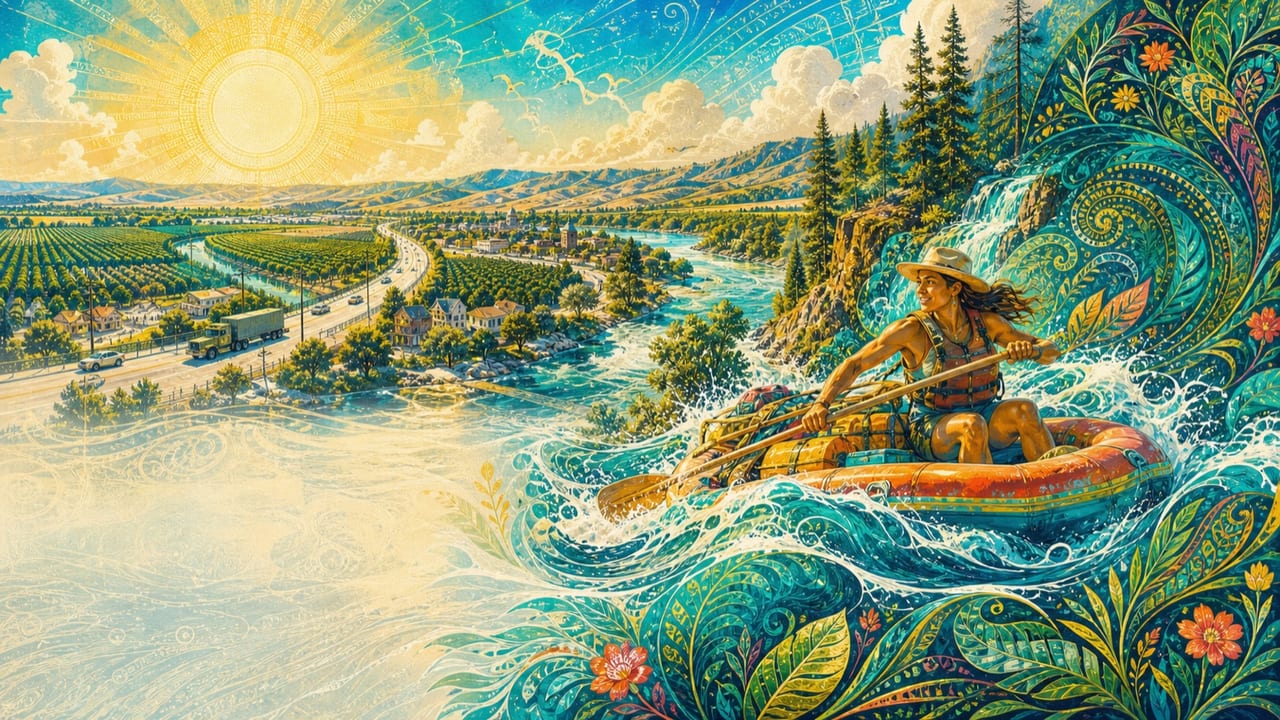
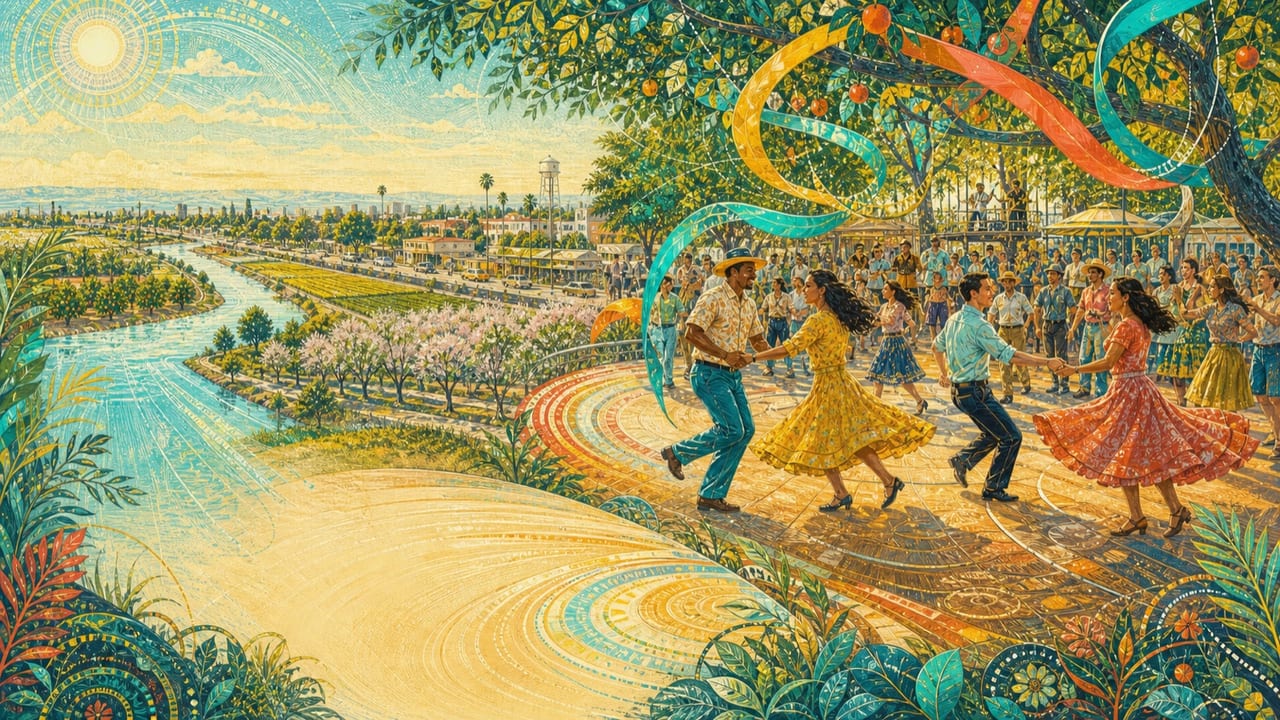
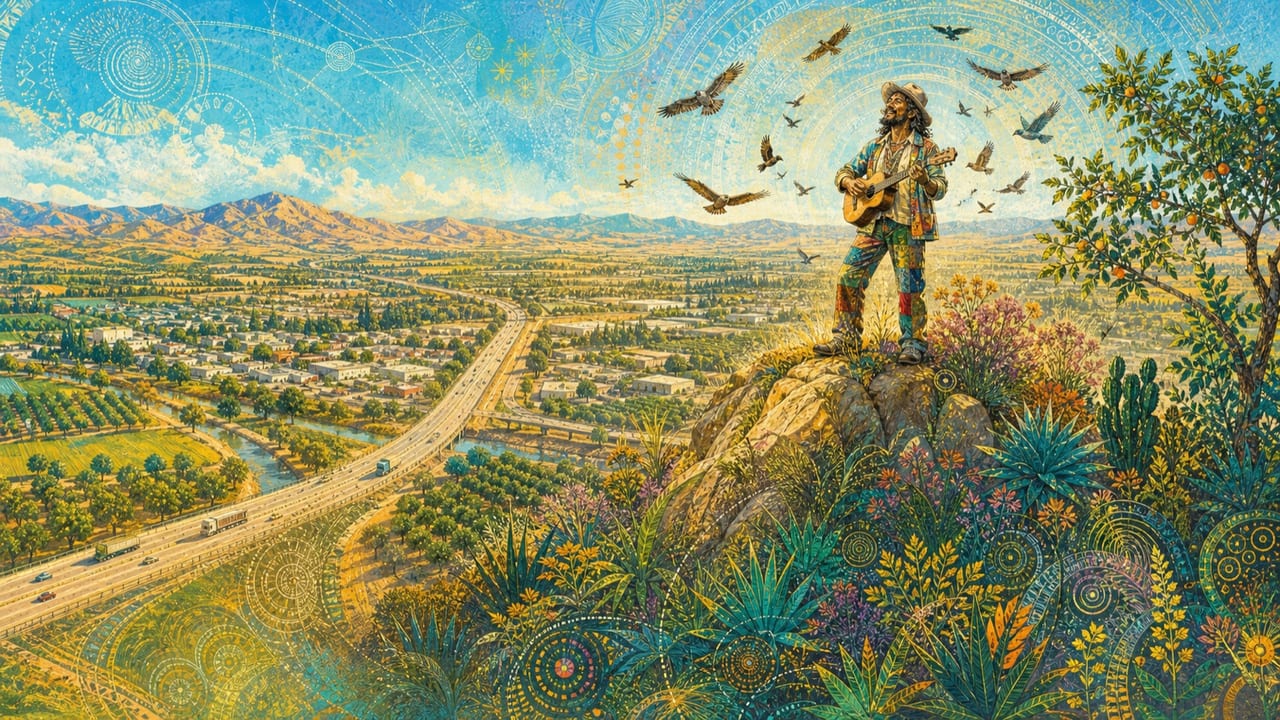
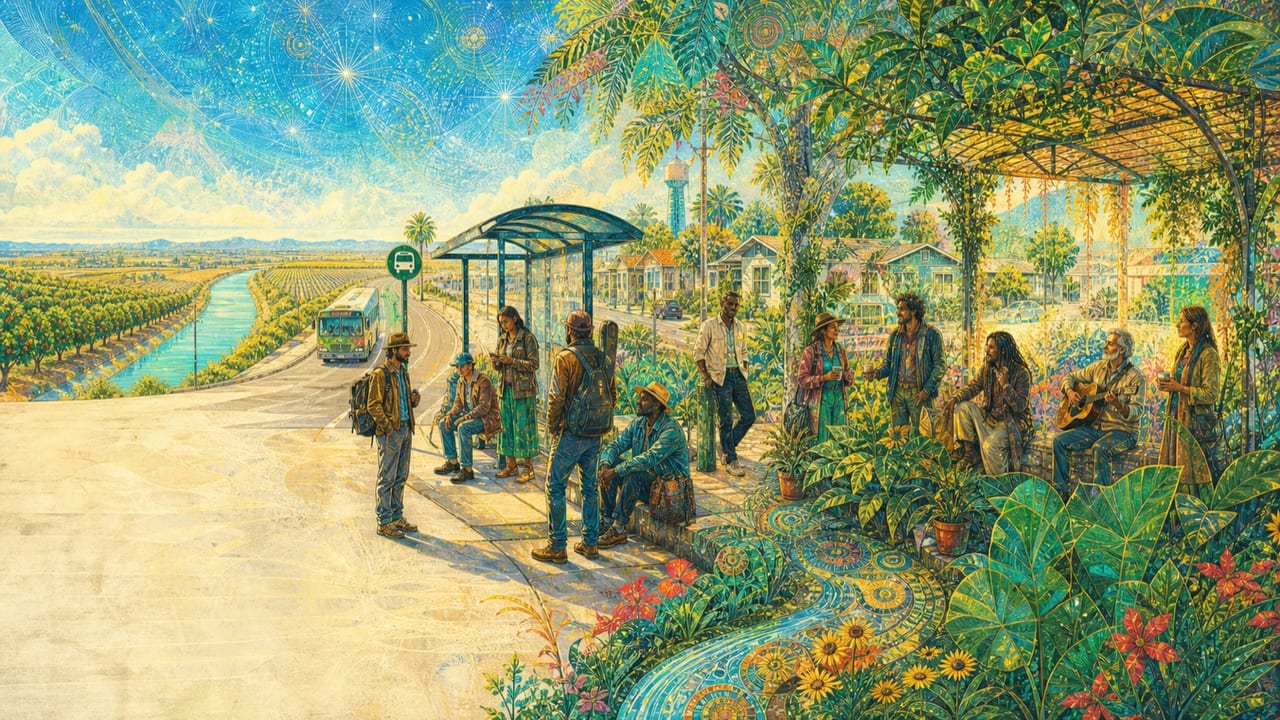
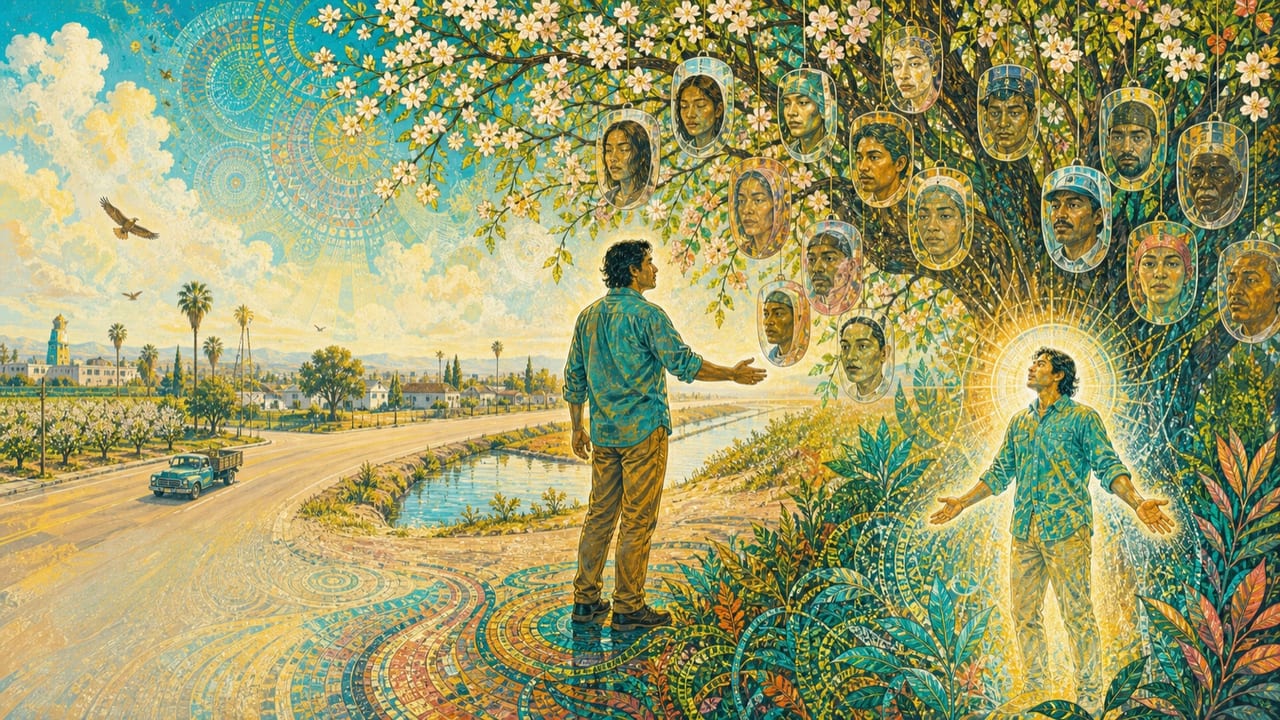
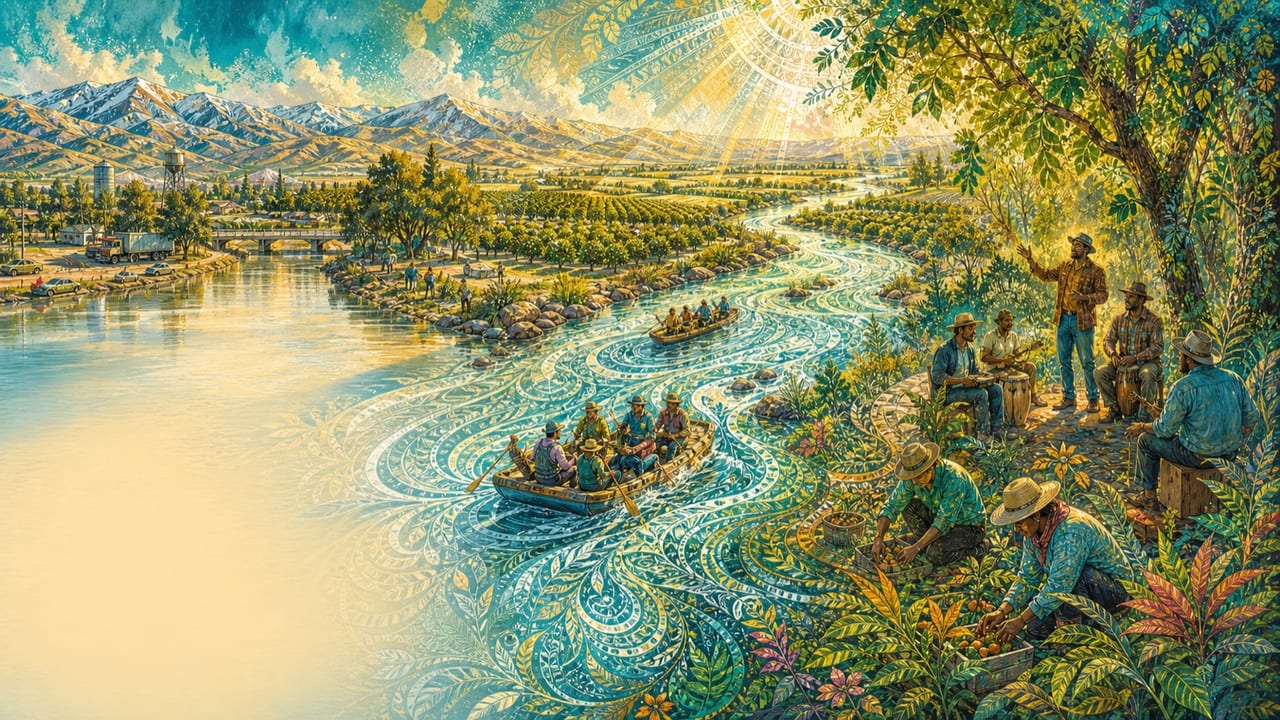
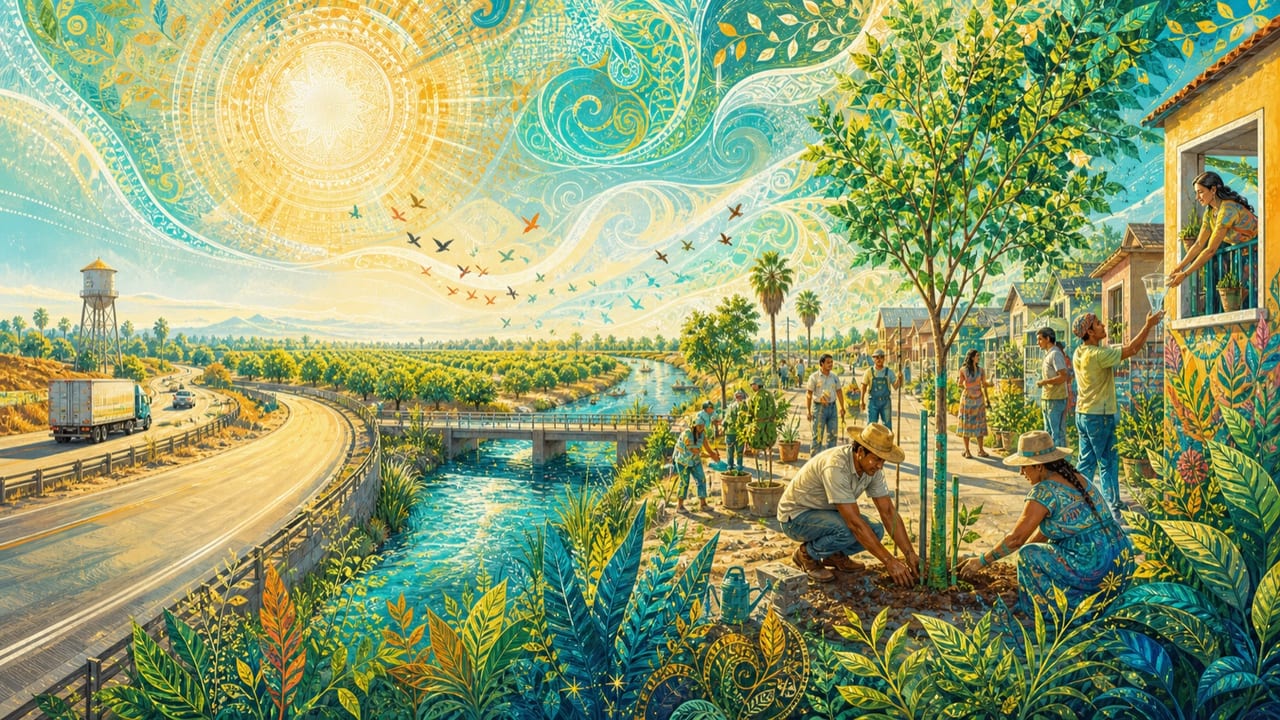
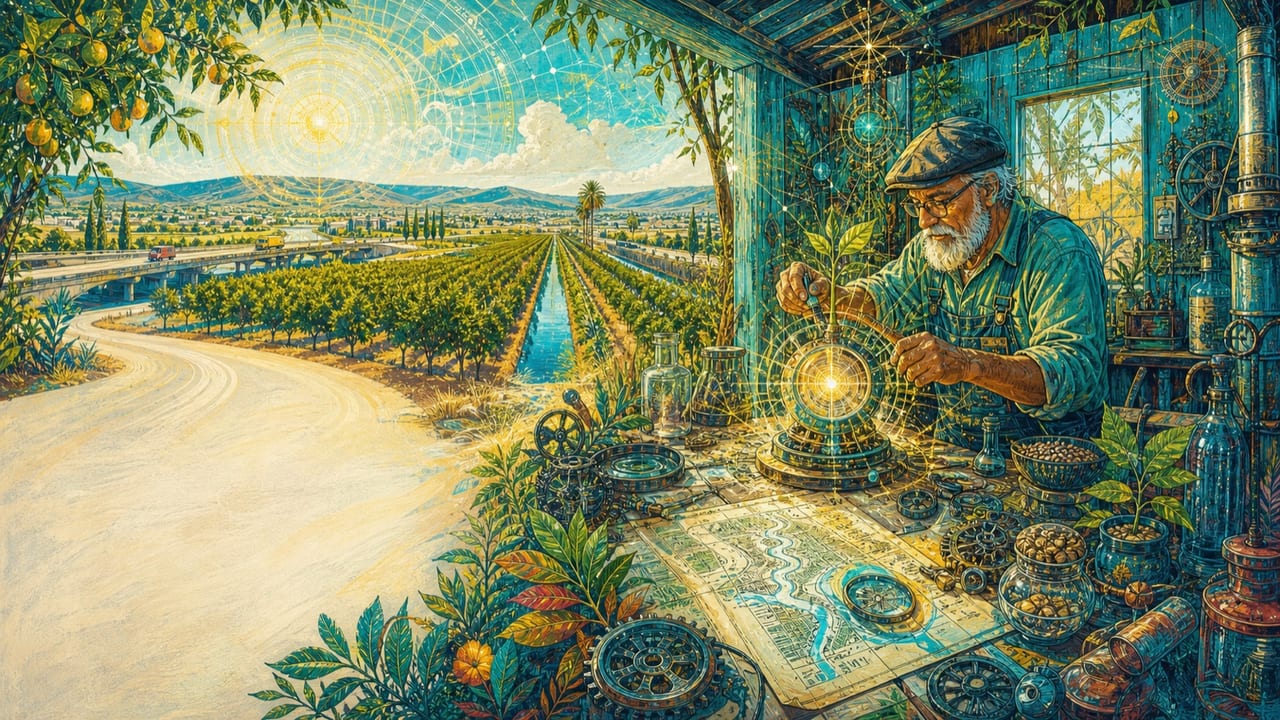
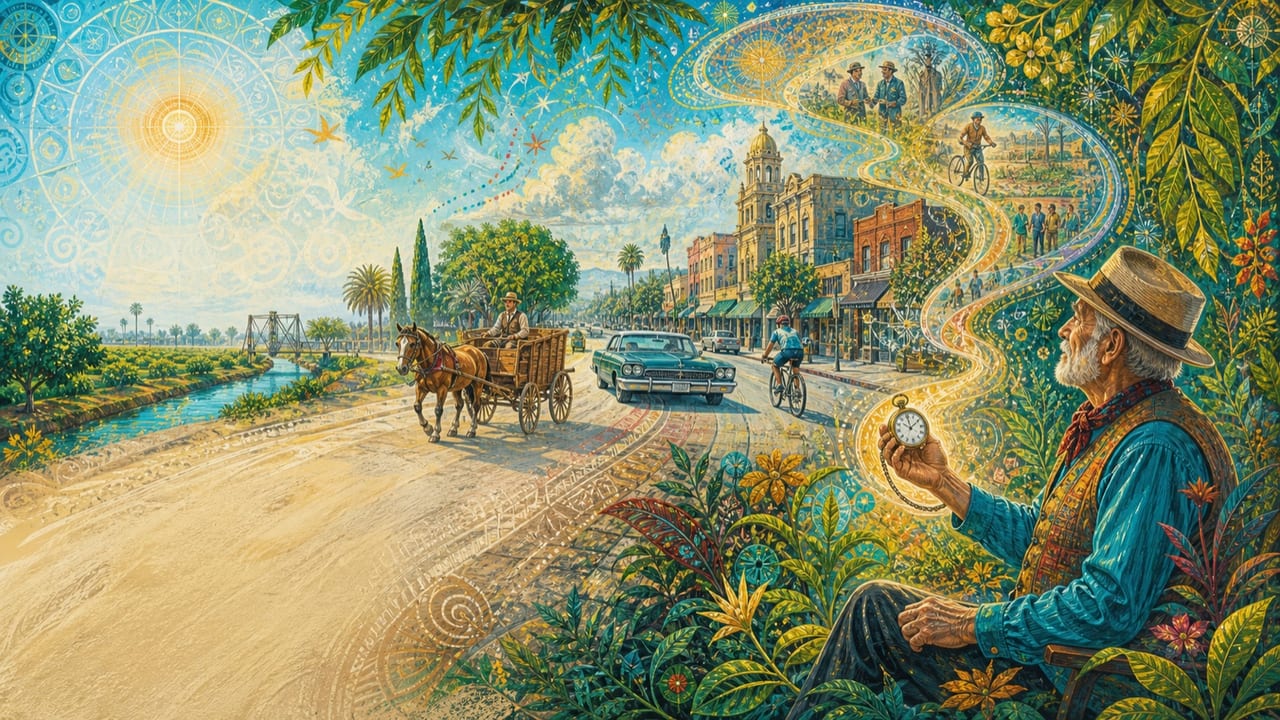
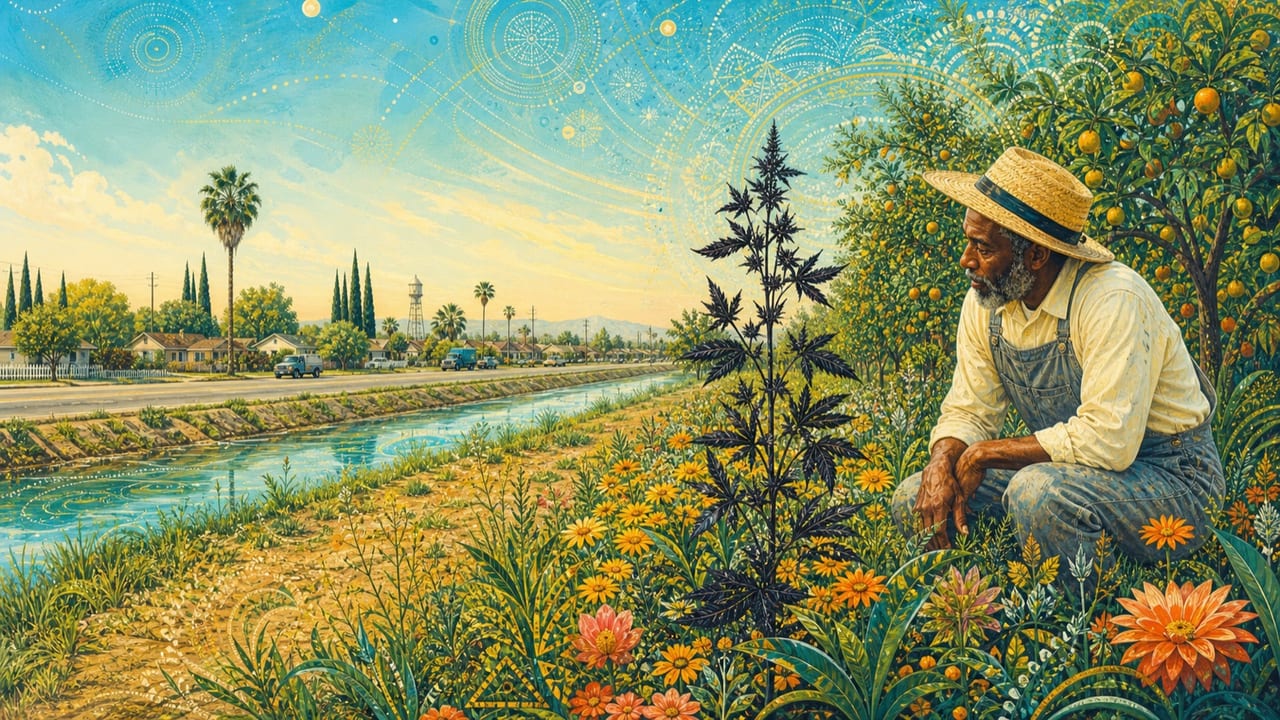
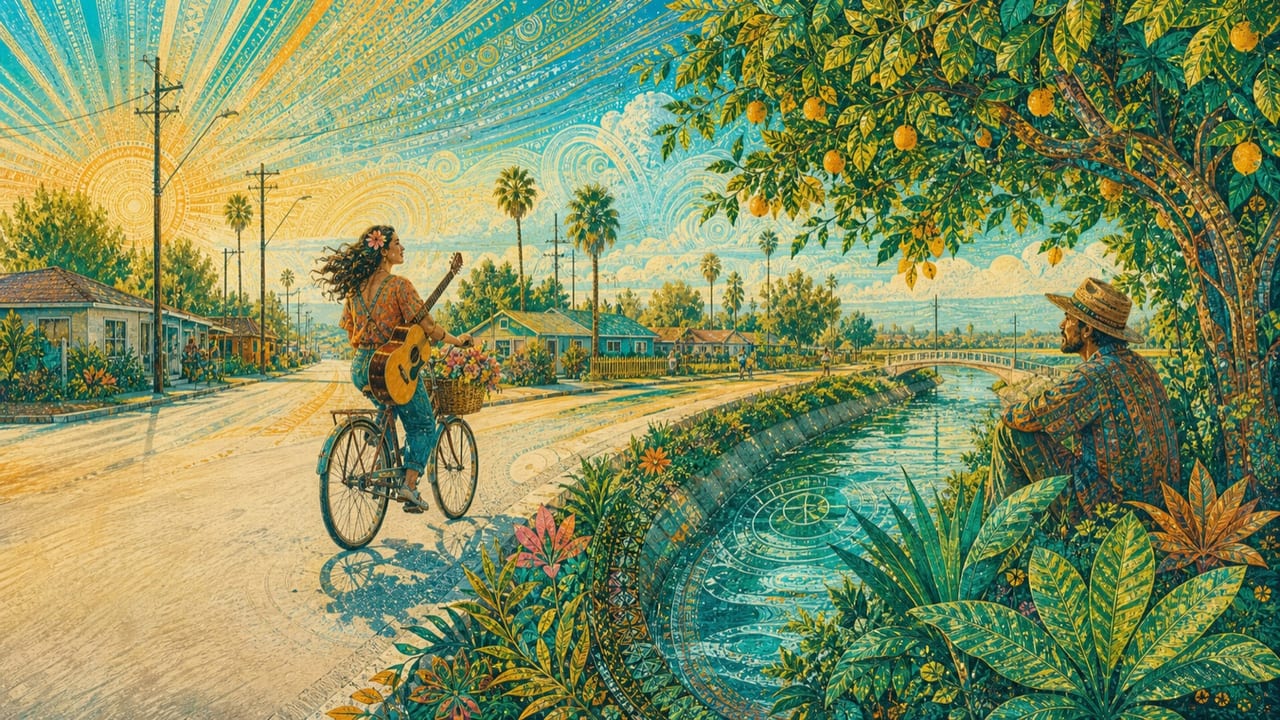
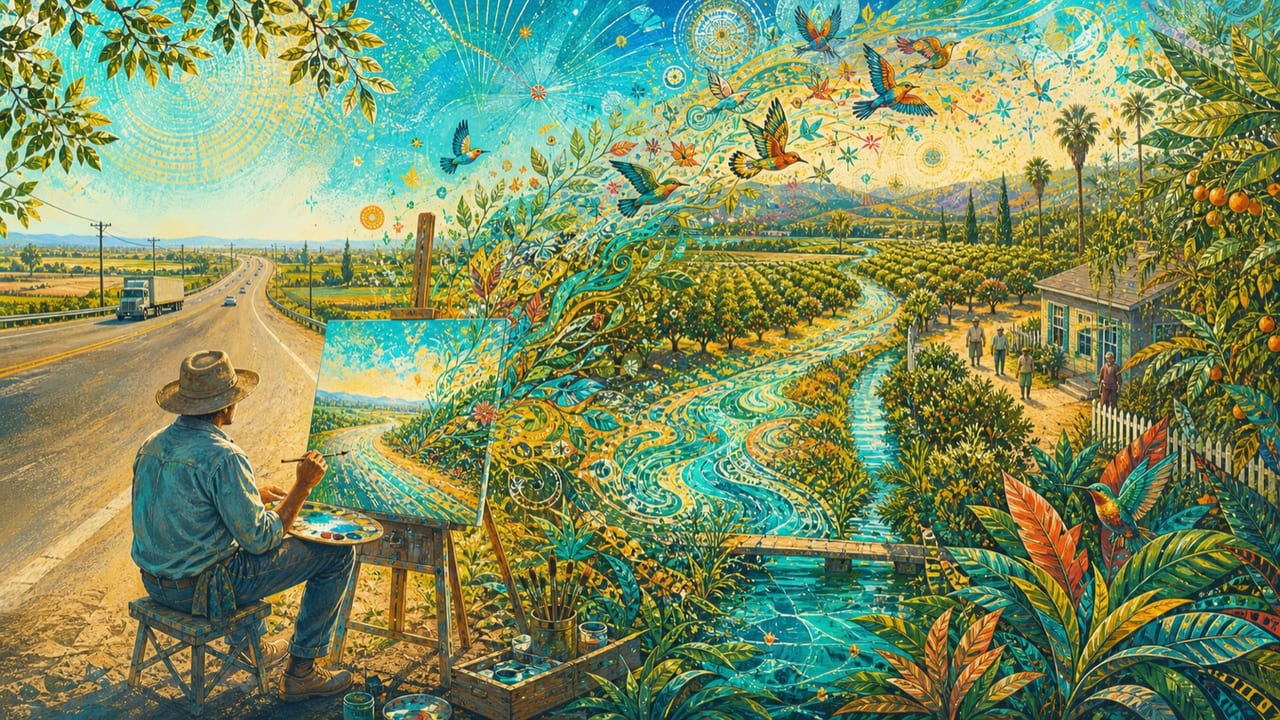
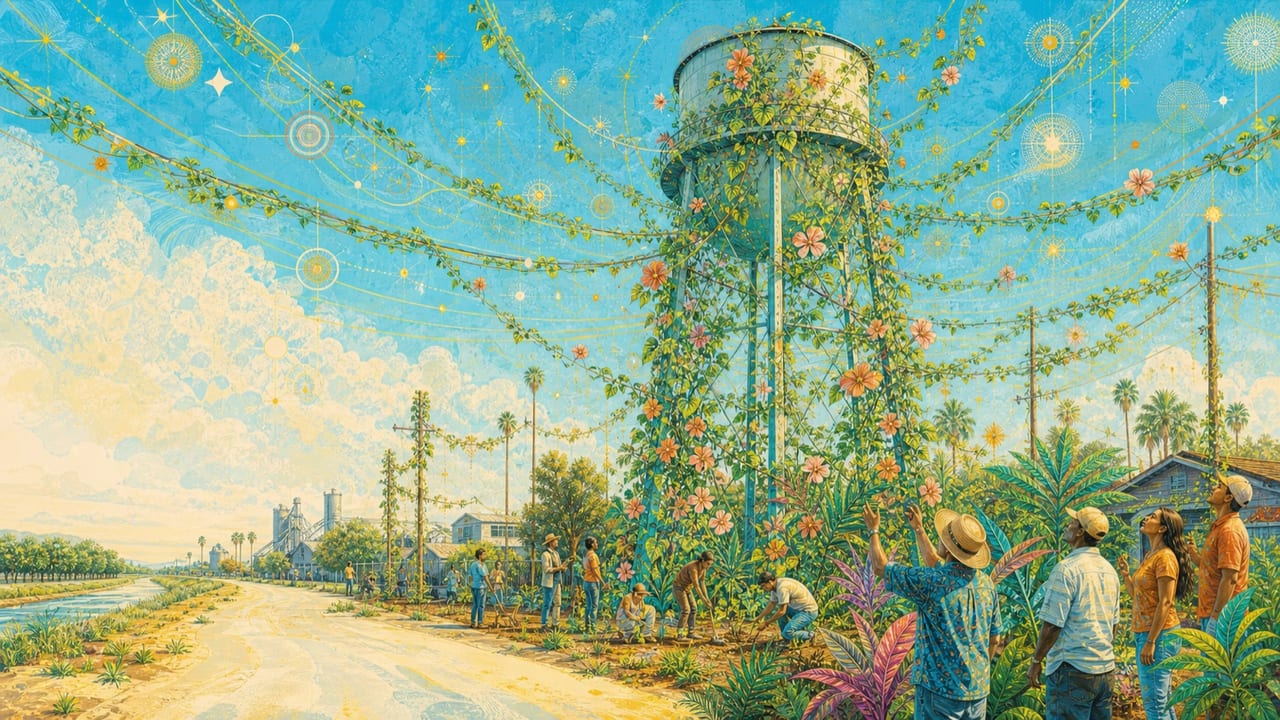
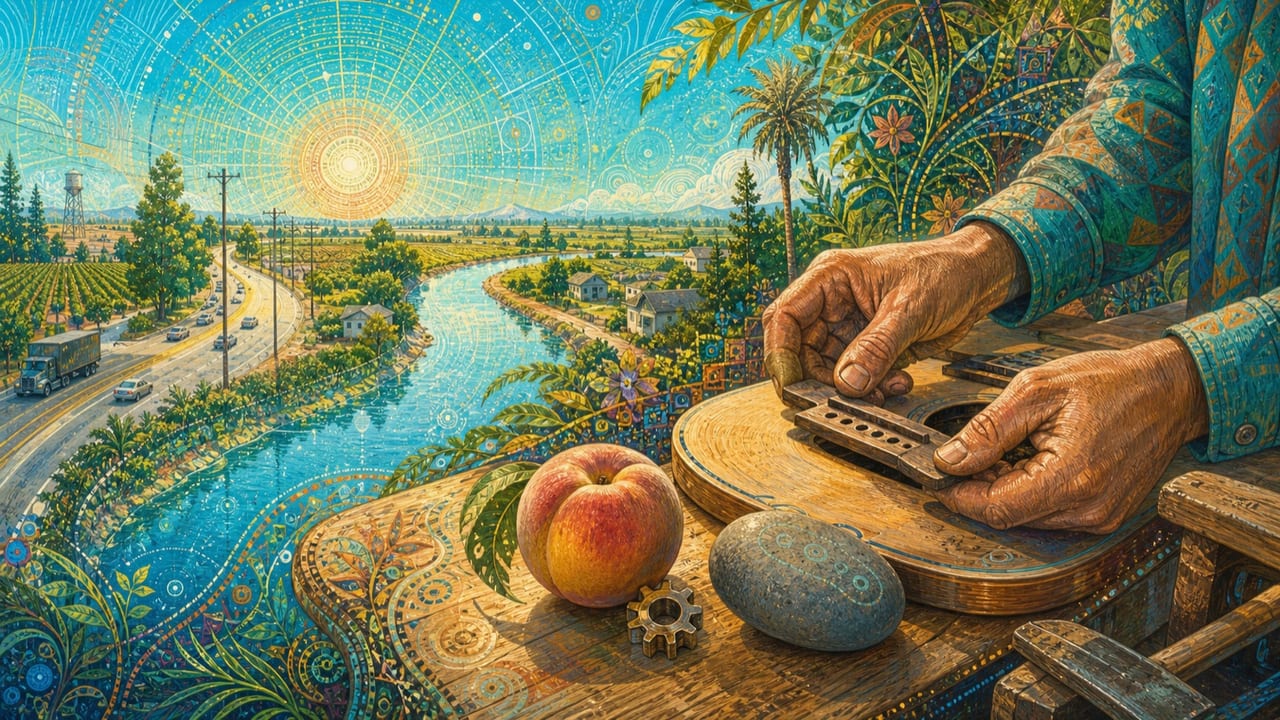
Explore original artwork for every song, made for both the screen and the printed page.
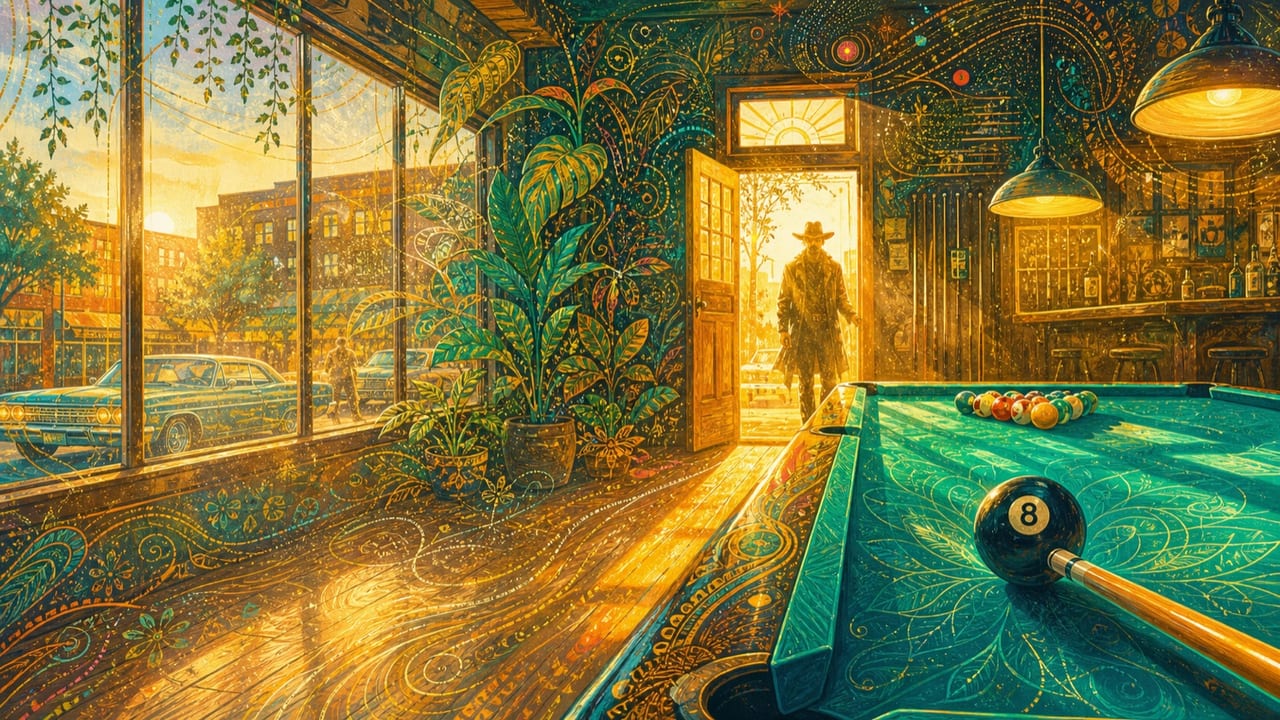
They know my name down at the pool hall. Chalk on my fingers, a little trouble in my pocket, and one more angle nobody else can see. The night's still young if you've got the nerve for it. Rack them up. I've made a living out of believing the next shot is mine.
When you sing, the room remembers what it came here for. I've seen the hard miles behind that voice, and I know a spotlight can't keep a person warm forever. So let the band play. When the lights go down, I'll still be here—a little shelter, a little fire, somebody on your side.
We've crossed enough borders to know a full pocket isn't the same as a full life. The world keeps taking its measurements—money, miles, how much a man can lose. Let it count. When I look over and find you beside me, I know what we've got. More than enough to keep going.
A long way from home, the smallest things can bring me to my knees: a doorway I almost recognize, evening on the water, the way your hand remembers mine. I don't need the whole world to welcome me back. Just a little kindness. Just a place where I don't have to be a stranger.
I've had enough and I've had nothing, and neither one tells you much about a man. Watch what he does when the road turns ugly. Watch who stays. I can't promise you a sky without weather, but when I say I'm beside you, I mean tomorrow too. My word has to be worth the walk.
I remember the wishing well before I remember the danger. Your hand in mine, candlelight, a river going somewhere we hadn't been. We've got reasons to keep moving and trouble close behind, but for one stolen moment you look at me and the colors come back. Stay beside me through the next bend.
Come see this little place I've been carrying around in my heart. A cottage near the coast, something growing in the garden, children laughing down in the village. Nothing grand. Just the river in the morning and your voice in the next room. I'd like us to know what it feels like to come home.
A room full of people can sing along and still leave you lonely when it's over. I love the music. I just want somebody to tell about the night. Somebody who knows the man after the guitar goes back in its case. A table, a little laughter, a life worth coming home to.
Come on through the barnyard—Ana's expecting company, and nobody gets turned away for being a little peculiar. The names are half the fun, the mice have lessons to teach, and there's something good waiting in the village square. Bring the children. Bring the child you used to be. We can all stay till sunset.
Keep your eyes on Anonyma, if you can. One moment she's dancing on the sea rocks; the next she's riding a parasol beyond anything sensible. The air smells of roses and saffron, her sisters are making music, and the dragons are coming back. Remember her name. We may need it on the way to paradise.
I wrote it with you in the room, even when you weren't there. Now the words wait where I left them, and I can't quite bring myself to pick them up. Funny how a love song can outlive the love and still have nowhere to go. I keep reaching for the beginning. It keeps asking why.
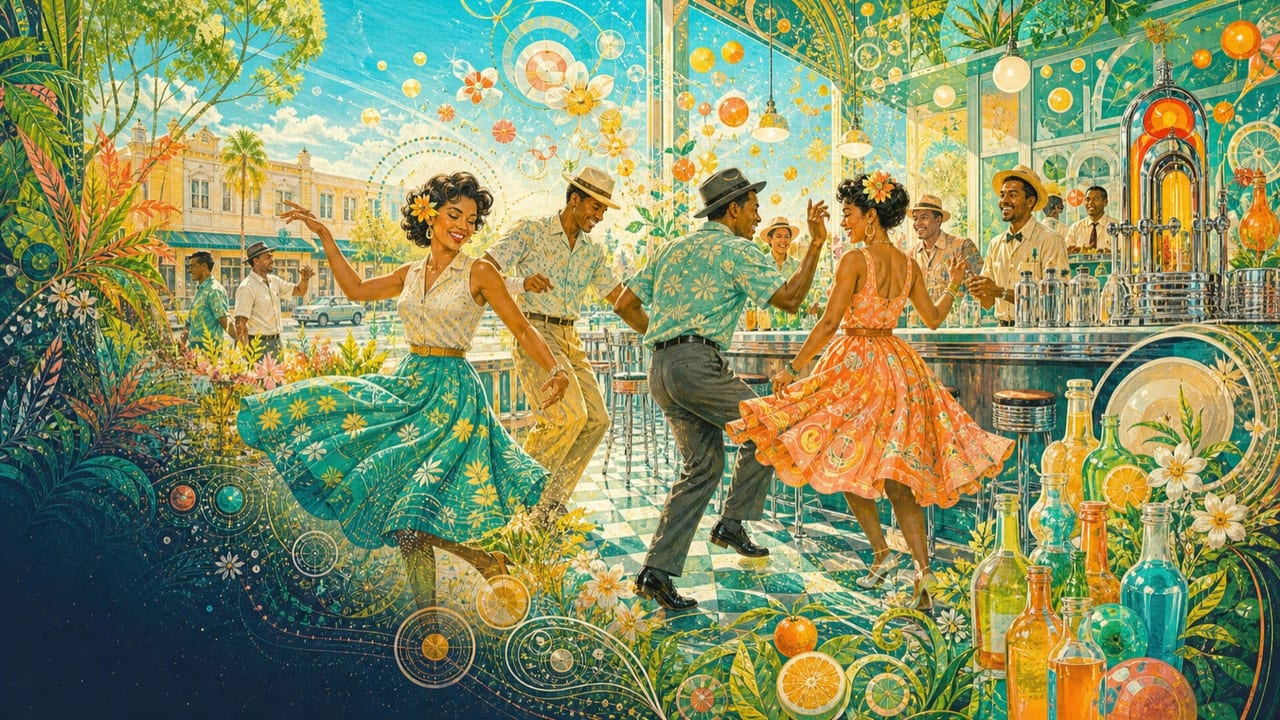
The band's getting tight, the girls are cutting loose, and somewhere outside there's a car waiting to take us anywhere. I can talk about forever when the music hits me right. Tonight, though, your hand is here and the floor is open. Let's see how much life we can fit into an ordinary Saturday.
You've got that look, and I've got one more reason not to leave just yet. We can trade our dirty little jokes all the way to the coast, then turn around when the band calls. Underneath the teasing, I'm asking something simple: look after me a little. I'll look after you. Don't disappear at sunrise.
I keep telling my side like telling it louder might change the ages, change the trouble, change what I should have known. Then I picture a road to Mexico and call it love. But a border isn't an answer, and a pretty escape doesn't settle anything. Listen for what I'm trying not to say.
I thought the last door had closed. Then that stubborn little voice started up again: you've still got one more hand to play. I know what losing looks like. I know the danger too. But you're standing here beside me, and suddenly getting back in the game means something better than winning alone.
My temper's doing the talking, and it doesn't know when to shut up. Every betrayal wants an answer; every answer sounds more like a threat. Somewhere in all that noise, there are children who need to get clear. I keep saying I've got somebody cornered. Listen close and you can hear the trap closing both ways.
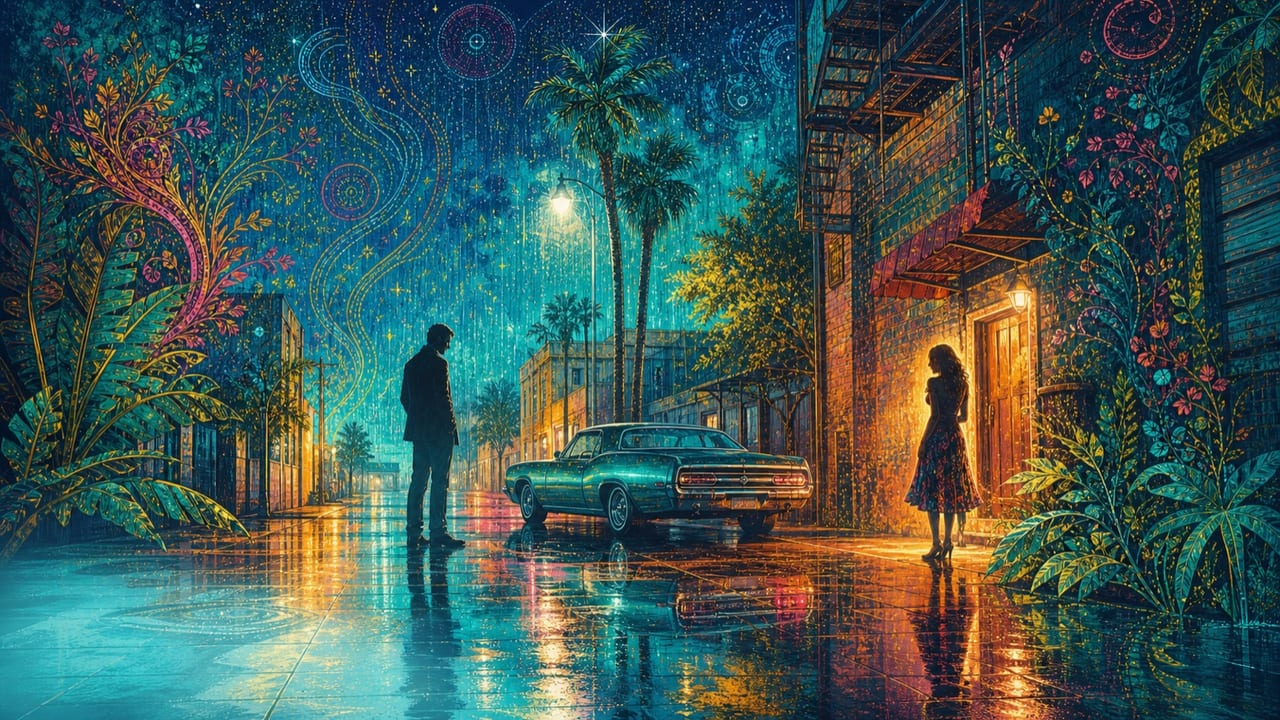
Wet pavement, neon, another borrowed band. I was doing what I do—playing through the pieces, trying not to think about going home alone. Then I saw you across the smoke. The room kept moving, but I was playing for one person now. Come closer. Maybe neither of us has to disappear into the night just yet.
Becca Ray, the morning's up and the West is still waiting. I've carried a gun and enough grief to know they don't make a man larger. The mountains took their share. So did I. When I remember you and Hannah, all my hard talk falls away. What's left is gratitude, and the ache of having been loved.
Up above the city, we could almost have a life nobody was watching. You heard something in my voice before the world did. But daylight came with disguises, and love learned to speak quietly. I still wonder who we might have been without all that hiding. When the music starts, I remember us without the audience.
Come here. I know the whole thing came down around you, and I'm not going to tell you it didn't hurt. We'll sit with the wreckage a little while. Then maybe we'll notice the light has changed. Better days don't always arrive with a parade. Sometimes they begin with somebody staying, right here, today.
You can make me laugh, I'll give you that. But your daddy's truck and another wild Saturday won't pay for a life together. I've known you long enough to see the man you could be under all that carrying on. Put your grown-up trousers on. I might still be willing to take that ride.
You walked in and knocked my whole life sideways. Leaving did it again. Somewhere between the road south and the stories my father used to tell, I'm learning how quickly a living voice becomes a memory. I don't want to learn your worth that way. Let me pay attention while you're still here to hear me.
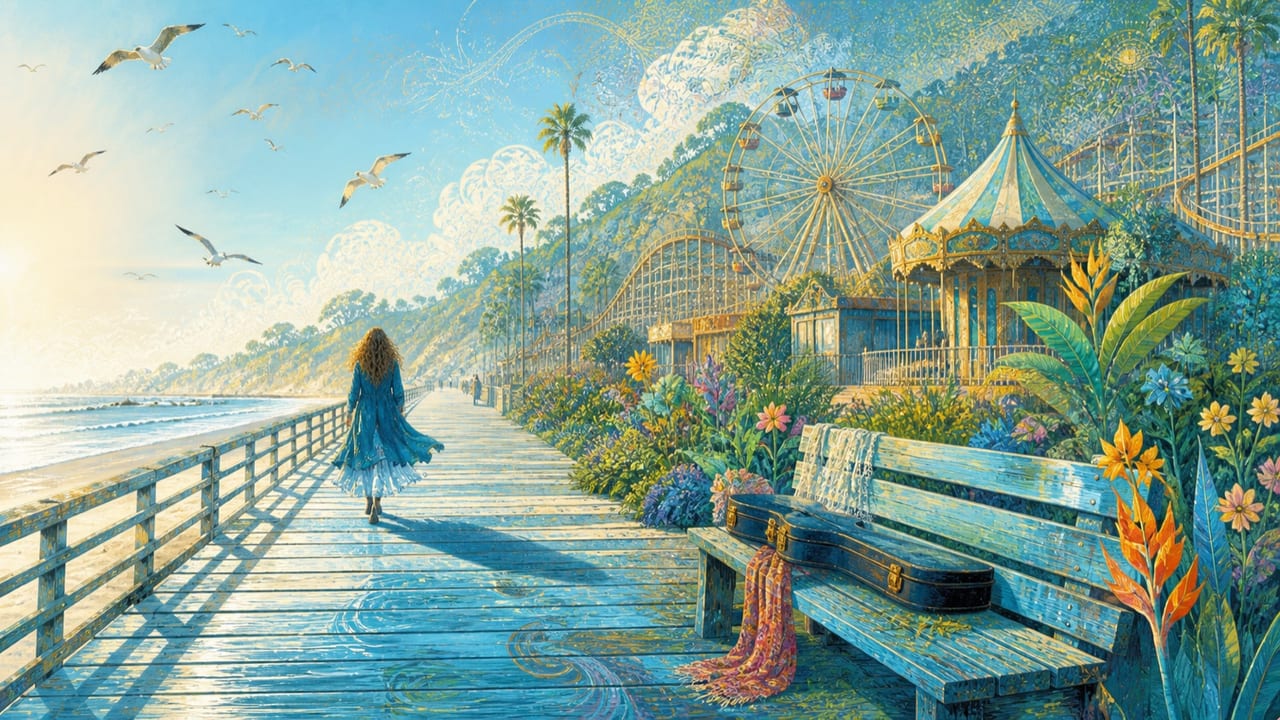
I thought we'd found our little corner of the bay. Gardens, long walks, your hand making the world less lonely. Then I asked for forever and heard goodbye. I came down that boardwalk full of myself; I left with my heart showing. If you ever come back, you'll find less swagger and the same love.
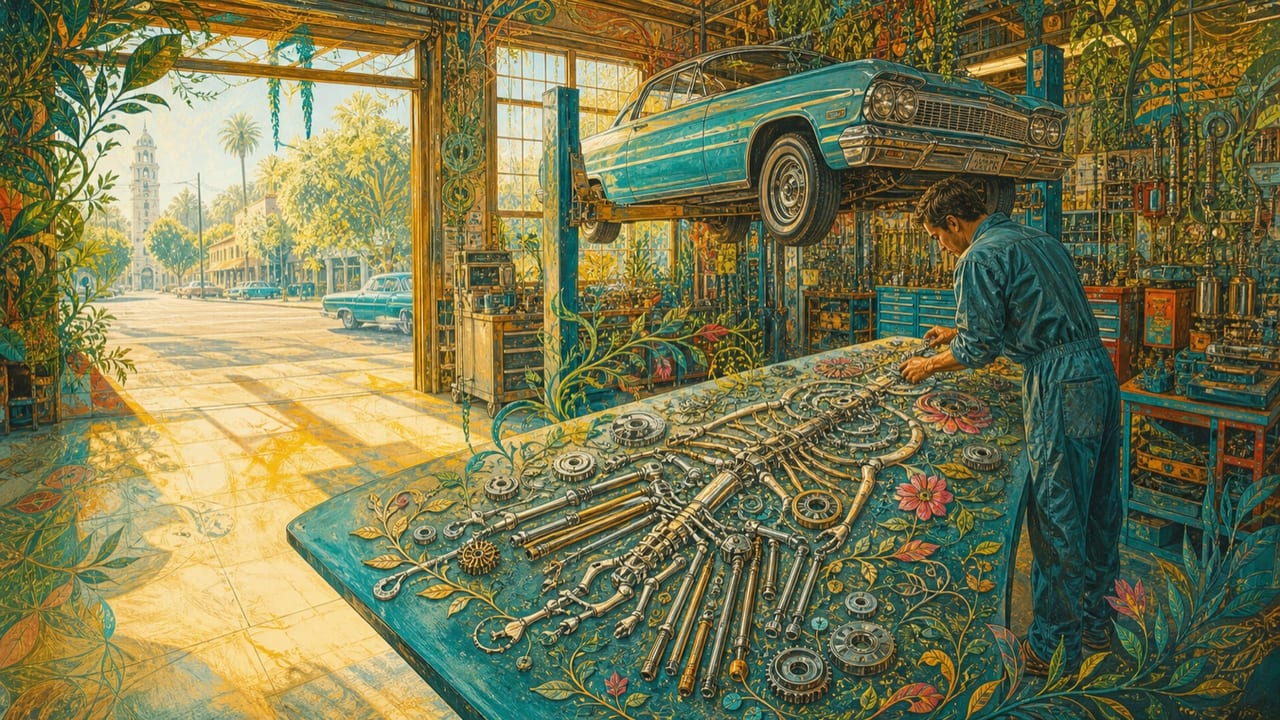
You can hear us before you see us. West LA behind our shoulders, engines talking, somebody grinning like the desert belongs to him. We fix what we can, ride what we've built, and make enough noise to keep tomorrow waiting. There's danger in that freedom. We know. We're still heading south together when the work is done.
They used to know my name for different reasons. Now there's a fence around my mornings and years where the road ought to be. My pride still runs its mouth; freedom doesn't answer. But don't mistake broke down for finished. Even in here, some stubborn piece of me is saving one more hand to play.
I can act like nothing touches me. Show up at the dance, talk big, make sure everybody sees me having the time of my life. Under all that noise, I'm scared you'll be the one who makes a fool of me. I keep saying nobody's going to break my heart. I wish saying it made it true.
Brother Tom, where'd you get to? You always seemed to know the turn before I reached it. Now I'm standing here with too much road behind me and not much steady ground ahead. If you can still hear the music from wherever you are, send a little back my way. I could use your company.
They put a velvet rope around the evening and dressed everybody like the cameras were coming. I went in for the spectacle. By morning, the beautiful promises were looking a little rumpled, and I still had a night of playing ahead. Funny what we call casual when keeping up costs so much.
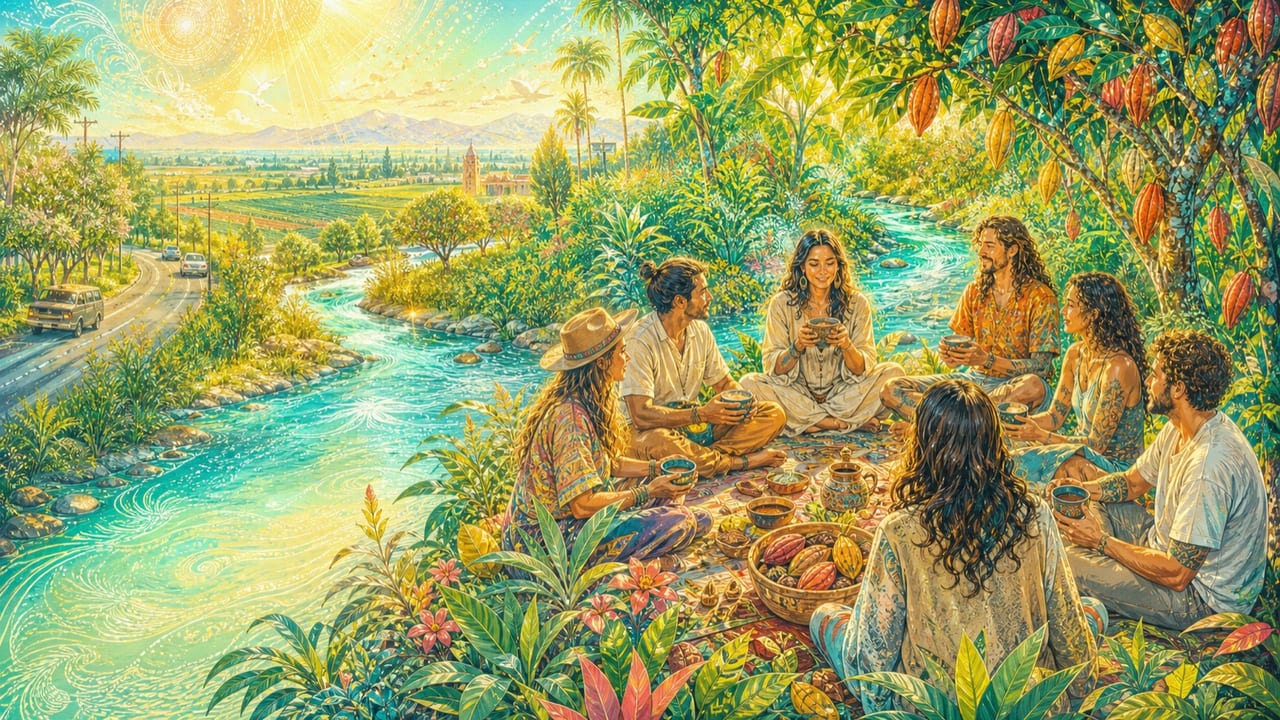
There's chocolate in the cup, mischief in the air, and everybody's got a different idea of where the night is headed. Come sit with this unruly little gathering. The jungle in our imaginations is wide awake. By sunrise, I suspect the dancing will have explained more than any of our grand declarations ever could.
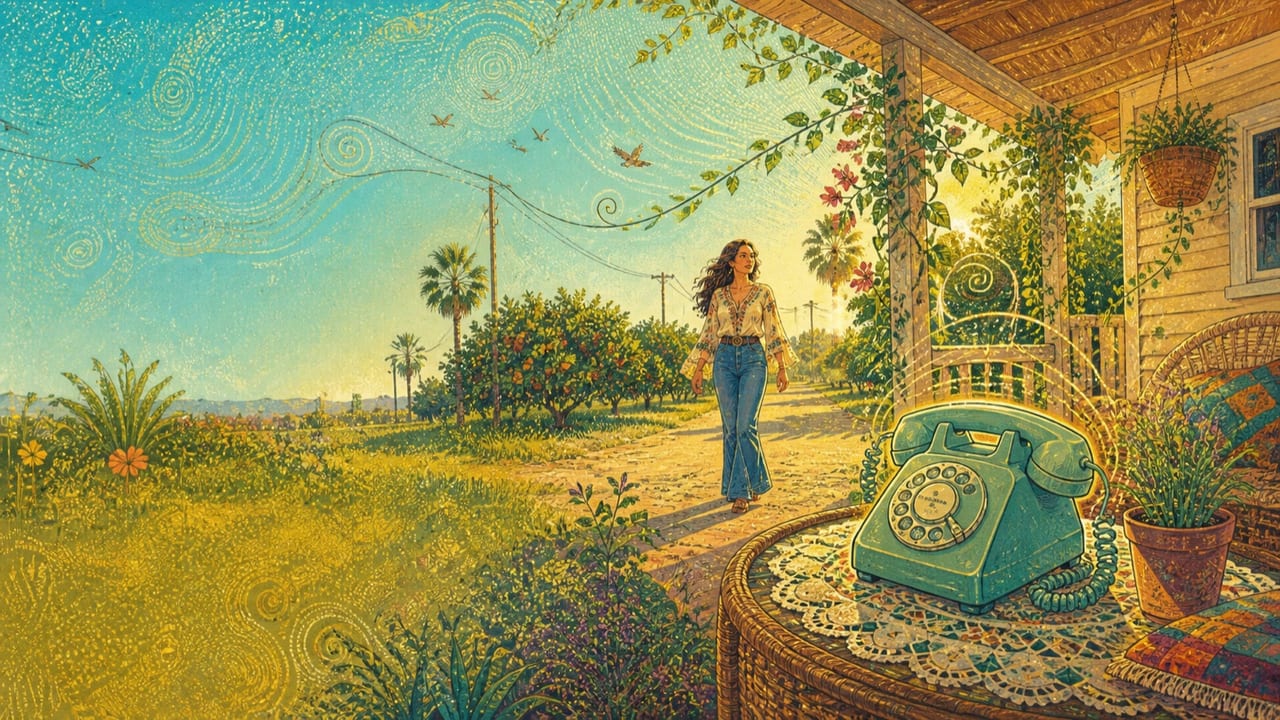
You don't have to bring me an accounting of every heartache. I've got a few of my own. Just call. Friday's coming, the world's still turning, and two lonely people could do worse than give each other a little time. I've been waiting long enough to know how much can begin with a ringing phone.
I never know exactly when yesterday lets go of tomorrow. Somewhere between the last star and the first light, you're beside me, and that seems like enough to start with. Help me find the words when I lose them. Walk with me when I lose the way. We don't have to meet the morning alone.
Carolina Blue, I've brought too much old weather with me. Friends gone, wrong turns, things I ought to have said differently. But out here among the trees, there's still a little tenderness I haven't ruined. Let me begin with that. Let me mean the promise this time, even when the sunshine turns to rain.
Come aboard—we've got a little English, a little Spanish, and more appetite than itinerary. There's a cantina somewhere with our names in the noise, a mountain to get over, something good on the fire. By the time we figure out where we're going, we'll all be singing together. ¡Vámonos! The shore can wait.
Everybody keeps telling me the world is ending. Me, I can still hear a tune. Somewhere under the shouting there’s an old rhythm calling us out of hiding—out of our wars, back into each other’s lives. Turn it up. Open the door. If we’ve still got love and a little music, let’s make some noise.
Lord, I'm still out here in the rain, looking at this beautiful world and trying to understand what you've done with it. You gave us mountains, music, one another. Why so much taking away? I'm not finished believing. I'm just tired, and I'd like to ask my questions without pretending I already know the answers.
Those nines keep turning up like they're trying to tell me something. Bells, borderlines, another train coming through. I've spent enough time chasing shadows. Maybe the work now is simpler: tend what grows, protect what I love, and listen to the voice I keep outrunning. The circle can wait while I find my footing inside it.
People have names for what we are now. Friends. Strangers. Something in between. None of them fit the way I remember your hand in mine. I can keep traveling, keep playing, keep answering when somebody asks how I'm doing. But I still don't know where the love is supposed to go when the name changes.
There's a fire coming down from the mountain that doesn't burn the way I understand. It takes the life I thought I had and leaves me standing in the blue light of something else. I'm tired of the road, but not done with it. If I can carry love through this, maybe I can begin again.
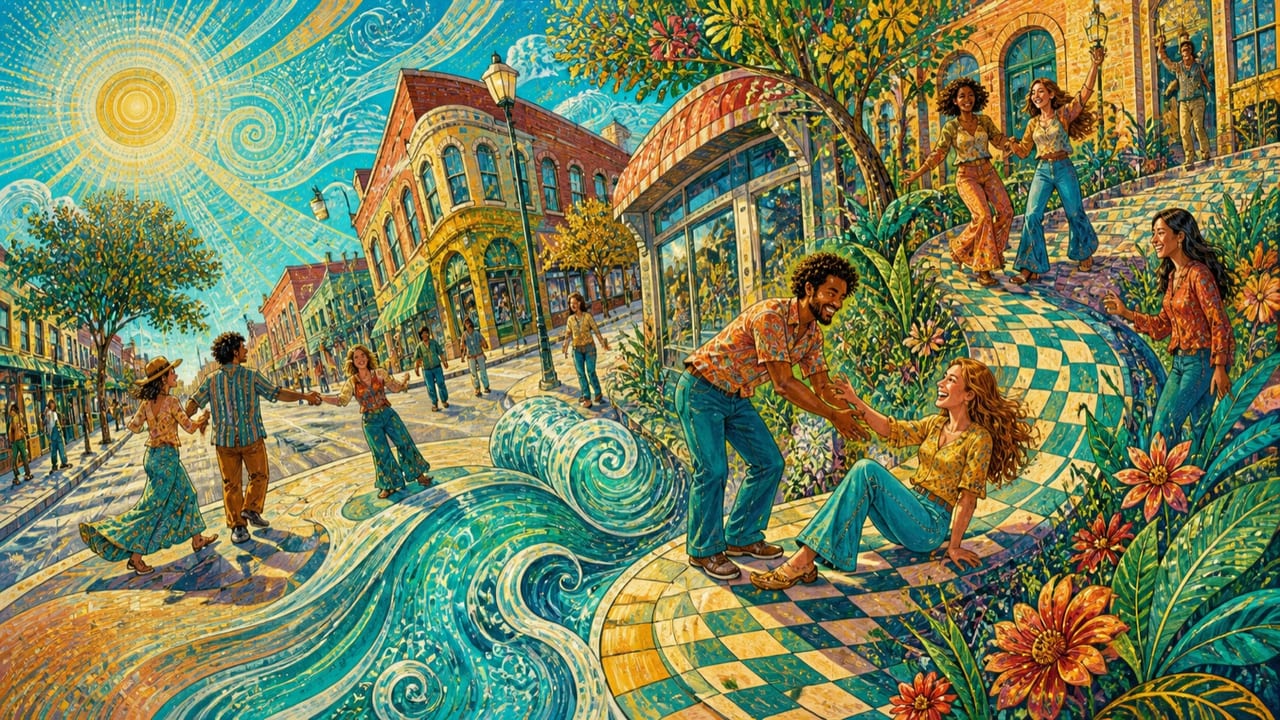
Meet me on the corner before school. The day hasn't told us what we can't do yet, and all our friends are here to help us ignore it when it tries. Somebody's talking about the coast. Somebody's got a song. For a little while, every dream we've got fits on this one patch of pavement.
I can lean back and look easy about it, but don't let that fool you. My heart's making quite a racket. Come down by the river; let's find out how our voices sound together. There are stars overhead and room on the ground to dance. I don't want cool to mean keeping you at a distance.
Barbara knows the price of things and the value of having her own way. I watch her move through that polished world like she was born with the keys. Maybe she was. I can admire the shine without understanding all of it. What I keep wondering is whether there's room in her plans for me.
I turn around and you're dancing where nobody thought to put a dance floor. Butterflies, rooftops, the whole street catching whatever you've got. I never know what's next with you. That's part of the trouble, and most of the joy. Don't make this just another summer. I'd like to keep being surprised beside you.
I can build an empire with a pen and knock it down before the ink dries. Give the outlaw a voice and he'll call every threat justice, every enemy proof he's right. That's the dangerous part of the telling. Come inside this crooked little world, but keep one hand on the door.
She doesn't wait for the world to clear a path. Wave, road, whatever's in front of her—she's already moving, and I'm trying to catch my breath. I wouldn't know what to do with her freedom except admire it. Maybe she'll let me come along. I know better than to ask her to slow down.
The world's got some hard edges. I've found most of them the hard way. Still, there's a bike to ride, a river to get across, a little rock and roll waiting downtown. Put your arms around me. I don't have to win an argument with the darkness tonight. I just want to get us through it together.
Payday on the other side of town. Everybody's wearing something that passes for a life under the arcade lights. I know the music, the dive, the price of staying in the shadows. I keep telling myself it's time to leave. Then the door opens, the night leans closer, and goodbye comes out sounding like hello.
I brought a guitar down to the river and found the whole evening already moving. Lanterns, food, firelight, neighbors who knew how to make a night last. She was dancing in the middle of it like the water had taught her how. By the time the stars came out, I wasn't in any hurry to go home.
You see some things one way; I come at them from somewhere else. I don't need to make you into me to love you. Let the seasons change, let the old town surprise us. We can stand beside each other without standing in the same shoes. Even goodbye can't make what we shared into nothing.
I know what I must look like coming down this road. Hungry, worn out, carrying pieces of a world that didn't hold together. But there's more here than the damage. Look at me a little longer. If we can get down to the water, maybe we can leave some of what we're carrying on the shore.
I said no. There wasn't another meaning hiding underneath it, and there wasn't a better way I should have said it. You don't get to turn what happened into my mistake. I want fresh air again. I want a room where the night belongs to me. The door is closed now, and this time it stays that way.
Before you cross that line, remember how small you once felt walking down a hallway where nobody heard you. I won't stand in the road and stop you. Just don't spend every bit of good luck you've got proving you can leave. Keep something gentle intact. If there's still a chance for us, send me a sign.
I left home with trouble close behind and learned to move before it caught my name. Rivers carried me farther than I expected. So did love. Let somebody else dress the story up as an outlaw legend. These days, I'd rather tell you about the family at the end of it, and the quieter water by the sea.
You can put the day down now. Whatever it asked of you, whatever it forgot to give back, it doesn't have to come to bed with us. I'll be here when the room turns gray with morning. Someday we'll be older, with children gathered close. Tonight, just rest. We have this moon, this breath, this little shelter.
Grace doesn't always arrive looking respectable. Sometimes it comes down the street making music, calling your name like an old friend who knows you're home. Pick up. You've been carrying yesterday long enough. If a little light gets through to you, pass some on. Somebody else is trying to make it through the same night.
Stay here a moment. The candle's lit, the house is full of voices, and nobody has to arrive knowing everyone else's name. We've all come by different roads. For this little stretch of time, we walk together. There will be leaving soon enough. Tonight, let the star in the darkness be something we can share.
I left the back door open and you came into my life like you'd been expected. People had plenty to say about that. I tried listening to them, tried walking the city until I could think straight. Then I heard your voice at the microphone. So much for straight thinking. There I was, feeling everything again.
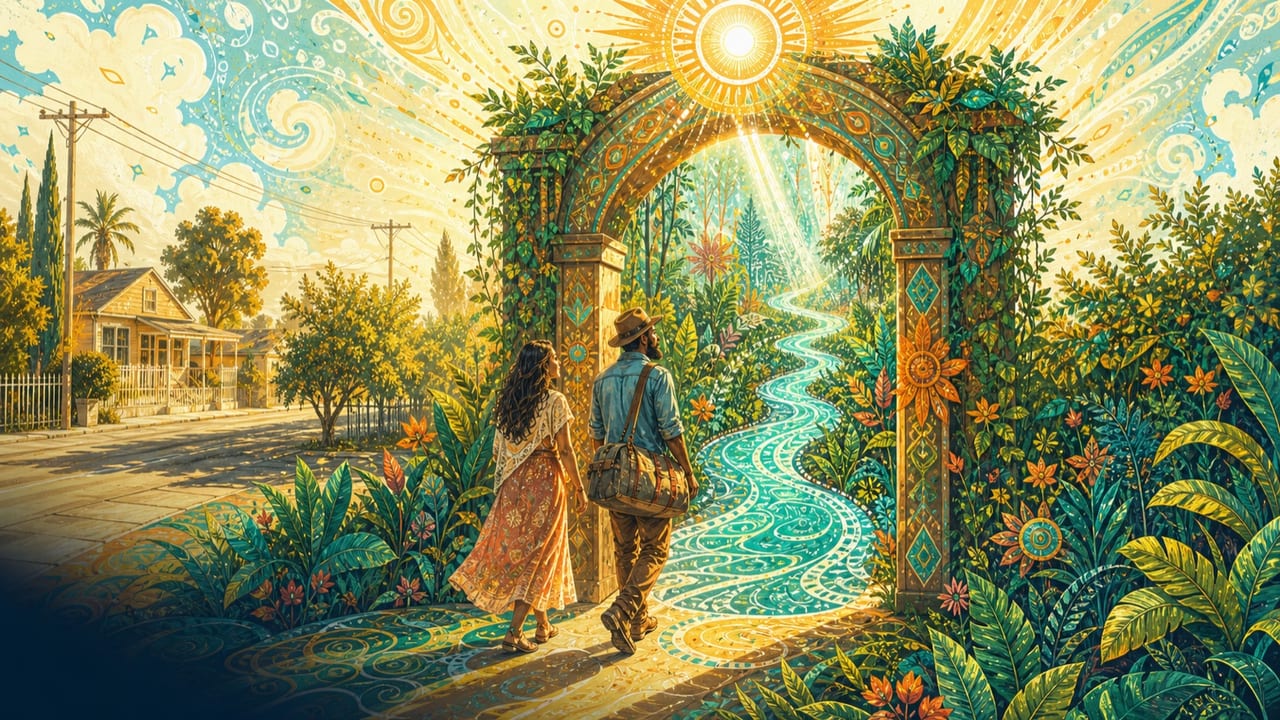
Everybody's running like the answer's just around the next corner. Come off that road with me a minute. There's a country lane, something to eat by the water, a whole evening we haven't ruined by hurrying through it. I don't know the answer to everything. I know I'd like to watch the sun come up with you.
Come down to the river if you're willing to be surprised. I've got a little shadow in my pocket and a little light I haven't learned to hide. Call it wicked, call it wisdom—I suspect the two have been talking behind our backs. Look again before you decide what kind of magic you've come to see.
The sky was beautiful in a way nobody wanted it to be. We had heard the warnings. Then came the running, the empty places, the names we couldn't get an answer from. Sara, I still carry yours. After the fire, even a lullaby has work to do: keep the lost close, and help the living meet another morning.
I thought I knew what I was looking at. The city taught me one set of shortcuts; the small town offered another. Then you came along and made a fool of my certainty. I'm trying to take that as a gift. Look twice. Listen longer. Love might be waiting behind the first thing I got wrong.
Papa, there’s a whole stretch of California between the things we said and the things we couldn’t. I still hear your laugh. I still carry your music. We didn’t come through this family without a few broken places, but your voice found its way into mine. Wherever those four winds take us, some part of us goes together.
She's got her own mind, her own wheels, and no intention of being rescued into somebody else's idea of a life. I like that about her. I remember nights when the ground was my bed and morning didn't promise much. Riding beside her doesn't erase those miles. It gives me somebody worth taking the next ones with.
There was a time I'd have asked you to dance. Tonight, I'm asking you to leave. I'm tired of the lies, the wrecked evenings, the promises that don't survive till morning. You can call this whatever you like on your way out. I'm calling it the end of giving up my peace to keep you here.
Put a seed in the ground and you learn something about believing before there's anything to see. I've been trying to bring that kind of patience to the rest of my life. Take my hand. I can imagine a place beyond all this feeling abandoned—a little forgiveness, a little work, room for us to grow whole again.
Come back up the mountain with me. I remember the hummingbirds, the river far below, the little sweetness we thought would last. Fire came through. So did the years. But when the sun catches that rock, I still find myself saving you a place. Maybe a landscape can remember what two people haven't quite finished loving.
The factory closed, so the road opened. That's one way a man finds himself traveling with a song and no sensible answer about next month. What I'm looking for isn't somebody to end the journey. It's somebody I can trust across the miles—someone who'll mean home whether she's beside me or waiting where I'm headed.
Grennan brought a ferret, somebody brought a camera, and the day's already got more rhymes than plans. We'll fix what breaks, share what we've got, and see whether a treehouse sounds better before or after lunch. Come along. There's a swimming pool at the end of this particular piece of nonsense, and the children are waiting.
The moon looks pleased with itself tonight. I wish I knew its secret. Up there, everything still shines; down here, I keep remembering how quickly our music went out of tune. Maybe there's another stage somewhere with room for both of us. For now, I'll let that foolish, beautiful moon keep me company.
We said things last night that don't sound any better in the morning. Now the room is quiet, and I can't tell whether I'm standing at the end or the beginning. Somewhere underneath it, my heart's still keeping time. If yours has been pushed aside too, come closer. Maybe we can find a way back into the music.
When I close my eyes, the world gets larger. Light, old mysteries, places I couldn't find on any map—and somehow, you're there with me. We could spend forever asking questions in those palaces. Or we could come back to a quiet life together. I don't need to understand eternity to know whose hand I want to hold.
I've got places to be, trees to climb, something cooking, and a truly unreasonable number of things to rhyme with all of it. You can stand around talking if you like. I'm going to see what happens. Bring the neighbors. If anybody's lonely, we can feed them before we get back to making a glorious mess.
I can talk tough about the things out there with teeth. Doesn't mean I want the light turned off. That little kid in me still listens too hard when the room goes quiet. The stars help. So does knowing there's a way home. I can face a pretty big universe and still wish somebody would leave the porch light on.
No, I don't remember you. Not the initials, not the kiss, not the exact way an empty room sounds after you've gone. Funny how many details a man can forget so precisely. Let me keep saying it a little longer. Maybe eventually my mouth will convince the part of me that remembers everything.
It isn't that I don't love you. It's that everybody's voice has gotten so loud I can hardly hear my own. I need a stretch of road without answering for every step. Let me find the quiet before I promise anything else. Going away for a while isn't the same as having nowhere I want to return.
I missed goodbye, and I've been trying to find another way to say it ever since. The seasons keep their appointments. Evening still comes. I sit by the fire with a space beside me that used to be yours. Wherever you've gone, the friendship hasn't followed you out the door. I'll be carrying it from this side.
I've made a mess inside the very family I ought to be protecting, and now every quiet moment sounds like somebody finding out. I keep imagining a happy ending big enough to let me off the hook. That's the trouble with telling your own story—you can hear a wish and start calling it an answer.
You don't have to decide because I'm standing here wanting you to. Go where you need to go. I'll be around—the country road, the firelight, wherever the music carries far enough for you to hear it. If spring brings you back this way, you won't need a map to find the welcome.
We're home from the tour just long enough to remember what we're missing. I've got a pocketful of bravado and miles behind it I don't always know how to talk about. Tomorrow we'll be packing again. Tonight, come close. Let's put down the road for a little while and see what we've still got to share.
Son, I don't have every answer about why your mother went away. I wish I did. What I can tell you is this: you haven't lost me. Whatever strange shape the world takes from here, I'm your father. I'll give what I have, learn what I don't know, and keep finding my way back to you.
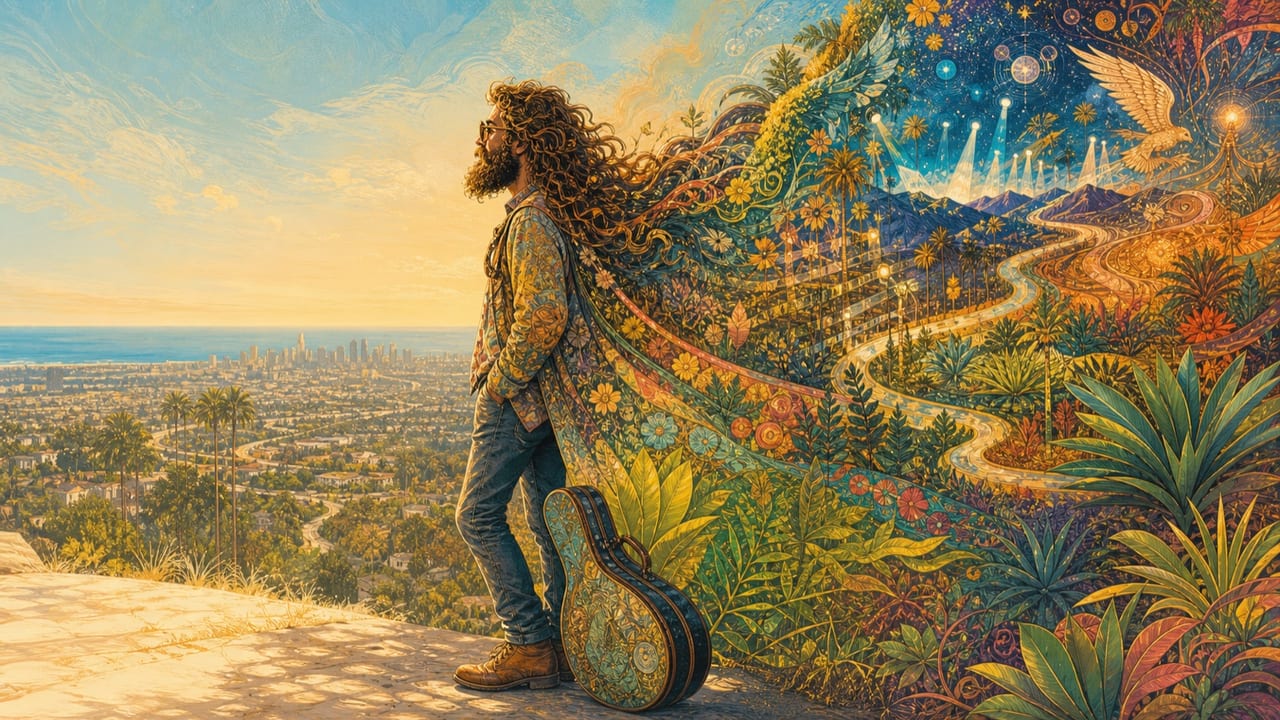
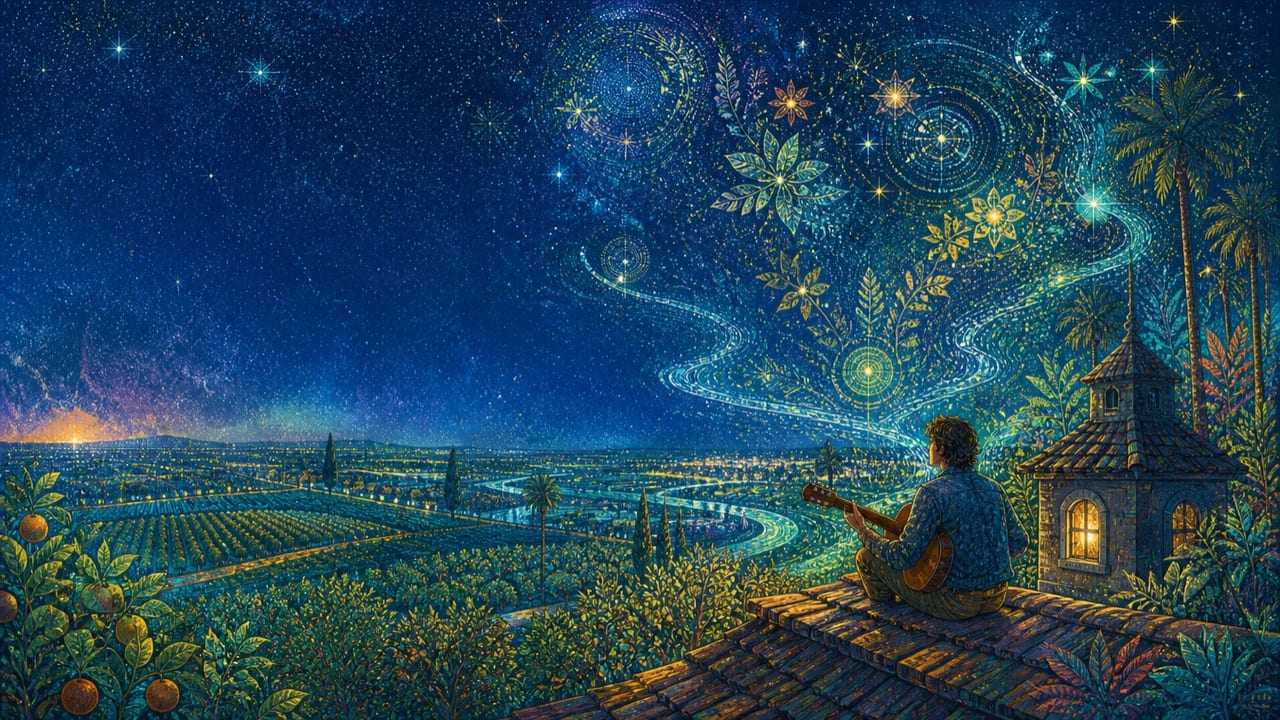
Four in the morning, and the city's still lit like it forgot to go to bed. That suits me. I've got a guitar, a pack on my back, and enough cold years behind me to appreciate a room full of people. Somewhere the spotlight's waiting. Morning can come looking for me when the set is over.
I made this dance up myself, which means I'm the world's leading expert on how it goes. You bounce here, bend there, then do whatever happens when your feet get ahead of your good sense. Everybody can join in. Bedtime is a very unpopular suggestion, and for the next few minutes I'm in charge of everything.
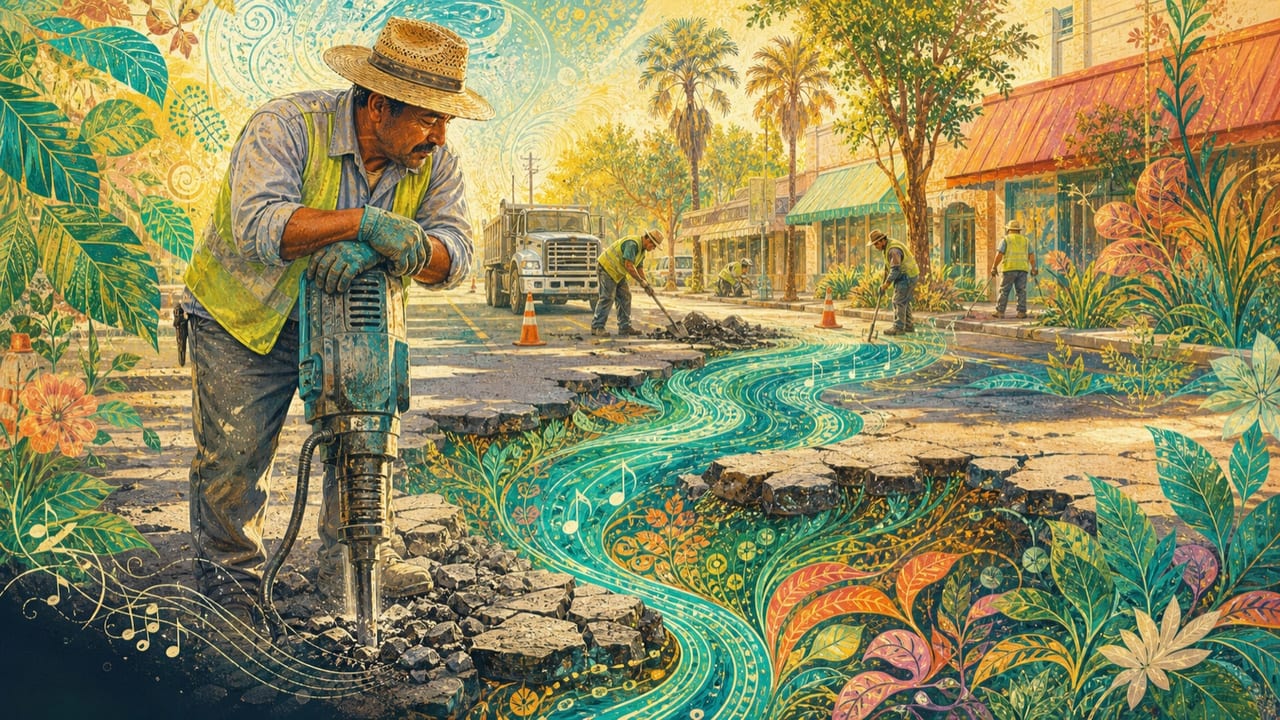
Break concrete all day and the rhythm doesn't leave your hands when you clock out. It follows you onto the train, down to Bourbon Street, right into the steel guitar. I've been hungry. I've been tired. But there's music in the racket, and I'm still trying to make enough of it to bring somebody I love along.
Juniper lives where the sea won't stay one color and nothing stays one shape for long. Follow her and you'll need to leave your tidy explanations behind. I've been lost, amazed, hurt, and brought around again. Through all those changes, there's one thing I keep recognizing: wherever this strange road takes us, I still turn toward her.
I'm standing at the entrance to a history that won't keep still. Jungle paths, old battles, voices calling for the land they love—the names cross centuries as easily as rivers. We carry our roots even when the road turns wild. Come through the story with me, but don't forget the country that gave you your first footsteps.
You can't see somebody hurting without carrying a little of it home. I love that about you, and I worry about the weight. Lady Grace, let me be tender with the one who keeps being tender with everyone else. We'll plant something along the way, so whatever changes, there's a living trail to follow home.
Friday at the traffic light, then all night toward the desert. Dinah's beside me, the challengers are lining up, and somewhere out there the rangers are catching on. We found a life beyond that airfield eventually. But give us a kiss for luck and a minute with the engine, and you'll hear the old spark coming back.
Come down to MLK. The kids are out, somebody's got food going, and we've found a little room between the bills and the next thing we have to do. Bring whoever's with you. Today, this side of town is a place to stay awhile. A long weekend ought to be measured in people, not hours.
I've folded the letter, unfolded it, tried to find words that won't make things worse. You'd think all these towns and all these songs would have taught me how to say something simple. Here it is: I haven't given up on us. Whatever this is, let me face it with you instead of driving away from it.
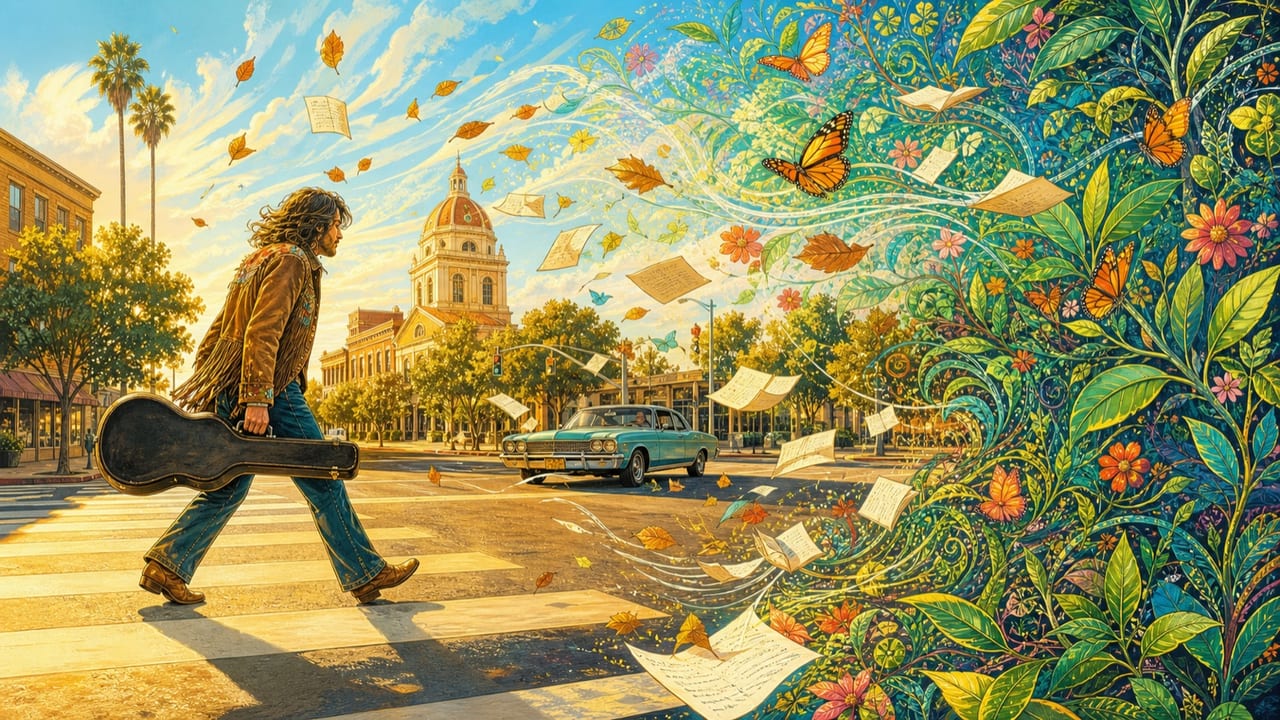
You’ve probably walked past me with somewhere else to be. I’m the fellow with the guitar, keeping company with the streetlights until morning. Stop a minute. We’ve all got something to grieve, something to forgive. There’s room here on the sidewalk—and I’ve got a song that might help us remember.
I found you at the Waterline on a Friday when neither of us wanted to go home to ourselves. Under the lights, we could pretend it was only attraction. Then the tears came, and the evening got honest. I can't promise to take the hurt away. I can be here while you let some of it out.
New Orleans comes back easy when there's something in the jar. So does a story I've told too many times with myself in the middle of the sorrow. I can make the past sound prettier than it was, but the bottom of this glass isn't going to explain it. You're gone, and I'm still talking to the memory.
Maybe I was Doc Holliday. Maybe I've just carried his kind of trouble through too many lifetimes of my own imagining. The names change; the guns keep turning up. I say I never wanted to kill anyone, then find myself in another showdown. Somewhere beyond all that boasting, I'm looking for a life that ends differently.
I can't get us back to where we were by explaining it one more time. Today has heard enough. Maybe tomorrow will give us a different road, a little rain for something still trying to grow. I'm leaving, but not without remembering. There are goodbyes with a small, stubborn maybe still tucked inside them.
I went to sea looking for a creature bigger than any story I'd heard. Found wars, strange countries, time folding back on itself—and kept mistaking the next grand answer for wisdom. Then a little girl asked us to put our treasures down and play. Imagine traveling all that way to learn how to arrive empty-handed.
I learned how to sound like thunder. The softer things took longer to let anybody hear. There were years when I thought tenderness was something to keep hidden, even from myself. Now I'd rather reach for your hand without disguising the care in mine. I've carried enough armor. Let me be gentle with you.
I can still see the daisy chains and hear your mother singing when the day got too big for you. Now you're growing into lives I won't get to follow everywhere. That's how it should be, even when it pulls at me. Go find your oceans. Nothing about the distance will make you stop being my girls.
My office has streetlights and a soundtrack nobody clocked in to provide. Then she arrives with that red wagon and the whole place turns into a show. People stop, cameras find us, the shadows get up and dance. It's a precarious kind of living, but some nights the city gives us a stage big enough for everyone.
I remember when we could run just because there was somewhere to go. Now I put on a smile and hope nobody looks at it too closely. The old songs still know another world; I keep going back to them, looking for a door. From the outside, you might never guess how badly I want to feel free again.
I came all this way with a picture of you that time hadn't quite caught up to. The village, the mandolin, flowers in your hair—I can remember it clearer than I can understand the waiting. If you don't want me, tell me. If there's still a road for us, I don't much care where it goes.
Donna, the phone's become the loudest quiet thing in the house. I keep imagining roads you might be on, reasons you might have gone, words I could take back if I knew which ones. I'm not going anywhere just yet. If you decide to call, I want the voice that answers to be mine.
Olivia's coming through, and the map had better learn to dance. Family, border crossings, painted walls, jungle visions—one voice calls to another until even the stars join in. I can't promise we'll stay inside ordinary geography. Bring your appetite for wonder. By the time we shout goodbye, we may have arrived somewhere nobody can point to.
This road used to feel like an adventure. Lately it just feels longer. Then you look at me, and I remember I don't have to carry every question all the way to the answer. We can let a few things go. Keep the song, keep each other, and see what opens when we lift our eyes.
I said goodbye to my friends and managed to lose myself somewhere after that. Now the weather's changing, and I'm tired of pretending a man can't get turned around. Take my hand. Whatever starts next, I'd like to start it with you. We don't have to know where the storm ends to stop facing it alone.
First it's work, then family, then something else knocking our little dream off the table. I keep seeing that cottage by the bay while the days keep finding reasons we can't go. I love you, but I'm tired of putting our life off until everything settles down. What if we went while it was still a little messy?
Out of sight, out of mind. It's a fine arrangement until I come home to the room you aren't in. Then the evening gets longer than it has any right to be, and I start negotiating with yesterday again. I can lose track of the days. Losing track of you is proving considerably harder.
Papa walks into the room like retirement is a rumor started by people who can't dance. The stories get bigger, the nights get longer, and the charm keeps trying to outrun the consequences. Onstage, he can still light the place up. Offstage—well, let's just say the encore isn't always the part he ought to repeat.
We've had the bright lights. We know what they cost when they go out. Maybe paradise isn't another grand arrival; maybe it's a little time beyond the city, with nobody needing us to look successful. We've hurt each other. We're still here. Come sit beside me and let's see what forever means without the audience.
I'm thinking Saturday. We could ride out to the beach, find something good to eat, make each other laugh at things that aren't nearly as funny alone. Nothing elaborate. The cliffs already have the sunset handled, and we can catch a movie if we're still ambitious. Pick a day. I'd like a little of it to be ours.
I remember the cottage by the water and the enormous lives we invented when we were small. Stones across the bay, meteors overhead, a first sweetheart who made ordinary afternoons feel important. Memory keeps those days in a different kind of light. I can still find a little of it when I look at you now.
The kids call me Preach now, but there's a long, hard trail behind that name. Susanna rode beside me through more than a man should dress up as adventure. I called on heaven while revenge kept choosing the road. If anything makes it out of this tale unbroken, let it be the love—not the gunfire.
People hear the preaching and think the certainty came first. It didn't. There was Alma, there was Maya, there were roads I took because I didn't know what else to do. Love gave me a language; loss made me struggle to speak it. If I sound like I'm asking for forgiveness, maybe I'm finally saying something true.
Think you're quick? Come on, then. I'll meet you in the branches, beat you through the brambles, and probably have time to help the kittens before you catch up. Don't mind the boasting; it's part of my charm. There's room for you in this game too. Being a winner gets boring if nobody else is having fun.
Easy, old boy. I know winter has made the meadow feel impossibly far away. But the children aren't your enemies, and spring hasn't forgotten us. Let me stand here with you a while. Soon enough we'll run with the wind in our faces. Until then, don't let being restless make you forget how dearly you're loved.
The lights are on, the cameras are looking, and this hand isn't being played with imaginary money. I can smile like I've got it covered. Under the table, I'm doing the arithmetic. Las Vegas likes a confident man right up until it doesn't. Keep watching. There's a thin line between owning the room and needing the nearest exit.
Call me Matthew. I've got more than one life tangled up in the telling, and I won't pretend the roads between them are ordinary. There were guns, jungles, hard streets, a body that needed to learn its way back. What stays with me isn't the spectacle. It's the hands that helped, and the work of offering mine.
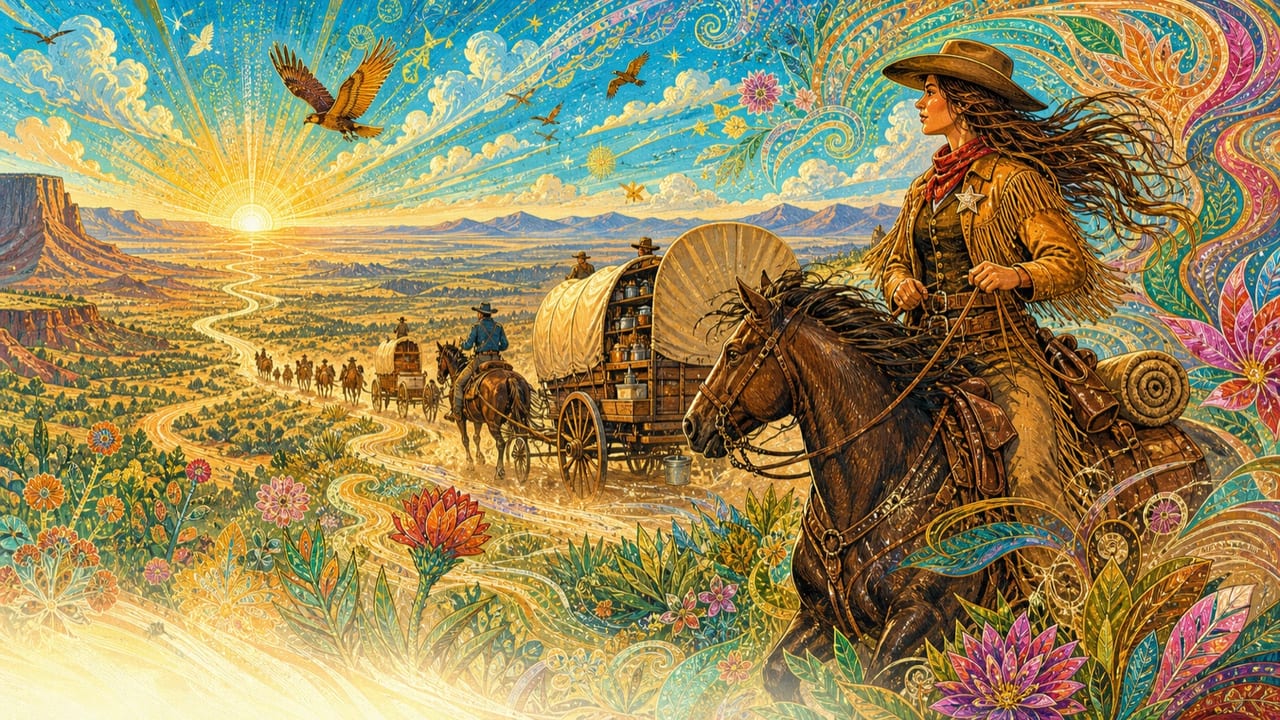
We came west with the gold rush and found more bullets than gold. She was braver than any story I could tell about her. When we finally made a California life together, I thought the hard riding might be over. Now she's gone, but in my mind she never stops moving. I still ride beside her there.
I've found islands a man could call paradise and still heard the sea asking when I'd be back. Revolution, mutiny, a love left onshore—it's all in the wake behind us. The hurricane took people we couldn't replace. When we rebuilt the ship, we carried them too. A vessel can break without losing the spirit that brought her this far.
Listen to the water a minute. We've spent so much getting here—on dreams, on mistakes, on wanting more than we knew how to hold. Tonight the forest doesn't ask us to explain any of it. There are stars overhead and a little warmth between us. Sleep now. We can meet the bigger questions when the morning comes.
I've been walking with a backpack full of stones and calling it a spiritual journey. Some of those stones have names I don't like saying out loud. Maybe coming home begins with taking one out. Not a grand revelation—just a little less weight, a little more room to become the man I'm always talking about being.
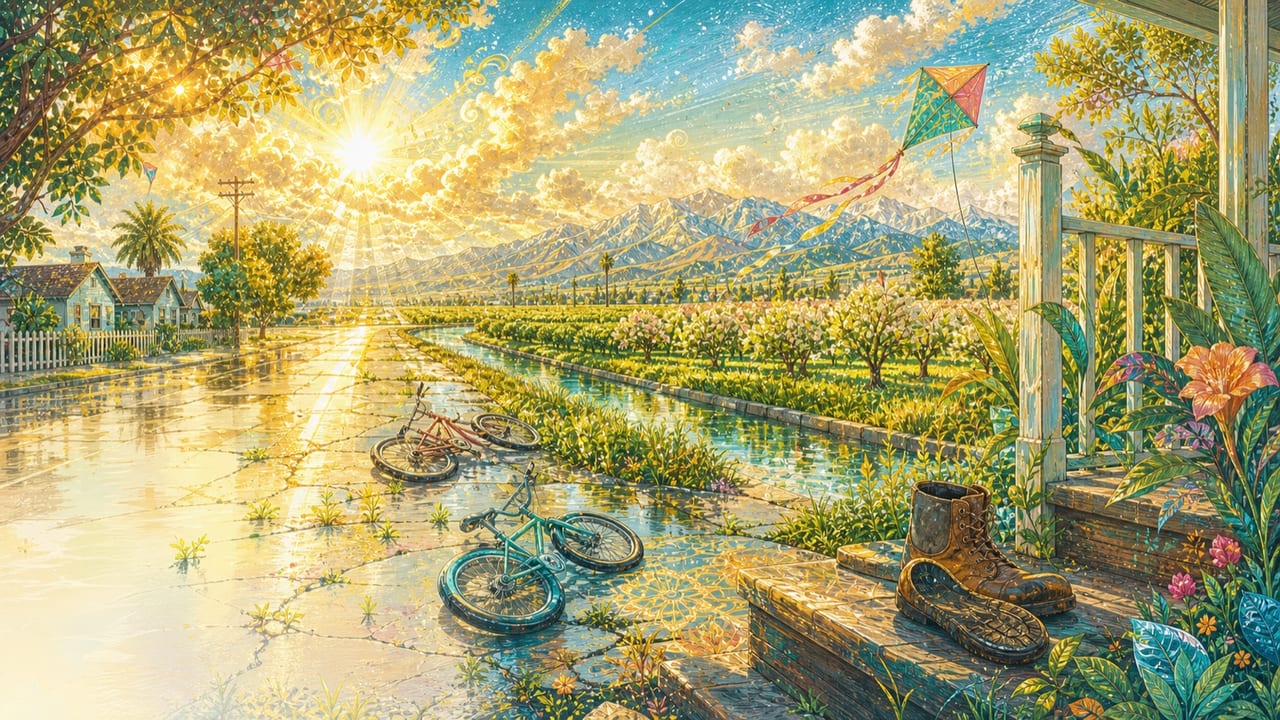
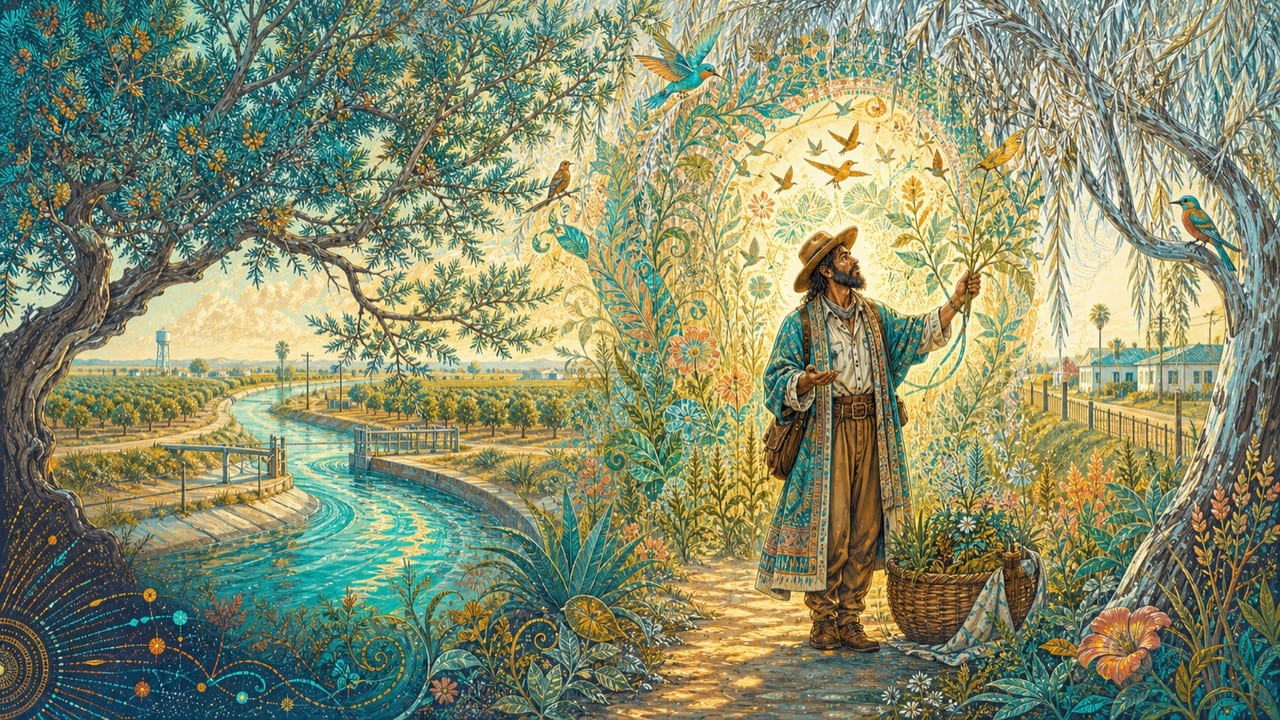
After all that traveling, look where I've ended up: standing in a California cornfield, learning what happens when I stay put. The light changes. The wind has news. You can see a surprising amount of the world from one small patch of it. Come take my hand before summer goes. I'd like to watch it leave with you.
Scarecrow Sam, guitar man, available wherever a quiet evening needs disturbing. I've still got enough thunder for a set and enough appetite for somebody's cornbread afterward. The desert cabin can wait another night. Come down to the show. I'll make my noise, dance a little crooked, and send you home with something still ringing.
Maribel, Margarita—come help me gather everybody before the food disappears. We've got enough relatives and imagined destinations to keep a whole evening moving. A little seaside, a little castle in the air, a lot of talking over the music. Wherever this wandering celebration carries us, let the goodbye be affectionate. Vaya con Dios, and come back hungry.
People say she cares too much. I wonder what they think the proper amount would be when somebody's going under. In my wildest telling, she sings us through a storm and brings the ship home. In the quieter version, she simply doesn't turn away. I've been on the receiving end of that. I call it enough to be grateful forever.
I met her by the river with my old battles still showing. She looked like she belonged to a place without all that weight. Then she'd be gone—up into the light, following something I couldn't see. I won't make a cage out of loving her. I'll just be looking toward the sky again when the sun goes down.
You can't know her by the sunshine alone. There's rain in her, fire, a wind that can change the whole room. She's come a long way through things that don't show when she smiles. When I hear she's coming home, I think of the desert after weather: the color was there all along, waiting for its moment.
She can turn a wrench and turn my head without looking as though either one takes much effort. I don't have a fortune to impress her with. Mostly I've got a grin I can't get under control. She likes her freedom and knows exactly what she's doing. Me, I'm just trying to keep up without looking completely ridiculous.
You're not even in the room, and somehow we're still fighting. I tell the voice to get out; it comes back louder, wearing my own anger. Even sleep won't close the door. This is what happens when the argument moves in and starts paying no rent. I want quiet. Instead, I keep giving it another line.
I used to walk right past them: the butterflies, moonlight on the water, somebody laughing like there was still a reason to. Then I started noticing you in the middle of ordinary mornings. Maybe love doesn't always knock hard enough to wake the whole house. Sometimes it waits for us to look up.
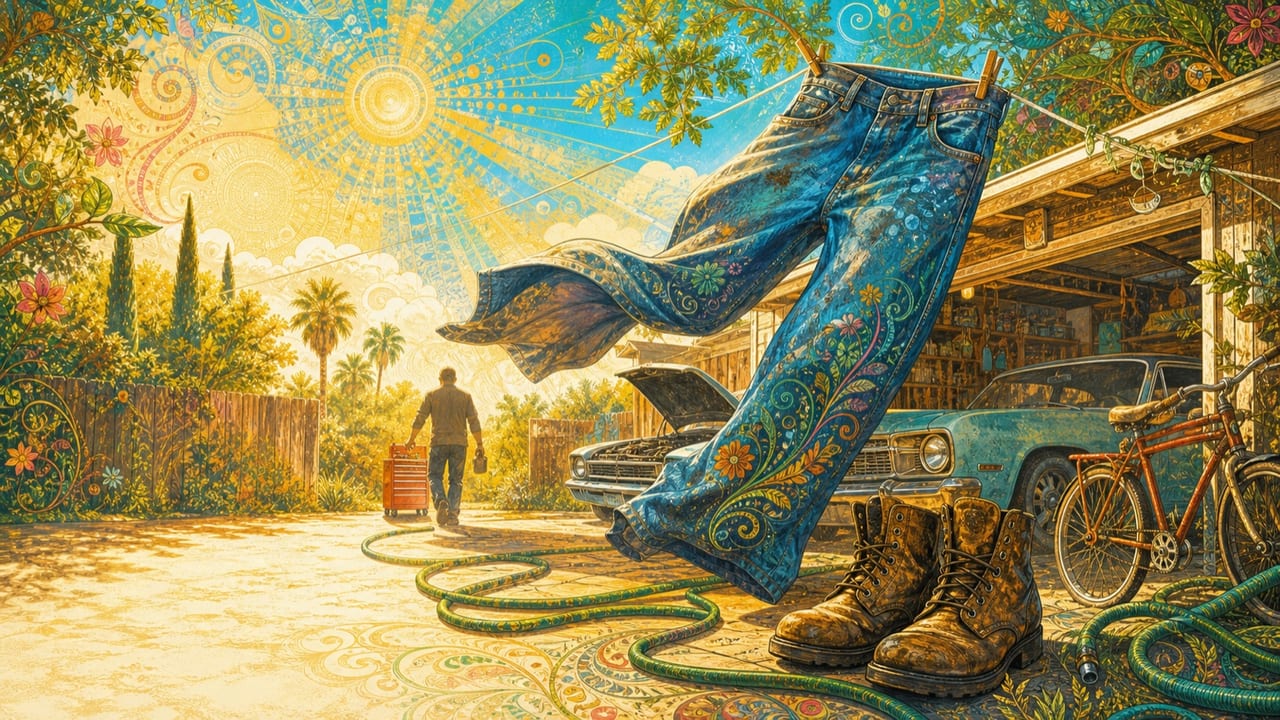
We've put years between ourselves and those first walks down the boulevard. There's gray where there wasn't, and a whole life in the middle. Then you step into the room in those familiar jeans, and time loses its place for a second. I don't need us to be young again. I like recognizing you through all of it.
Another platform, another town I'll mostly remember by the room where I played. Central California slips past the window while I try to decide whether I'm leaving home or looking for it. Sing along if you know this stretch. Somewhere down the line, somebody I love is listening for the same train.
Back when we were making the world up as we went along, Spike and Delilah were busy improving the place. A wheel, a fire, something to keep your feet from complaining. Then came a guitar, and survival got a rhythm section. Come sit by our imaginary first campfire. We may have just invented a very good evening.
Captain Xander has the watch, and the Mystic Mariner is headed where sea charts start looking like star maps. Keep close to your shipmates. Out here, a little hesitation can cost more than we know how to count. Sera can see a way forward when the rest of us can't. The telling pauses, but the voyage hasn't let us go.
She said her name was Strawberry, and I remember the red of her hair as clearly as her laugh. The desert keeps fewer things than a heart does. There's a flower coming out of the rock where I last saw her; I still look at it like it might answer. Some goodbyes never quite learn how to be past tense.
I went in for a game of nine-ball and came out with somebody worth showing up beside. We like our cars fast and our nights a little noisy. You don't have to make a mystery out of the rest of it. We're together. If that troubles you, perhaps try dancing before you try explaining us away.
Sunny knew the river, and people trusted the way she read its moods. So did I. It's hard to look at beautiful water after it keeps somebody you love. I remember her strength, her care, everything that made us follow her. The waiting changed its meaning. The love didn't stop when the boats failed to come home.
Come over Saturday. We can spend a little time letting the world turn without trying to push it along. I've been looking at the same troubles from the same chair; maybe your company will move the furniture around inside my head. Call when you're ready. An ordinary evening can change direction surprisingly fast.
Caught myself doing it again—talking like you're just in the next room, like somebody might answer if I get the question right. The café closes. The road opens. I take the conversation with me because I don't know where else to put it. Funny how much a man can say when he hasn't got the words for goodbye.
We've invented a dance that looks suspiciously like refusing to go to bed. There's jumping, splashing, a cardboard box doing important transportation work, and a great deal of artistic disagreement with the grown-ups. Bring your lemonade. If anybody asks why we're making so much noise, tell them we're developing a new form of rock and roll.
I opened the door to a bad dream and found empires, beasts, politicians, old scriptures—all shouting over each other like they'd been rehearsing for the end of the world. The images keep changing; the fear knows the same tune. Somewhere inside that uproar, I'm still trying to hear a human voice. Something that remembers forgiveness before the next catastrophe.
You can't always see what connects us. Sometimes it's under the surface, holding while the seasons change and the miles do their best to look permanent. I think about that when the river catches the light. We don't need the whole crossing laid out before us. We just need to remember there's more here than the distance.
Come up before sunrise. Bring whatever's been weighing you down; we might find a place to leave some of it. People have plenty to say about a fool alone on a hill. Sit with him awhile and the story changes. By the time the light comes, you may recognize the voice you've been calling somebody else's.
I used to pass people like me without knowing we had anything in common. Now I'm the one a little too quiet in the familiar places. I've got a show, another road, a morning that won't wait. Before all that, meet me by the sea. I'd like to remember how it feels to belong beside somebody.
The room is quiet, but my thoughts won't stop talking. Some sound like fear. Some borrow the voice of somebody I miss. I keep trying to tell an old conversation from what's happening right now. Inside this song, the echoes have gotten tangled together. Listen for the person underneath them, trying to find a little stillness.
Tell me what you've carried. The battles, the love, the times you had to find your way home without anyone beside you. I imagine the river gathering all those miles into one great moving question. None of us can see the whole crossing. If there's a shore where we meet again, I picture it with open arms.
I saw the first wildflowers by the river this morning. Nothing dramatic—just a little color where yesterday looked tired. It made me think of coming home to you. Maybe that's how the season turns inside a person too: one small sign, then another, until the shadows don't take up quite so much of the day.
The storm was coming, and even the wizard had questions for his father. Down in the town, people watched the water and waited for help they couldn't be sure of. This isn't a tale where a little magic makes the losses disappear. The sea keeps its dead. The living still have to decide what to do with another morning.
Once we had our own little rebellion going—love, freedom, the stubborn belief that nobody could make us stand in line. Then fear got in, and we lost our way from each other. Seeing you again brings that old wishing well back into view. The morning glories are blooming. I wonder what else we might let begin again.
There's something growing down by the water that doesn't care whether I understand it. It keeps coming back through the seasons, like a thought I haven't finished having. I used to want love to look exactly the way I pictured it. Now I'd rather make room for the real person standing here, and see what kindness grows.
There's a woman in black who knows how to find people who don't want finding. In this crooked business, I used to think knowing her made me safer. Then the long road starts narrowing, and every favor has a colder meaning. It's an unsettling moment when the shadow you watched approach somebody else turns toward your own door.
I remember her in that hidden meadow, working as though the picture was something she could hear. She said the gift wasn't hers alone; we all carried a little of it. Years after goodbye, I went back in the landscape of memory and found her painting again. Some people leave us a way of seeing that keeps them near.
Every autumn, that vine looks finished. Every spring, it asks me why I was so sure. I stand by the old garden wall thinking about the things I can't keep from changing. Your hand isn't here today. Still, something in me remembers how we grew together, and won't mistake a bare season for the whole story.
An old wanderer ought to know better than to use a word like perfect. Then you showed up and spoiled all my sensible reservations. I don't need us to fit somebody else's picture of husband and wife. I'd rather make our own arrangement: affection, freedom, a little nerve, and room for whatever this astonishing chance becomes.
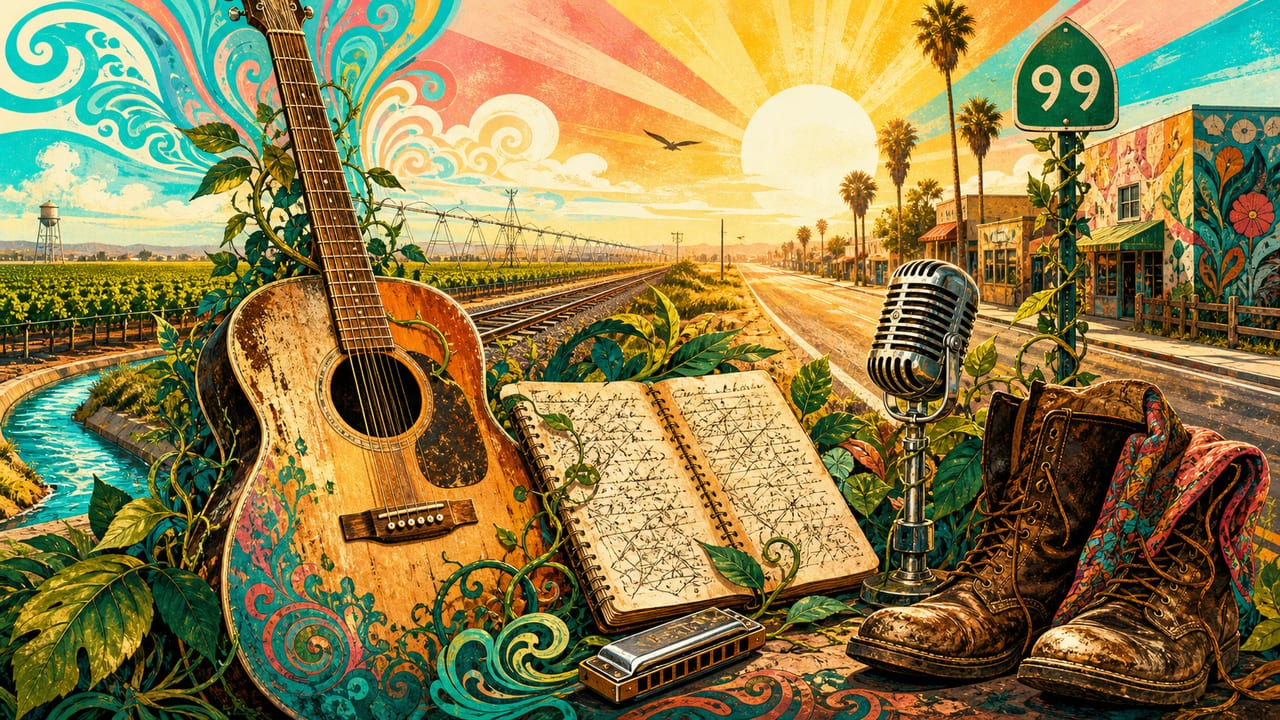
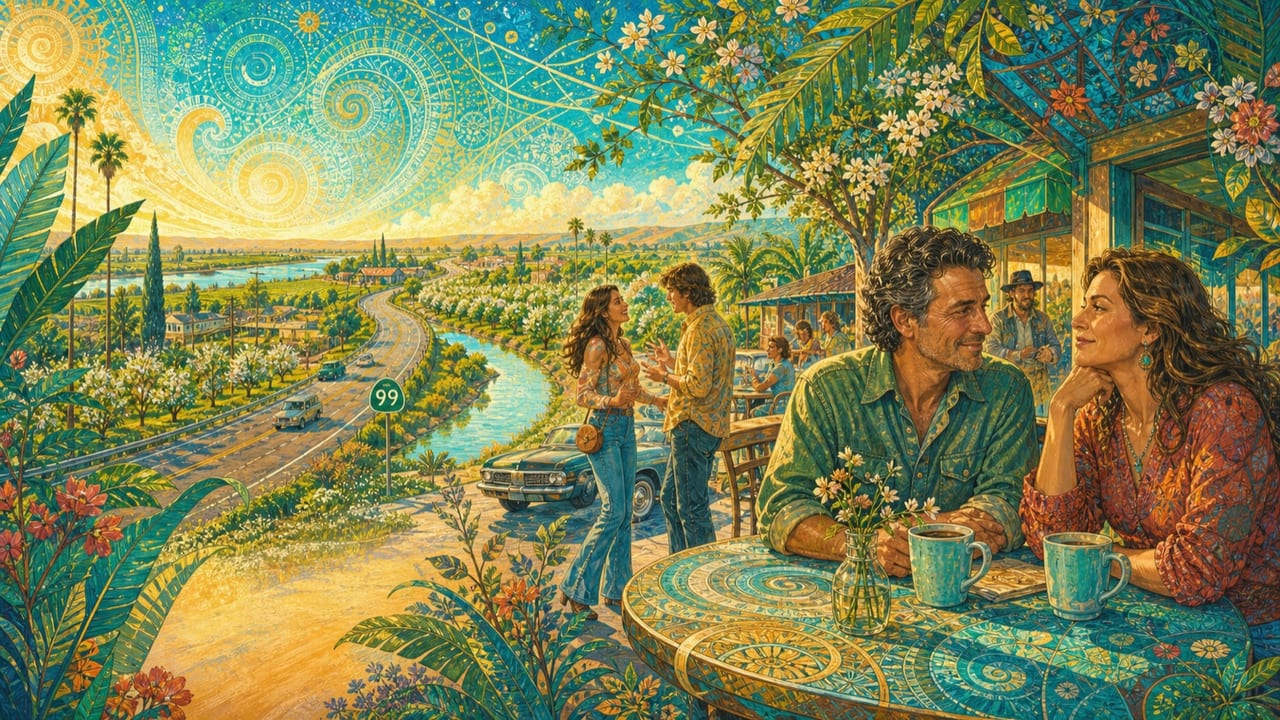
They told me to keep quiet, but the road keeps bringing the story back. A chaplain's calling, a soldier's anger, a family I can't get back to—none of it sits peacefully in the same man. I keep seeing Highway 99 running north through the grain. Maybe that's why I can't stop talking. I'm still trying to find a way home.
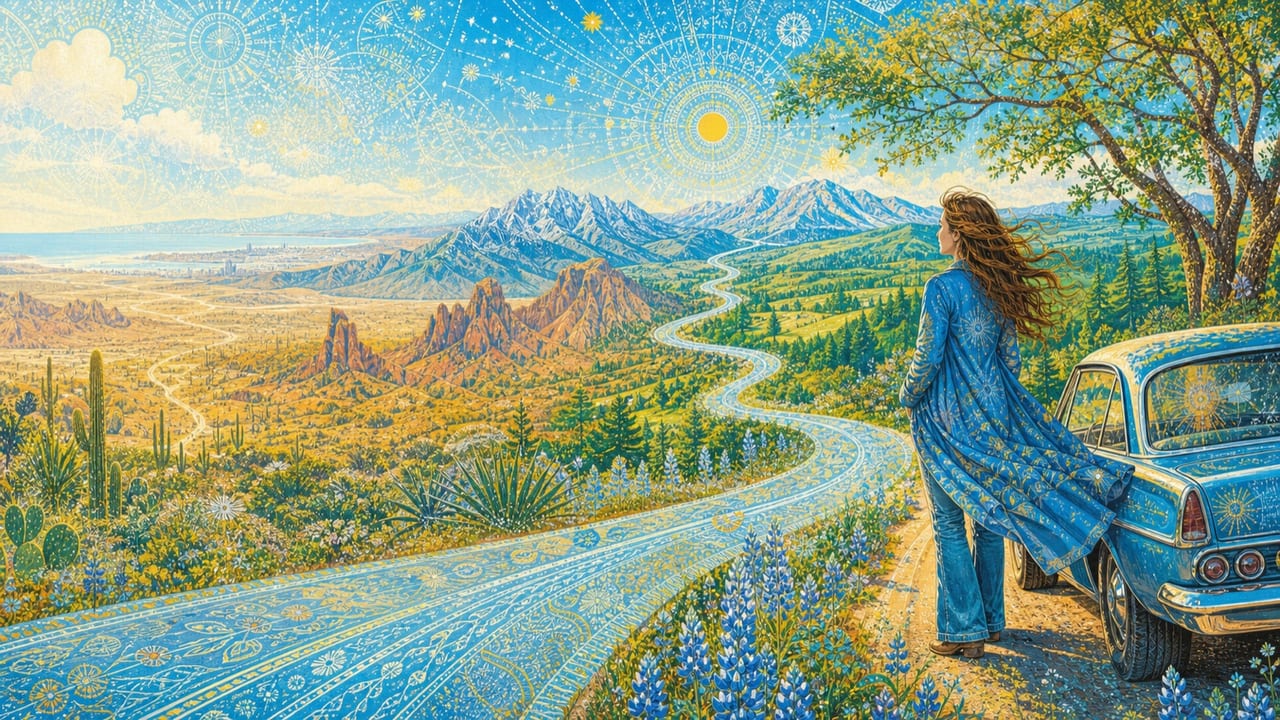
I've asked this road a lot of questions. Mostly it answers with another bend. The seasons change, people leave us, somebody we love waits a little longer than they should. I don't know whether I'm a better traveler for all these miles. I know the next hello will matter, and the last goodbye still does.
I came down to Miracle Springs with a tune still finding its feet. Clear air, desert water, somebody saying there was room for one more—it doesn't take much to give a song somewhere to begin. Come spend a little time here. You might find a friend, a bit of quiet, or a reason to stay awhile.
It was good to see you, even for an hour. Strange how quickly a familiar face can bring the whole picture back into focus: the beginning, the closeness, the goodbye I still don't understand. I keep remembering us as though a little careful looking could restore the colors. There's room in that picture for you to come home.
You asked a child to keep a secret that should never have belonged to them. I won't carry the blame along with the memory anymore. What happened hurt a family, not just a moment. If I find my way to forgiveness, it will be on my terms. It won't make the harm smaller, or make it mine.
You and I know some of the same roads, but that doesn't mean we've walked the same life. There are crossings nobody can make for us. I keep wondering what I can leave along the bank—a song, a kind word, some small sign that helps the next traveler find their footing. That would be a worthwhile trace.
The bell keeps marking time like it has somewhere important to be. Morning will send me down the road again, and I can't give you an honest date for coming back. I can give you this hour. Come closer while the sky still has color in it. Let's not spend the whole evening rehearsing goodbye.
You're beautiful. I've never had trouble seeing that. What hurts is how often I disappear while you're looking at yourself. There's a difference between admiring somebody and being allowed to meet them. I wanted the second thing. When I leave, it won't be because the shine wore off. It's because I couldn't find us inside it.
I could have written a whole song in the time this ride's taking. Turns out I did. Sitting here with nowhere to put my impatience, I start dragging up old nights, old loves, every wrong turn that brought me to this curb. Driver, if you're listening, I'm ready. I've run out of reasonable things to complain about.
You know exactly what happens when you walk down that street. I try to play it cool; my eyes have other plans. The night gets noisy with rivalry and old memories, but underneath all my showing off is one small hope: when you walk away this time, let it be the kind of leaving that comes back.
That's the whole arrangement, really. We take care of each other. Not only when the weather's kind or when we've got plenty to give, but through the leaving, the worry, the days that ask more than we expected. Call it love, call it family. I want it to be something you can count on without asking twice.
What a time we had. I can say it lightly, but there's a lot folded into those few words—work, distance, the spark at the start, all the things that got between us afterward. I've carried it through more towns than I can name. When the struggle finally quiets, I hope the love is what I hear.
There's a commotion behind that door, and my imagination is being absolutely no help. Everybody's got a rumor, somebody's jealous, and downtown is calling us to come make our own noise. I ought to mind my business. Instead, I'm leaning closer with the same question as everyone else. This town can turn curiosity into an all-night occupation.
I used to know how to brighten a room. Lately I look for that man and find an empty chair where a friend should be. This winter has gone on a long time. I'm still walking, though. Still imagining a morning by the river when a song feels like company again, and the light reaches all the way in.
We thought forever was something you could carve into a tree and leave there. I still remember the names, still know the shape of that first freedom. Things went sideways. We did too. But if there's a way to come home without pretending none of it happened, I'd like to find it with you.
I'm glad the world found you. I just miss the person I knew before it started telling you who to be. There was a garden, a wedding, a kind of happiness that didn't need managing. Behind the sunglasses and all that success, are you still able to hear us? I'd like to meet you there again.
Morning comes, but it doesn't bring much color with it. The songs keep playing to a room that feels a little too large, and yesterday has started borrowing tomorrow's clothes. I didn't know an absence could rearrange time. If our roads meet again, maybe I'll tell you that. For now, I'm listening for something that sounds like you returning.
I left Los Angeles thinking a different view might make a different man. Now the bay's outside the window, the mornings are misty, and somehow it's the same old show. Maybe the scenery wasn't the thing that needed changing. That's an uncomfortable thought to have after you've packed up your whole life and brought it with you.
She arrived in a dream offering directions, then started speaking as though she owned the road—and me along with it. The old biblical names don't make the bargain any easier to understand. I woke with more questions than I took to sleep. Some visions leave you less certain, and maybe that's the part worth keeping.
Why do we keep walking away from the things we once couldn't believe we'd found? I see the same question on faces all over town, even when nobody says it. Maybe another goodbye isn't the only ending available. We could try. I don't know whether that fixes anything, but I'd like to give the song a chance.
Don't give me another beautiful promise. Show up. Do the work. Mean what you said when saying it was easy. I can forgive a lot more honestly than I can keep pretending words and actions are the same thing. If you come back, bring the part of yourself that knows how to follow through.
Sometimes I imagine the whole universe began by finding a rhythm. Then I look at the space you left and can't find the next note. All my grand ideas come down to something pretty small: a hand held out, a song I want you to hear. Whatever music means to the stars, I know what it means between us.
It's usually the little things. A bird starting up in the morning. A memory that makes me smile halfway through a long, unpromising mile. Knowing there's somebody I want to tell when I get home. I can't promise the road will get shorter. With you in my life, I can tell you why it's worth traveling.
You're the tune the radio won't stop playing, even when the radio's off. I know every turn of it, every place I expect you to come back in. The floor is there, the music's going, but I can't seem to move. I'm waiting for another song to find me without having to pretend I never loved this one.
I wasn't expecting color when you came along. I'd been lonely, lost a friend, gotten used to a quieter kind of gray. Then there was the river village, children's voices, light coming in before I was ready to believe it. I don't want to keep this happiness to myself. Wear my ring. Let's make something others can remember warmly.
People can tell you plenty about me, especially the parts they weren't there for. I'd rather you watch whether I keep my word. Freedom took me a long time to learn; loving you hasn't made it less precious. I keep saying you don't know me. Then you look at me like that, and I wonder who I'm trying to fool.
I don't make friends. Too much asking, too much disappointment, too many people finding the soft place and leaning hard. That's my speech, and I've practiced it. Then you show up, and I start leaving room in the day for you. I might even stick around till the end. But let's be clear: I don't make friends.
I can wrap a goodbye in enough wordplay to make it sound almost painless. Doesn't mean it is. I was on the road before we met, and here I am on it again, with the apologies not quite landing. If I had it over, I'd still choose us. A wanderer can keep moving and know exactly who got away.